
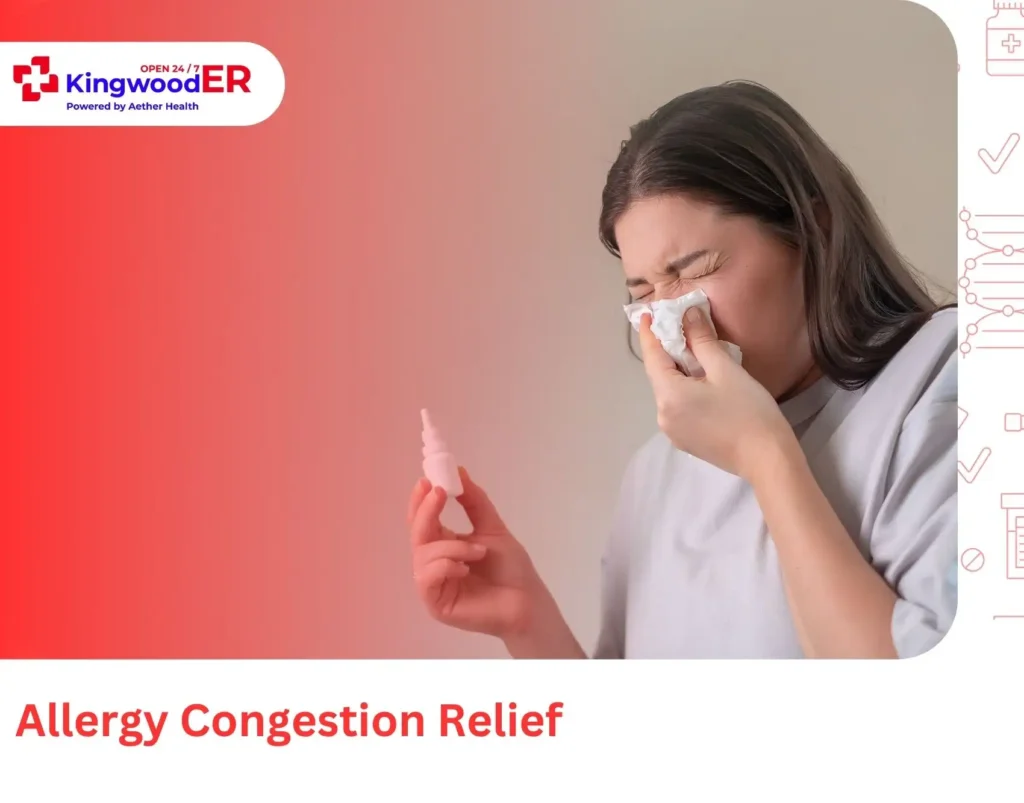
Allergy congestion is one of the most disruptive symptoms Kingwood residents face during pollen season. It affects sleep, focus, and quality of life. Understanding what works at home – and knowing when congestion signals a more serious problem – can help you get relief faster and avoid complications.
This guide walks through effective at-home relief strategies, when to escalate to a healthcare provider, and the warning signs that mean it’s time to come to Aether Health Kingwood ER.
What Causes Allergy Congestion?
Allergy congestion happens when your immune system reacts to airborne allergens – pollen, mold spores, dust mites, or pet dander. The reaction triggers inflammation and swelling in the nasal passages, which produces mucus and blocks airflow.
In Kingwood, common triggers include cedar in winter, oak in spring, grass in summer, and ragweed in fall. Gulf Coast humidity also supports year-round mold spore exposure that spikes after storms.
According to the CDC’s overview of allergens and pollen, pollen exposure can also worsen asthma symptoms and lead to more severe respiratory complications for sensitive individuals.¹
Effective Home Care for Allergy Congestion

For most people, at-home strategies provide meaningful relief when practiced consistently. The most effective approaches focus on reducing allergen exposure and supporting nasal drainage.
Reduce Allergen Exposure
- Keep windows closed during high-pollen days and check daily counts through local weather apps
- Use HEPA-filter air purifiers in the bedroom and main living areas
- Change and wash bedding weekly in hot water to reduce dust mite exposure
- Shower before bed to remove pollen collected on skin and hair during the day
- Replace HVAC filters every 2-3 months, especially during peak allergy seasons
Support Sinus Drainage
- Rinse your nasal passages with sterile saline solution once or twice daily
- Use a warm compress across your cheeks and forehead to ease sinus pressure
- Take a hot shower or breathe in steam from a bowl of warm water to loosen mucus
- Elevate your head at night with an extra pillow to help mucus drain
- Stay well hydrated throughout the day to keep mucus thin and moving
Get Professional Guidance When Needed
If home care isn’t providing enough relief, your primary care provider or a local allergist can offer testing to identify specific triggers and recommend appropriate options. Your pharmacist can also review your medical history and suggest over-the-counter care that fits your situation.
When Congestion Signals Something More Serious
Not all persistent congestion is caused by allergies. Sometimes, chronic allergic inflammation leads to secondary conditions – or the original cause is something else entirely.
Sinus Infection
Watch for thick yellow or green mucus lasting more than 10 days, facial pain that worsens when leaning forward, and a low-grade fever. Sinus infections often develop after prolonged allergic inflammation blocks normal sinus drainage.
The CDC’s sinus infection overview explains how seasonal allergies can contribute to sinus infections and when medical care is appropriate.²
Nasal Polyps or Structural Issues
Chronic one-sided congestion, loss of smell, or congestion that persists year-round may indicate nasal polyps or a deviated septum. These conditions typically need evaluation by an ENT specialist.
Non-Allergic Rhinitis
Some people experience chronic congestion triggered by weather changes, foods, hormones, or medications rather than allergens. This condition requires a different treatment approach than seasonal allergies.
For more detailed guidance on telling these conditions apart, our sinus infection vs. allergies guide walks through the key differences.
Warning Signs That Require Emergency Care

Most allergy congestion never requires emergency care. However, certain warning signs indicate the need for immediate medical evaluation. Come to Aether Health Kingwood ER right away if you experience:
- Difficulty breathing, wheezing, or shortness of breath
- Swelling of the face, lips, tongue, or throat
- Vision changes, eye swelling, or eye pain related to sinus pressure
- Severe headache with fever and stiff neck
- Confusion, extreme fatigue, or lightheadedness with congestion
- Bluish lips or fingernails
- A child breathing rapidly or showing chest retractions
- Signs of anaphylaxis – throat tightness, hives, dizziness, or multiple systems reacting
If you or a loved one has been prescribed an epinephrine auto-injector for severe allergies, use it as your allergist has directed at the first sign of a whole-body allergic reaction, then call 911.
For allergy-related breathing complications, our emergency care for breathing problems service page outlines the full evaluation and stabilization available on-site.
How Aether Health Kingwood ER Helps

Aether Health Kingwood ER is a freestanding emergency room open 24 hours a day, 365 days a year. Board-certified emergency physicians evaluate allergy-related emergencies on-site with rapid access to advanced diagnostic tools.
Our services include on-site CT imaging, laboratory testing, respiratory evaluation, and immediate treatment for airway swelling and severe allergic reactions. Most straightforward evaluations are completed within 1 to 2 hours, and we coordinate follow-up care with your primary care provider or allergist before discharge.
For severe reactions requiring stabilization, we monitor patients after treatment because allergic symptoms can return in a delayed second wave.
Insurance & Billing Information
Aether Health Kingwood ER works with most major insurance plans. Please call (713) 528-8703 to verify your specific coverage before your visit.
As required by Texas Health & Safety Code §254.155 (HB 2041), we disclose that this is a Freestanding Emergency Medical Care Facility. Our charges are comparable to a hospital emergency room and may include a facility fee. The federal No Surprises Act and the prudent layperson standard protect patients from unexpected billing during emergency care.
| Visit Aether Health Kingwood ER
Address: 2158 Northpark Dr, Kingwood, TX 77339 Phone: (713) 528-8703 Hours: Open 24 hours, 365 days a year No appointment needed. Walk-ins welcome. |
Frequently Asked Questions
What is the fastest way to get allergy congestion relief at home?
A hot steam shower combined with a saline rinse provides relief within minutes. For lasting improvement, combine these with head elevation at night, HEPA air filtration, and weekly washing of bedding in hot water.
Why does allergy congestion get worse at night?
Two main reasons: lying flat allows mucus to pool in the sinuses instead of draining, and allergens carried into the bedroom on your body concentrate around your sleeping area. Head elevation and a bedroom air purifier directly address both.
Can allergy congestion lead to a sinus infection?
Yes. Chronic allergic inflammation swells the sinus openings, trapping mucus and allowing bacteria to grow. Warning signs include thick yellow-green mucus for more than 10 days, facial pain, and low-grade fever.
When should I go to the ER for allergy congestion?
Come to the ER for difficulty breathing, facial or throat swelling, vision changes with sinus pressure, severe headache with fever, confusion, or signs of anaphylaxis. Congestion alone is rarely an emergency.
Do I need an appointment to visit Aether Health Kingwood ER?
No. Walk-ins are welcome 24 hours a day, 365 days a year. Our board-certified emergency physicians evaluate patients on a first-come basis, with the most urgent cases prioritized.
External References Links :
1.CDC’s overview of allergens and pollen
2.CDC’s sinus infection overview