

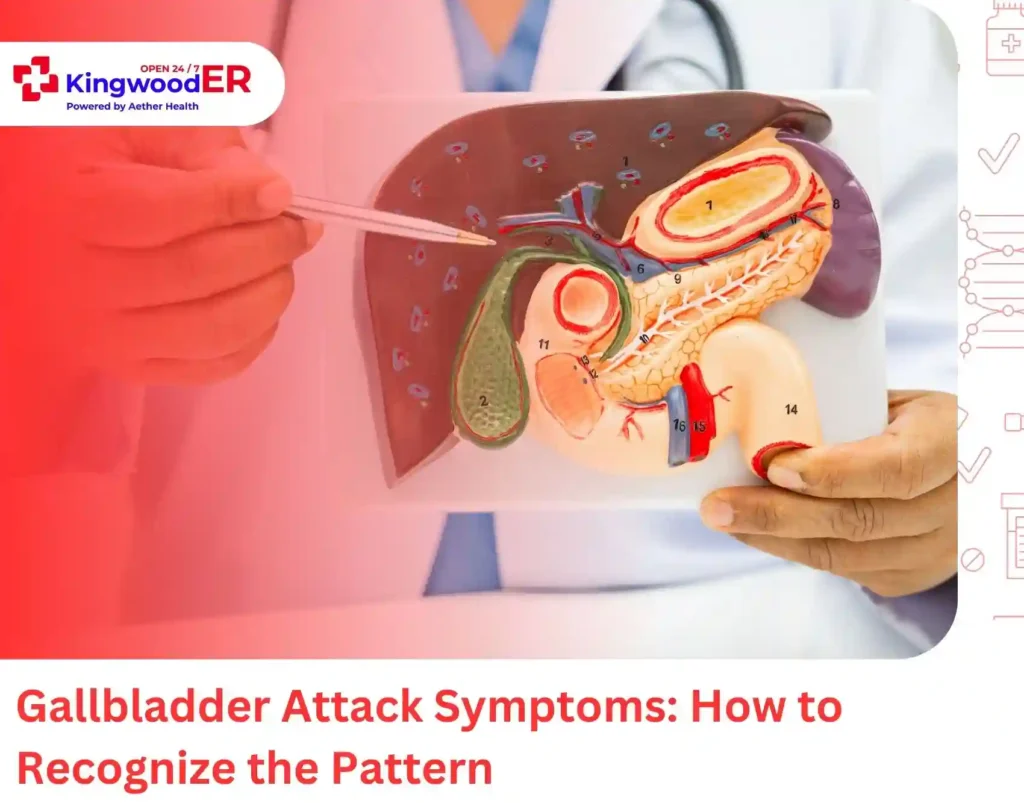
Gallbladder attack symptoms have a signature pattern that sets them apart from ordinary indigestion or acid reflux. The pain strikes suddenly in the upper right abdomen, often after a fatty meal.
Recognizing the pattern of gallbladder attack symptoms is the first step to getting the right care. This guide maps the pain dimension by dimension and points you to when it becomes an emergency.
What Does a Gallbladder Attack Feel Like?
A gallbladder attack feels like sudden, intense pain that builds within minutes to a sharp or cramping ache in the upper right abdomen. The pain is often constant rather than coming in waves, and it does not improve with position changes, antacids, or passing gas.
People describe gallbladder attack pain as:
- A sharp, squeezing, or gripping sensation
- A deep, boring ache that feels like pressure from the inside
- Severe enough to interrupt activity or sleep
- Constant intensity rather than throbbing or wave-like
- Often more severe than typical indigestion or heartburn
For a complete clinical overview of the sensation and pattern, Mayo Clinic’s guide to gallstone symptoms and causes describes how biliary colic differs from other digestive pain. ¹
Gallbladder Pain Location: Where Does It Hurt?

Gallbladder pain location is typically the upper right abdomen, just below the ribs. The pain often radiates to the right shoulder, right shoulder blade, or the middle of the back between the shoulder blades. This referred pain pattern helps distinguish it from other abdominal problems.
Primary and referred pain locations include:
- Upper right abdomen, just below the ribcage (primary site)
- Middle upper abdomen below the breastbone (common)
- Right shoulder blade or between the shoulder blades (classic referred pain)
- Right shoulder itself
- Right side of the back, below the ribs
Press gently on the upper right side below your ribs. If pressing there reproduces or worsens the pain, that is a strong clue the gallbladder is involved.
For a broader look at abdominal pain causes and emergency evaluation, our abdominal pain emergency care services page explains how we approach undifferentiated abdominal pain.
Gallbladder Attack Triggers: When Does the Pain Strike?
Gallbladder attack triggers most often include eating fatty, fried, or heavy meals, especially late at night. Many people experience their first attack 1 to 3 hours after a rich dinner. Other triggers include rapid weight loss, prolonged fasting, pregnancy, and certain hormonal changes.
Common gallbladder attack triggers include:
- Fatty, fried, or greasy meals (classic trigger)
- Large or heavy meals, especially late in the evening
- Rapid weight loss or crash dieting
- Prolonged fasting followed by a large meal
- Pregnancy and hormonal changes
- Being overweight or obese
- Family history of gallstones
When fat enters the small intestine, the gallbladder contracts to release bile. If a gallstone blocks the bile duct during that contraction, pressure builds and the attack begins.
For the full scope of digestive emergencies we handle, our GI emergency care in Kingwood service page outlines what to expect during a visit.
How Long Does a Gallbladder Attack Last?
How long does a gallbladder attack last depends on whether the gallstone passes or stays stuck. A typical biliary colic attack lasts 30 minutes to a few hours and resolves on its own. Pain lasting more than 6 hours suggests inflammation or infection needing emergency care.
Mild to moderate attack: 30 minutes to 2 hours. The stone eventually shifts and bile flow resumes.
Moderate to severe attack: 2 to 6 hours. More intense and may require medical evaluation.
Prolonged attack (over 6 hours): likely acute cholecystitis or a stuck stone. Requires emergency evaluation to prevent complications.
For patient guidance on when gallbladder inflammation sets in, Mayo Clinic’s cholecystitis symptoms and causes page explains the typical course and warning signs.²
Other Signs of a Gallbladder Attack You Should Know
Beyond pain, signs of a gallbladder attack often include nausea, vomiting, bloating, and loss of appetite. Some people develop a low-grade fever or notice their skin and eyes turning slightly yellow. These additional signs help distinguish a gallbladder attack from other upper abdominal conditions.
Common accompanying symptoms:
- Nausea with or without vomiting
- Bloating and feeling of fullness
- Loss of appetite
- Sweating or restlessness from the pain
- Pale or clay-colored stools (suggests bile flow obstruction)
- Dark urine (suggests bilirubin buildup)
- Low-grade fever (over 101 degrees signals infection)
- Yellowing of skin or eyes (jaundice, indicates bile duct blockage)
Severe abdominal pain can also signal appendicitis. Our appendicitis emergency care center explains how we distinguish these conditions.
Gallbladder Attack Causes and Risk Factors
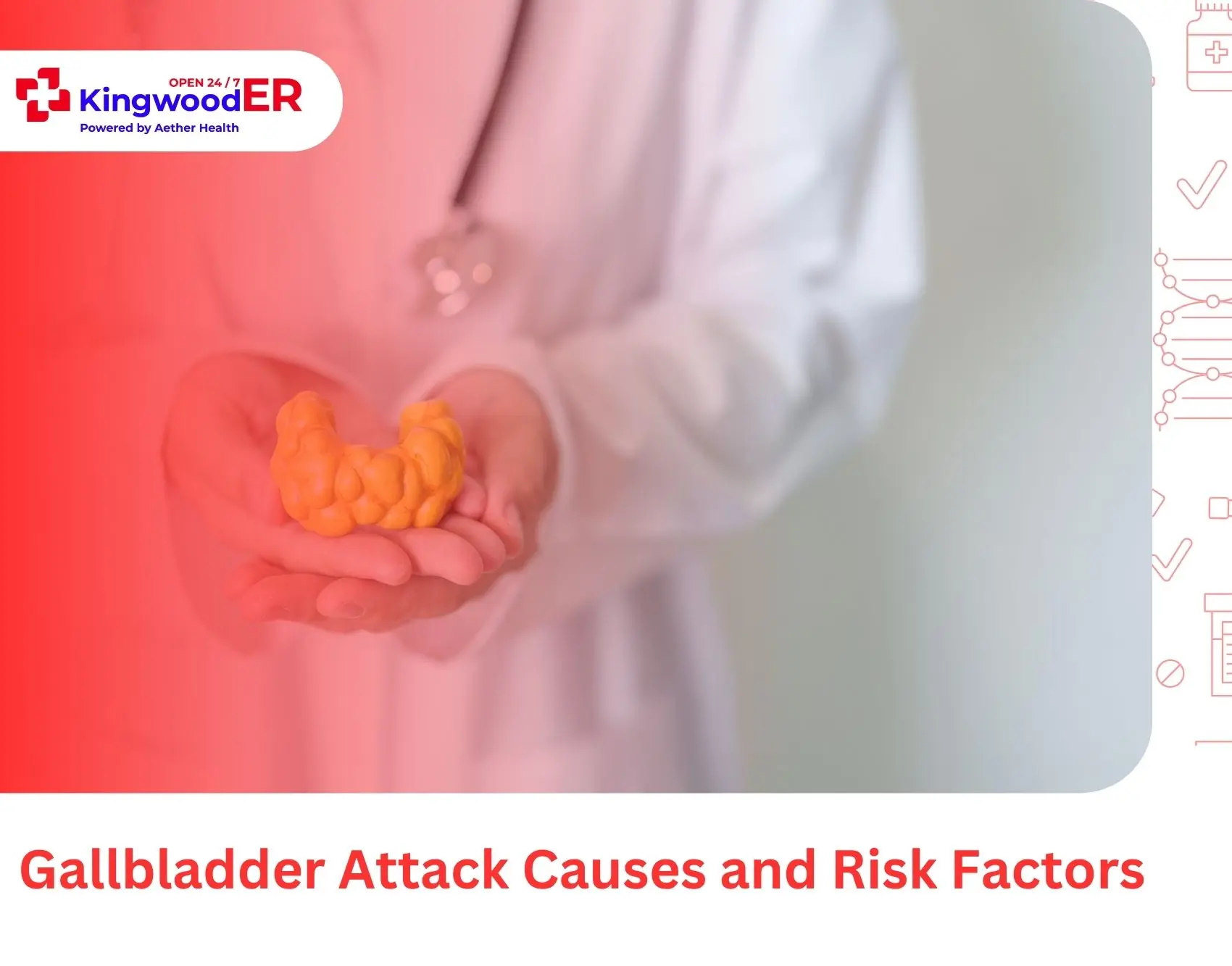
Gallbladder attack causes trace back to gallstones blocking the flow of bile. Risk factors include being female, over 40, overweight, pregnant, having a family history, rapid weight loss, and a high-fat diet. These factors influence cholesterol balance and bile concentration.
Main risk factors for gallbladder attacks:
- Being female (women develop gallstones about twice as often as men)
- Age over 40
- Overweight or obesity
- Pregnancy, especially multiple pregnancies
- Family history of gallbladder disease
- Rapid weight loss or yo-yo dieting
- High-fat, low-fiber diet
- Diabetes
Gallbladder attacks are rare in children but possible. For symptoms specific to younger patients, see our guide on pediatric emergency care.
When Does a Gallbladder Attack Become an Emergency?
A gallbladder attack becomes an emergency when pain lasts more than 6 hours, you develop a high fever, your skin or eyes turn yellow, or you cannot keep fluids down. These signs suggest complications like infection, bile duct blockage, or pancreatitis that need urgent care.
Come to the ER right away for any of the following:
- Severe abdominal pain lasting more than 6 hours
- Pain worse than any previous attack
- High fever above 101 degrees with chills
- Yellowing of the skin or eyes (jaundice)
- Persistent vomiting preventing fluid intake
- Light-colored stools and dark urine together
- Confusion, extreme fatigue, or signs of shock
- Pain spreading to the chest or shortness of breath
For milder attacks that still need same-day evaluation, our minor emergencies treated 24/7 page covers walk-in conditions handled on-site.
How Aether Health Kingwood ER Evaluates a Gallbladder Attack
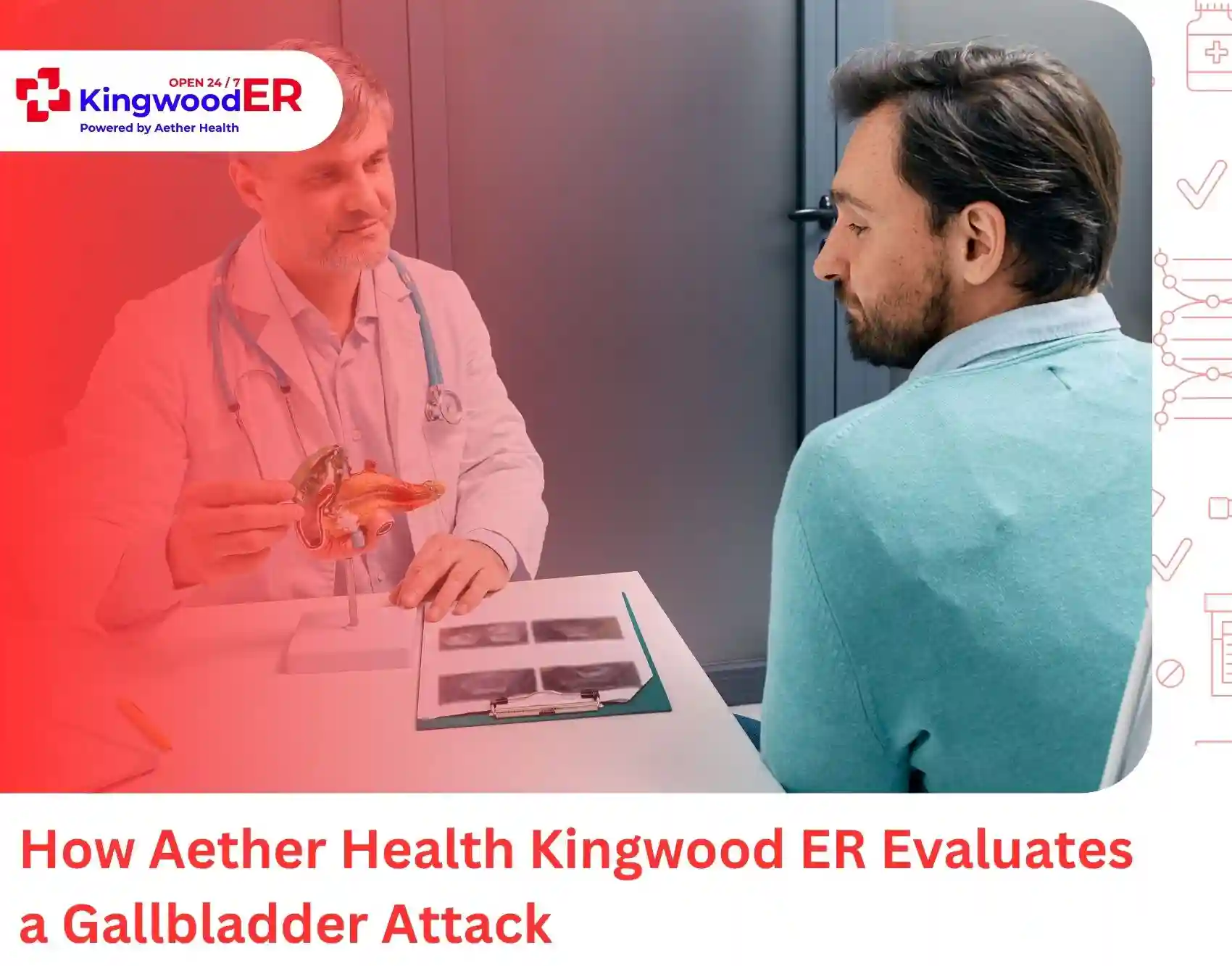
Aether Health Kingwood ER provides 24/7 evaluation of suspected gallbladder attacks with on-site ultrasound, laboratory testing, IV fluids, and CT capability when needed. Board-certified emergency physicians can confirm gallstones, identify complications, and coordinate surgical consultation when the attack is severe.
Aether Health Kingwood ER is open 24 hours a day, 365 days a year. For severe attacks, we provide stabilization, pain management, and coordinate direct hospital transfer when gallbladder removal is needed.
Residents of nearby areas can learn about accessibility on our emergency services near Atascocita page.
Insurance & Billing
Aether Health Kingwood ER works with most major insurance plans. Call (713) 528-8703 or visit our Contact Us to verify coverage or get directions.
Per Texas Health & Safety Code §254.155 (HB 2041), this is a Freestanding Emergency Medical Care Facility. Charges are comparable to a hospital ER and may include a facility fee. The federal No Surprises Act protects patients from unexpected billing during emergency care.
| Visit Aether Health Kingwood ER
Address: 2158 Northpark Dr, Kingwood, TX 77339 Phone: (713) 528-8703 Hours: Open 24 hours, 365 days a year No appointment needed. Walk-ins welcome. |
Frequently Asked Questions
Can a gallbladder attack go away on its own?
Mild attacks often resolve within a few hours when the stone shifts. You still need medical evaluation to confirm gallstones and prevent future attacks.
What foods trigger gallbladder attacks?
Fried foods, fatty meats, full-fat dairy, baked goods, and heavy sauces are common triggers. A high-fiber diet with lean proteins reduces attack frequency.
Is gallbladder pain worse than appendicitis?
Severity varies by person. Gallbladder pain is upper right, appendicitis is lower right. Both need medical evaluation.
Can stress cause a gallbladder attack?
Stress itself does not cause attacks, but stress-related eating or skipped meals can trigger them in people with existing gallstones.
Do I need the ER for every gallbladder attack?
No. Mild attacks under 2 hours can wait for primary care. Go to the ER for pain over 6 hours, fever, jaundice, or persistent vomiting.