


Pleurisy causes sharp, stabbing chest pain that worsens with every breath, cough, or sneeze. The condition behind pleurisy can range from a mild viral illness to a life-threatening blood clot, which is why identifying the cause matters. This guide walks through the main pleurisy causes, how to recognize pleuritis symptoms, how pleurisy treatment works, and when symptoms signal a pleurisy emergency requiring immediate care at Aether Health Kingwood ER.
What Is Pleurisy?
Pleurisy, also called pleuritis, is inflammation of the pleura, the thin two-layered membrane that surrounds each lung and lines the inside of the chest cavity. When the pleura becomes inflamed, the layers rub together instead of sliding smoothly, producing sharp chest pain with every breath.
Pleurisy itself is not a disease. It is a symptom of something else happening inside the body. Identifying the underlying cause is essential, because the right treatment depends entirely on what is driving the inflammation.
What Are the Main Pleurisy Causes?
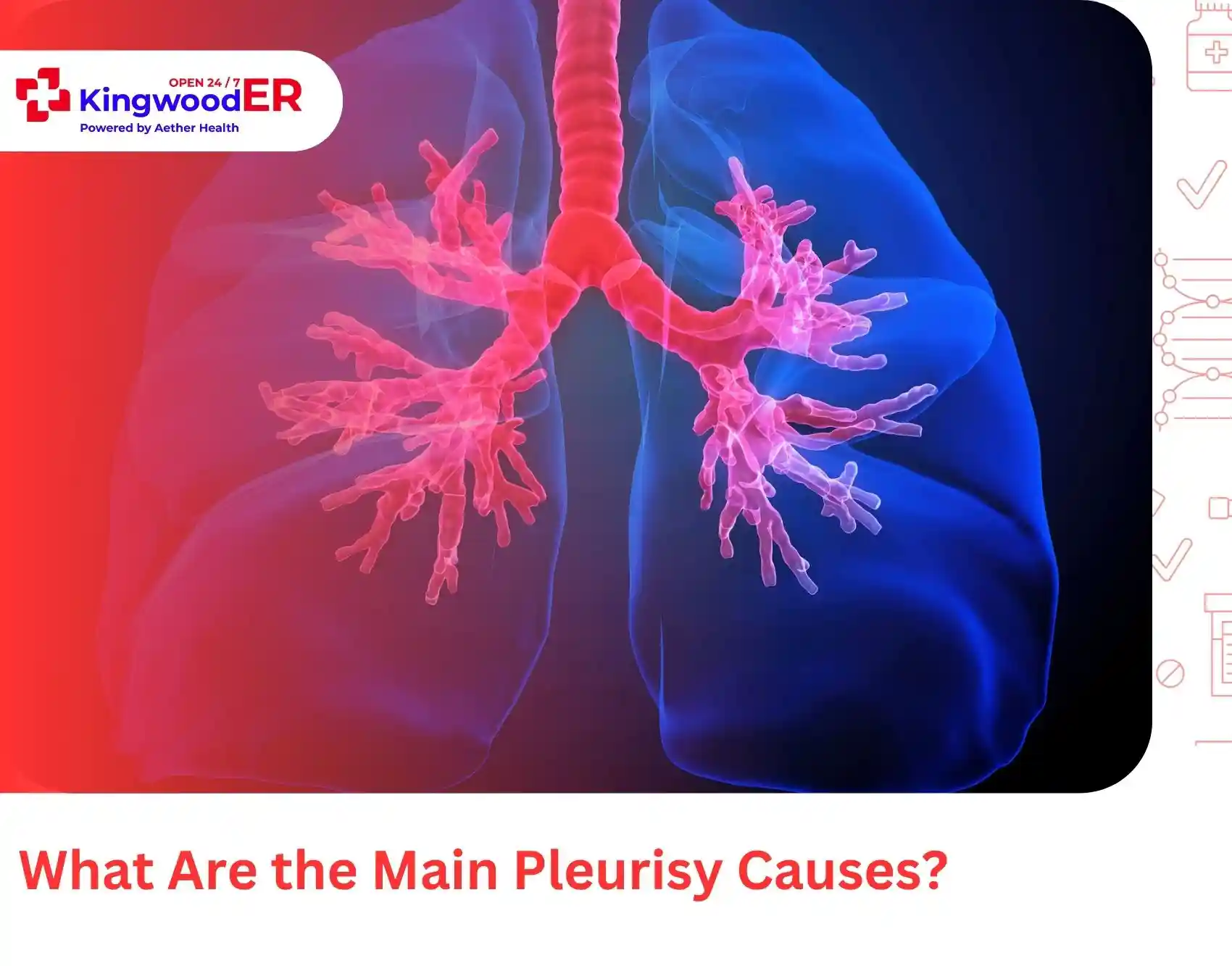
The main pleurisy causes include viral and bacterial infections, pulmonary embolism, autoimmune conditions, and chest trauma. Viral infections account for most cases of pleurisy, but a blood clot in the lungs is the most dangerous cause and requires emergency evaluation immediately.
Viral Infections (Most Common)
Common respiratory viruses, including influenza and the viruses that cause the common cold, inflame the pleura as part of a broader respiratory illness. Viral pleurisy usually develops a few days into the illness, comes with a dry cough and mild fever, and resolves on its own within one to two weeks.
Bacterial Infections
Bacterial pneumonia and tuberculosis can both inflame the pleura. Warning signs include high fever above 101 degrees Fahrenheit, productive cough with thick yellow or green mucus, worsening shortness of breath, and chest pain that does not improve with rest. Bacterial causes need prompt medical treatment.
Pulmonary Embolism (Medical Emergency)
A pulmonary embolism (PE) is a blood clot that travels to the lungs, usually from a vein in the leg. PE is life-threatening. Signs include sudden sharp chest pain with no clear trigger, rapid shortness of breath, fast heartbeat, coughing up blood, lightheadedness, and leg swelling.
For a deeper look at how blood clots are evaluated and treated, our emergency blood clot treatment service page outlines the diagnostic steps and stabilization protocols.
Autoimmune Conditions
Lupus and rheumatoid arthritis can cause the immune system to attack the pleura. Pleurisy is one of the most common lupus-related complications. Autoimmune pleurisy tends to be recurrent, meaning it flares with the underlying disease.
Chest Injury or Trauma
Falls, car accidents, sports injuries, and severe coughing fits can inflame the pleura or cause rib fractures that irritate the surrounding membrane. Trauma-related pleurisy can mask more serious injuries, such as lung bruising or a collapsed lung, and deserves medical evaluation.
For a full clinical overview of the pleural conditions behind pleurisy, the National Heart, Lung, and Blood Institute’s guide to pleural disorders explains how each cause affects the pleura.¹
What Are the Pleuritis Symptoms to Watch For?
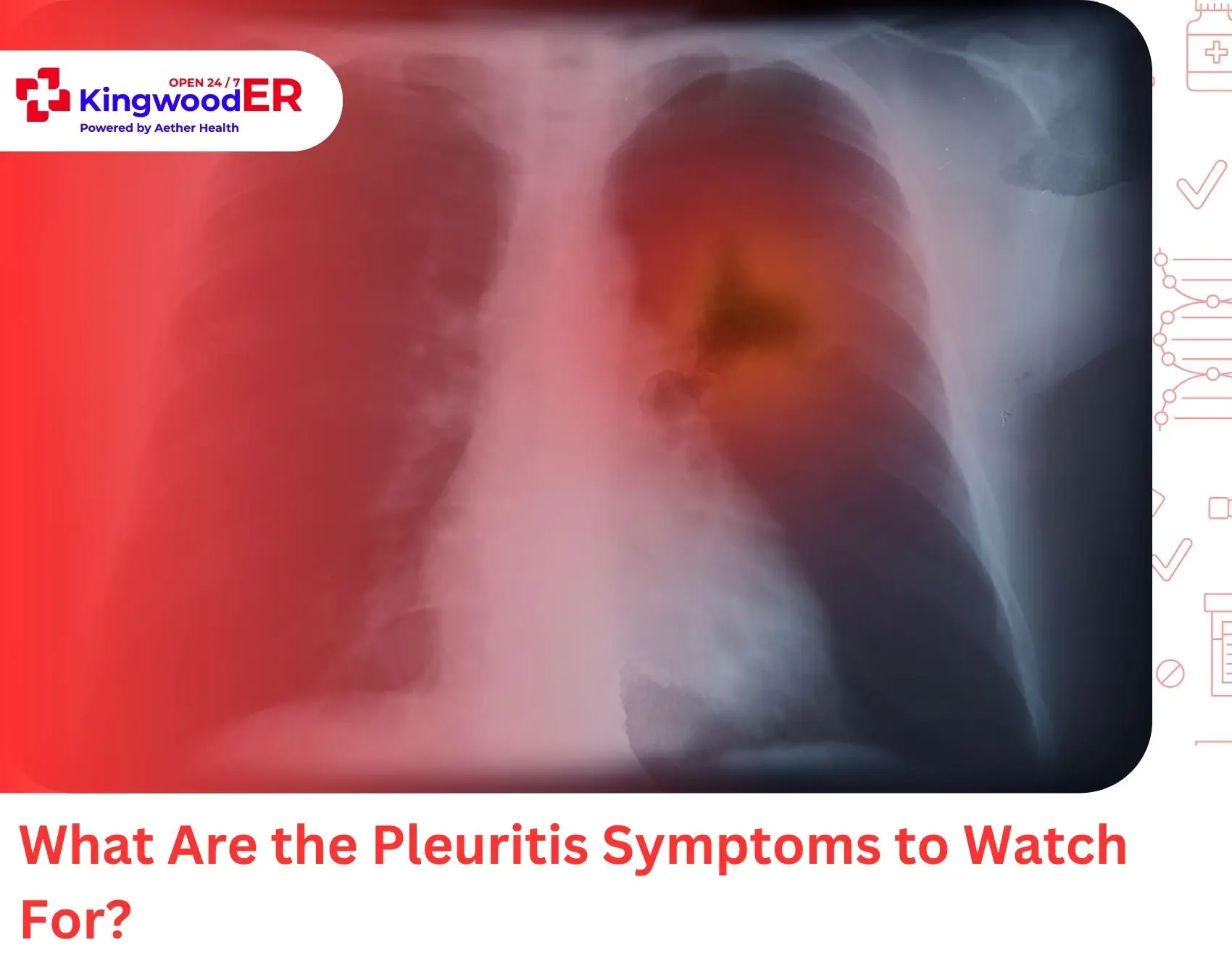
The signature pleuritis symptoms are sharp, stabbing chest pain on one side that worsens with breathing, coughing, or sneezing. Pleurisy chest pain may radiate to the shoulder or back on the affected side and is often accompanied by shortness of breath or dry cough.
Additional pleuritis symptoms depend on the underlying cause and may include:
- Pain that worsens with deep breaths, coughing, laughing, or sneezing
- Shortness of breath, often from shallow breathing to avoid pain
- Dry cough
- Fever and chills if infection is the cause
- Fatigue and general feeling of being unwell
- Pain radiating to the shoulder or back on the affected side
Because pleurisy chest pain overlaps with other serious conditions, our guide on what’s causing my chest pain walks through the full differential.
How Is Pleurisy Diagnosed?
Pleurisy is diagnosed through physical examination, chest imaging, and blood tests to identify the underlying cause. A physician listens for a characteristic pleural friction rub, orders a chest X-ray or CT scan to look for inflammation or fluid, and runs blood work to check for infection or clotting disorders.
The full diagnostic workup typically includes:
- Physical exam with chest auscultation (listening with a stethoscope)
- Chest X-ray to show fluid buildup, pneumonia, or structural issues
- CT scan for detailed lung and pleural imaging, especially when PE is suspected
- Blood tests for infection, clotting markers, and autoimmune indicators
- EKG to rule out cardiac causes that can mimic pleurisy chest pain
The MedlinePlus Medical Encyclopedia entry on pleural effusion, a condition that often accompanies pleurisy, describes how fluid buildup around the lungs is identified and managed.²
What Does Pleurisy Treatment Involve?
Pleurisy treatment targets the underlying cause rather than the inflammation itself. Viral pleurisy resolves with rest and hydration. Bacterial pleurisy requires antibiotics. Pulmonary embolism needs emergency anticoagulation. Autoimmune pleurisy involves managing the underlying disease. Trauma-related pleurisy may need pain management and injury evaluation.
Treatment outcomes depend heavily on how quickly the cause is identified. This is why same-day medical evaluation matters for any sharp chest pain, even when the cause seems obvious.
When Is Pleurisy a Medical Emergency?

A pleurisy emergency requires immediate ER evaluation when symptoms include sudden onset with shortness of breath, coughing up blood, bluish lips, fainting, chest pain after leg injury or long travel, or high fever above 103 degrees. These signs may indicate pulmonary embolism or severe bacterial infection.
Come to the ER right away for any of the following:
- Sudden sharp chest pain with shortness of breath
- Difficulty breathing at rest
- Coughing up blood or blood-tinged mucus
- Fast or irregular heartbeat with chest pain
- Bluish lips or fingernails
- Lightheadedness, dizziness, or fainting
- High fever above 103 degrees with chest pain
- Chest pain following a leg injury, surgery, or long travel
- Chest pain spreading to the arm, jaw, back, or neck
Any persistent sharp chest pain deserves same-day evaluation, even without these red flags. The underlying cause of pleurisy matters, and early diagnosis makes treatment far more effective.
How Aether Health Kingwood ER Helps
Aether Health Kingwood ER provides 24/7 emergency evaluation for pleurisy chest pain, with on-site CT imaging, X-ray, laboratory testing, and EKG to identify the underlying cause quickly. Board-certified emergency physicians handle everything from viral pleurisy to life-threatening pulmonary embolism.
Aether Health Kingwood ER is open 24 hours a day, 365 days a year. For life-threatening causes like pulmonary embolism, immediate stabilization begins the moment you arrive. For infectious or inflammatory causes, we coordinate appropriate treatment and primary care follow-up before discharge.
Insurance & Billing
Aether Health Kingwood ER works with most major insurance plans. Call (713) 528-8703 to verify your specific coverage.
As required by Texas Health & Safety Code §254.155 (HB 2041), we disclose that this is a Freestanding Emergency Medical Care Facility. Our charges are comparable to a hospital emergency room and may include a facility fee. The federal No Surprises Act protects patients from unexpected billing during emergency care.
| Visit Aether Health Kingwood ER
Address: 2158 Northpark Dr, Kingwood, TX 77339 Phone: (713) 528-8703 Hours: Open 24 hours, 365 days a year No appointment needed. Walk-ins welcome. |
Frequently Asked Questions
How long does pleurisy last?
Viral pleurisy typically resolves within one to two weeks as the underlying infection clears. Pleurisy from bacterial infections, autoimmune disease, or more serious causes depends on how long the cause takes to treat.
Can pleurisy go away on its own?
Mild pleurisy from a viral infection often resolves with rest and hydration. However, pleurisy can also signal pulmonary embolism or bacterial pneumonia, so every case deserves medical evaluation to identify the cause.
Is pleurisy contagious?
Pleurisy itself is not contagious. However, the viral or bacterial infections that cause pleurisy can be contagious. Take standard precautions if your pleurisy stems from an infection to avoid spreading it.
What is the difference between pleurisy and pneumonia?
Pneumonia is an infection of the lung tissue itself. Pleurisy is inflammation of the membrane surrounding the lungs. They can occur together because pneumonia often causes pleurisy, but they are distinct conditions.
When should I go to the ER for a pleurisy emergency?
Come to the ER immediately for sudden severe chest pain, chest pain with shortness of breath, coughing up blood, chest pain after injury or long travel, or chest pain spreading to the arm or jaw.