


Pericarditis can mimic a heart attack with the same frightening chest pain, leaving you unsure whether to drive to the ER or lie down. Both conditions involve the heart, both cause chest pain, and both deserve urgent evaluation. This guide walks through pericarditis vs heart attack dimension by dimension: how the pain feels different, what pericarditis symptoms and pericarditis causes look like, and why any chest pain still means it is time for emergency evaluation at Aether Health Kingwood ER.
What Is Pericarditis?
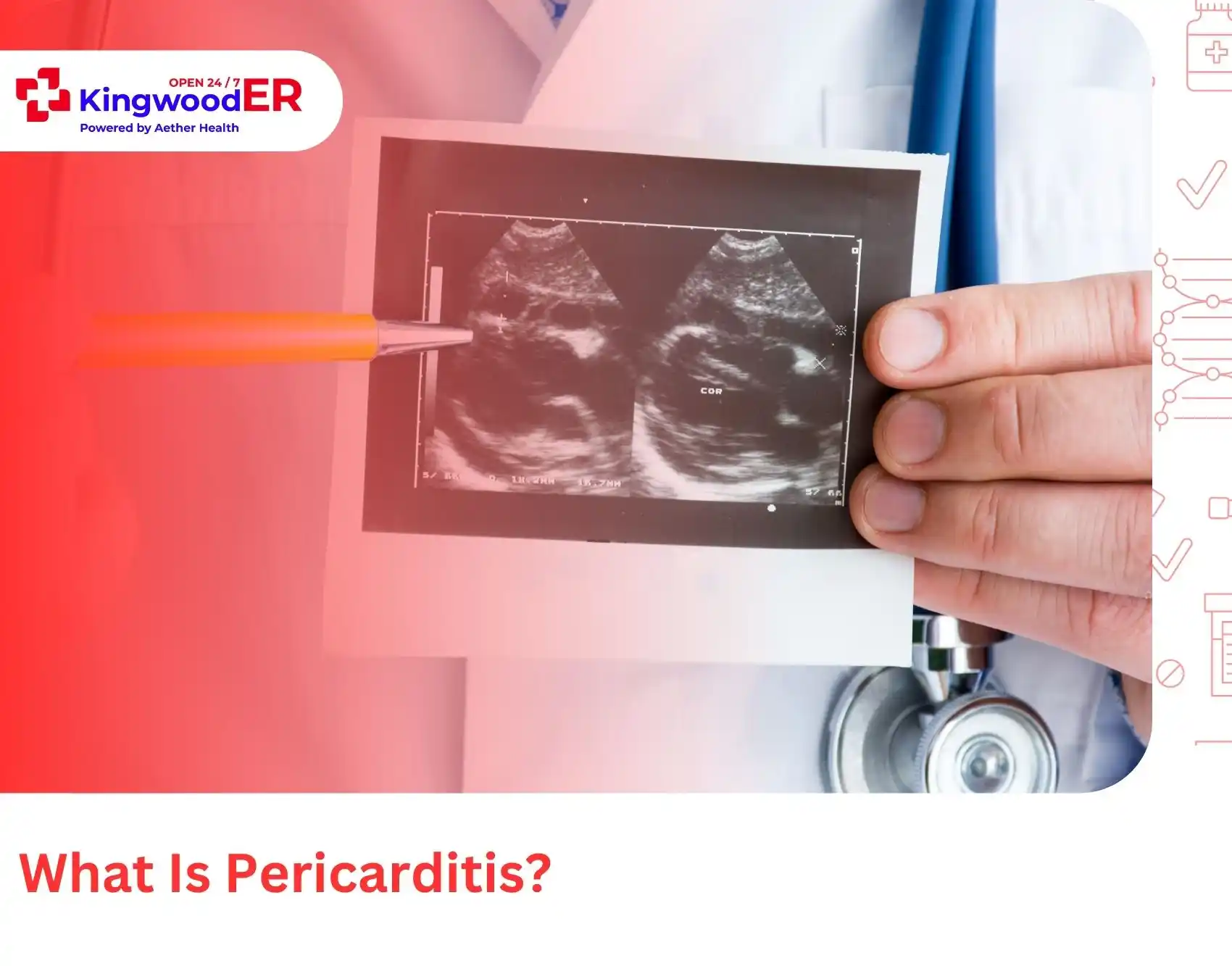
Pericarditis is inflammation of the pericardium, the thin two-layered sac that surrounds the heart. When the layers become inflamed, they rub against each other and the heart, producing sharp chest pain that often worsens with breathing, lying down, or swallowing.
Pericarditis is usually caused by a viral infection but can also follow a heart attack, result from autoimmune disease, develop after chest surgery, or appear with no identified cause.
What Is a Heart Attack?
A heart attack, or myocardial infarction, happens when blood flow to part of the heart muscle is blocked, usually by a clot in a coronary artery. The affected muscle begins to die within minutes. A heart attack is always a life-threatening medical emergency.
Heart attack risk rises with age, high blood pressure, high cholesterol, diabetes, smoking, obesity, and family history of coronary artery disease.
Pericarditis vs Heart Attack: How the Pain Compares
The pain of pericarditis is typically sharp and stabbing, worsens with breathing or lying flat, and improves when sitting up and leaning forward. Heart attack pain is usually a crushing pressure or squeezing sensation that does not change with breathing or position.
Pericarditis: sharp, stabbing, or pleuritic chest pain. Often one-sided or central. Worse with deep breaths, coughing, swallowing, or lying flat. Relief comes from sitting up and leaning forward.
Heart Attack: crushing pressure, squeezing, or heavy weight on the chest. Often radiates to the left arm, jaw, neck, back, or shoulder. The pain does not change with breathing or position.
For a broader look at the different types of chest pain and when each one is serious, our heart attack vs chest pain guide walks through the full differential.
Pericarditis Symptoms vs Heart Attack Symptoms

Pericarditis symptoms often include low-grade fever, dry cough, and fatigue following a recent viral illness. Heart attack symptoms include shortness of breath, sweating, nausea, lightheadedness, and a sense of impending doom, often appearing suddenly with the chest pressure.
Pericarditis symptoms often include: low-grade fever, dry cough, fatigue, muscle aches, and recent history of a viral infection. Pain may develop gradually over hours or days.
Heart attack symptoms often include: cold sweat, nausea or vomiting, shortness of breath, lightheadedness, pain radiating to the arm or jaw, and feelings of anxiety or doom. Onset is often sudden.
Women, older adults, and people with diabetes may have atypical heart attack symptoms, including just fatigue, nausea, or back pain without classic chest pressure.
A rapid or irregular heartbeat can also appear with pericarditis. If palpitations are a prominent part of your symptoms, our guide on signs of heart palpitations explains when palpitations are harmless versus when they need urgent care.
Pericarditis Causes vs Heart Attack Causes
Pericarditis causes are usually viral infection, autoimmune disease, kidney failure, cancer, or recent heart surgery. Heart attack causes come down to blocked coronary arteries from plaque buildup or sudden clot formation, with risk factors like high cholesterol, high blood pressure, smoking, and diabetes.
Pericarditis causes: viral infections (most common), bacterial or fungal infections, autoimmune diseases like lupus, kidney failure, cancer, radiation to the chest, recent heart surgery or heart attack (Dressler syndrome), and chest trauma.
Heart attack causes: coronary artery disease (plaque buildup narrowing arteries), sudden plaque rupture with clot formation, coronary artery spasm, and in rare cases, spontaneous coronary artery dissection.
How Doctors Tell Pericarditis and Heart Attack Apart
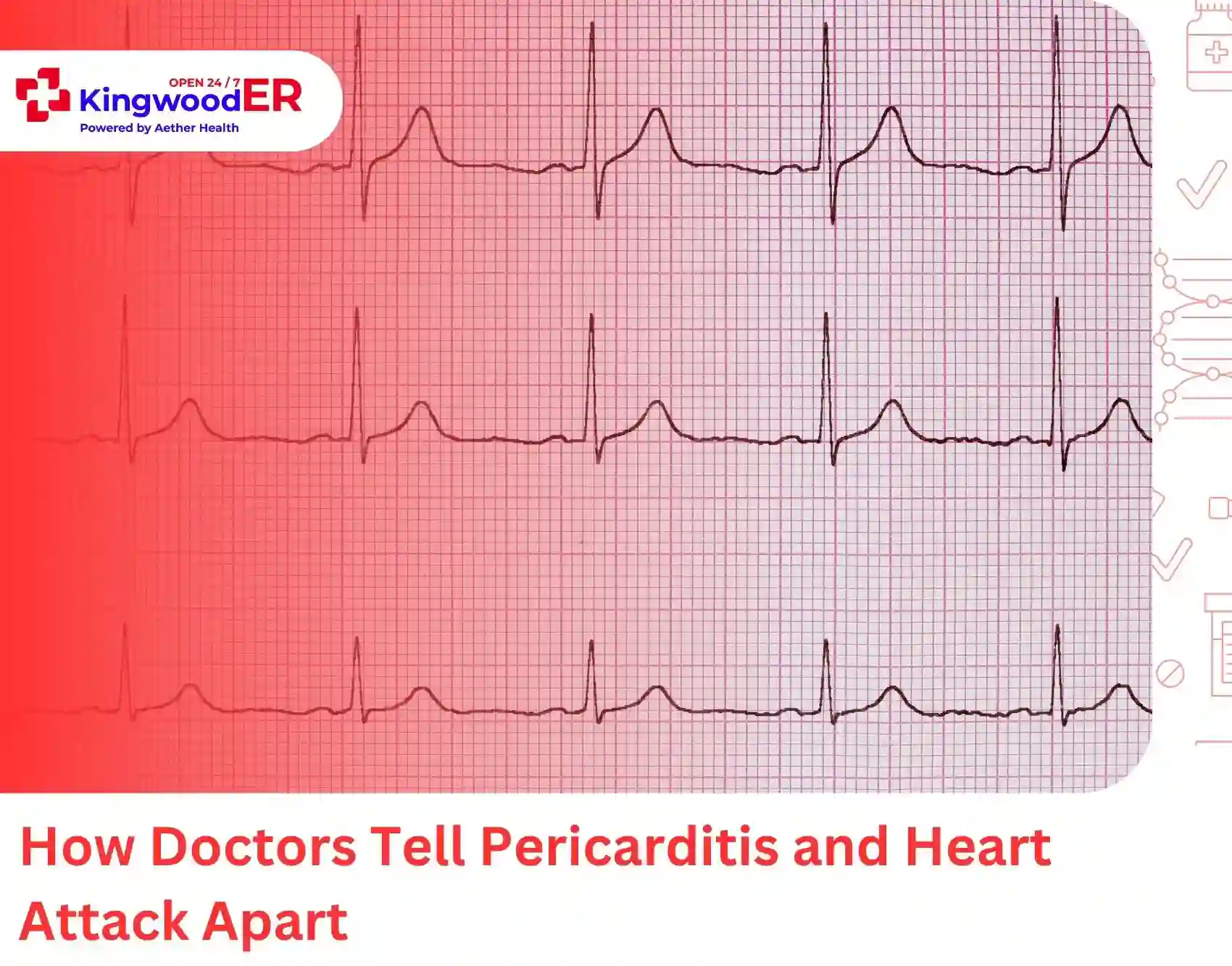
Doctors distinguish pericarditis from heart attack using an EKG, blood tests for cardiac enzymes, and chest imaging. Pericarditis typically shows widespread ST-segment elevation on EKG without the specific pattern of a heart attack, and cardiac enzyme levels help confirm the diagnosis.
The ER workup for chest pain usually includes:
- EKG to look for ischemia patterns (heart attack) or widespread changes (pericarditis)
- Blood tests for troponin and other cardiac enzymes released during muscle damage
- Chest X-ray to check for an enlarged heart (which can suggest pericardial fluid)
- Echocardiogram if pericardial effusion is suspected
- CT scan if dissection, pulmonary embolism, or another serious cause is possible
If pericarditis is accompanied by an irregular or rapid heartbeat, our emergency care for irregular heartbeat service page outlines how we evaluate and stabilize cardiac rhythm disturbances on-site.
For a patient-friendly clinical overview, the American Heart Association’s pericarditis page explains how the condition develops and what the diagnostic process involves.¹
What Does Pericarditis Treatment Involve?
Pericarditis treatment usually focuses on reducing inflammation, managing pain, and treating the underlying cause. Most cases of viral pericarditis resolve within a few weeks with rest and anti-inflammatory care. Severe cases involving fluid buildup around the heart may require hospitalization and procedural drainage.
Complications that can require immediate intervention include pericardial effusion (fluid buildup compressing the heart) and cardiac tamponade (life-threatening pressure on the heart). These are rare but need emergency evaluation.
If you want to understand how long cardiac-related chest pain can last and when it should prompt action, our guide on heart attack symptom duration walks through the timeline and warning signs.
When Pericarditis Chest Pain Needs Emergency Evaluation
Any new chest pain severe enough to make you consider the ER should be evaluated at the ER. Pericarditis chest pain and heart attack pain can look similar, and only testing can tell them apart safely. Delay risks missing a heart attack or a pericarditis complication like cardiac tamponade.
Come to the ER right away for any of the following:
- New or sudden severe chest pain
- Chest pain radiating to the arm, jaw, back, or neck
- Chest pressure or squeezing lasting more than a few minutes
- Chest pain with shortness of breath
- Chest pain with sweating, nausea, or lightheadedness
- Chest pain following a recent viral illness that is worsening or not improving
- Rapid or irregular heartbeat with chest pain
- Fainting or near-fainting with chest discomfort
If you have been diagnosed with pericarditis before and your symptoms are worsening or you develop shortness of breath, come in immediately. Recurrent pericarditis can be serious.
How Aether Health Kingwood ER Evaluates Chest Pain

Aether Health Kingwood ER provides 24/7 cardiac evaluation with on-site EKG, cardiac enzyme testing, chest X-ray, CT, and echocardiogram capability. Board-certified emergency physicians can distinguish pericarditis from heart attack within minutes and begin appropriate stabilization immediately for either condition.
Aether Health Kingwood ER is open 24 hours a day, 365 days a year. For suspected heart attack, treatment begins the moment you arrive, with direct hospital transfer available for cases needing cardiac catheterization. For pericarditis, we confirm the diagnosis, assess for complications, start treatment, and arrange cardiology follow-up before you leave.
For a deeper look at how pericarditis fits within the broader category of heart inflammation conditions, the National Heart, Lung, and Blood Institute’s heart inflammation guide provides the full clinical framework.²
Insurance & Billing
Aether Health Kingwood ER works with most major insurance plans. Call (713) 528-8703 or visit our Contact Us page to verify your specific coverage or get directions.
As required by Texas Health & Safety Code §254.155 (HB 2041), we disclose that this is a Freestanding Emergency Medical Care Facility. Our charges are comparable to a hospital emergency room and may include a facility fee. The federal No Surprises Act protects patients from unexpected billing during emergency care.
| Visit Aether Health Kingwood ER
Address: 2158 Northpark Dr, Kingwood, TX 77339 Phone: (713) 528-8703 Hours: Open 24 hours, 365 days a year No appointment needed. Walk-ins welcome. |
Frequently Asked Questions
How can I tell pericarditis vs heart attack at home?
You often cannot tell at home with certainty. Pericarditis chest pain usually eases when leaning forward and worsens when lying flat. Heart attack pain feels like crushing pressure and does not change with position. When unsure, go to the ER.
What are the main pericarditis causes?
The most common pericarditis causes are viral infections. Other causes include bacterial or fungal infections, autoimmune diseases, kidney failure, cancer, chest radiation, recent heart surgery, and chest trauma. Many cases have no identified cause.
How long does pericarditis last?
Acute pericarditis typically resolves within a few weeks with appropriate care. Some cases become recurrent or chronic, lasting months. Early diagnosis and pericarditis treatment reduce the risk of complications like fluid buildup.
Can pericarditis kill you?
Pericarditis itself is rarely fatal with timely care, but complications like cardiac tamponade (pressure on the heart from fluid buildup) can be life-threatening. This is why any suspected pericarditis chest pain deserves emergency evaluation.
Should I go to the ER for pericarditis symptoms?
Yes, if symptoms are new, severe, or worsening. Pericarditis symptoms overlap with heart attack symptoms, and only testing can safely distinguish them. Go to the ER for any new chest pain lasting more than a few minutes.