

A mini stroke (TIA) is a warning stroke that resolves within minutes to hours, but it signals that a full stroke may be coming within days or weeks. Even when mini stroke (TIA) symptoms disappear on their own, they are a medical emergency requiring immediate ER evaluation. This guide walks through mini stroke symptoms, TIA signs you should never ignore, and exactly what to do if you or someone near you experiences one in Kingwood.
What to Do First If You Suspect a Mini Stroke
Call 911 immediately if you suspect a mini stroke or stroke. Note the exact time symptoms started, because treatment options depend on that window. Do not drive the person yourself unless no other option exists. Even if symptoms disappear, you still need emergency evaluation.
Three steps that matter most in the first 10 minutes:
- Call 911 right away, even if symptoms seem to be improving
- Note the exact time symptoms began (write it down if possible)
- Keep the person safe, calm, and still until help arrives
For step-by-step guidance on helping someone through a suspected stroke event, our guide on what to do if someone is having a stroke provides the full first-response playbook.
What Is a Mini Stroke (TIA)?
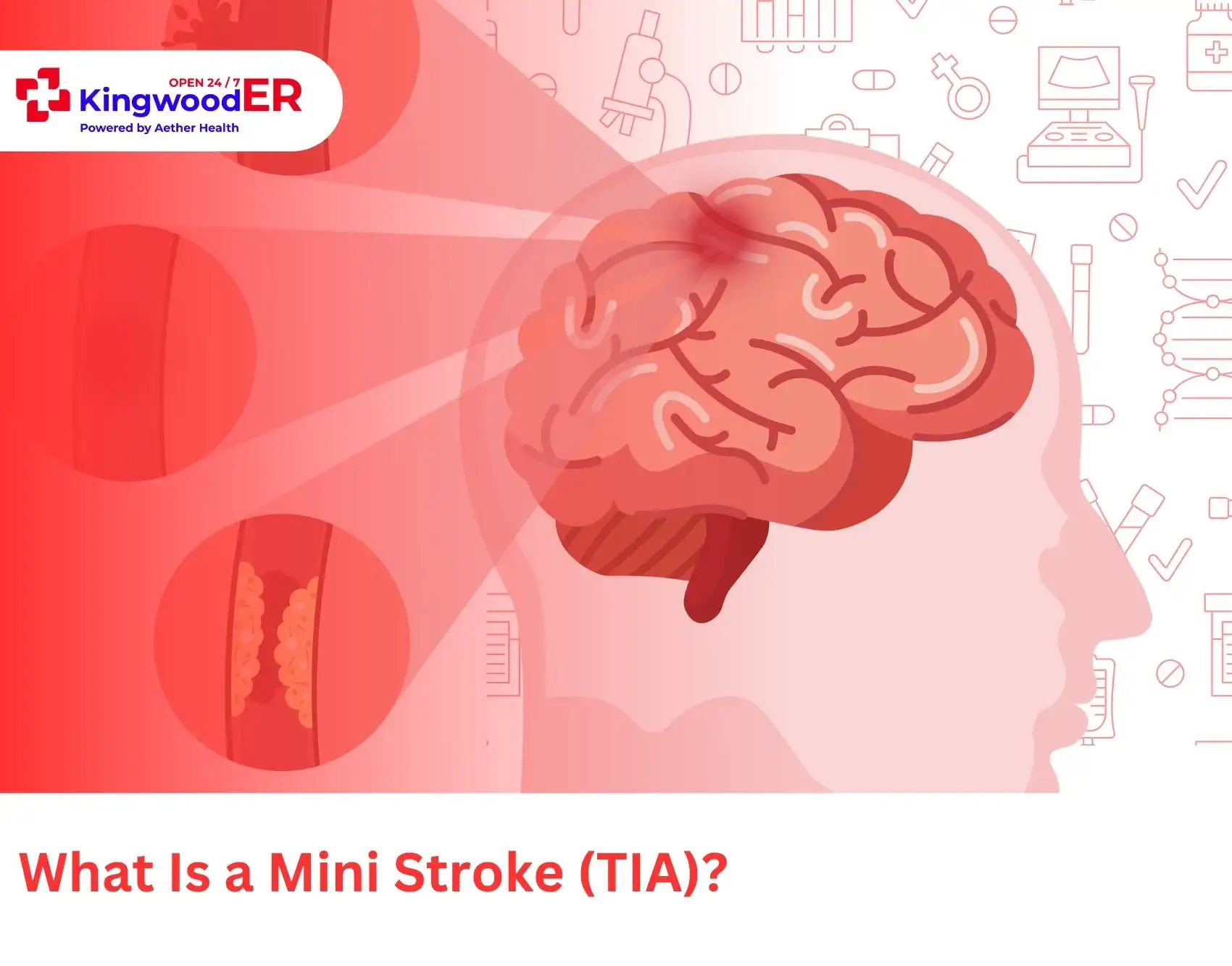
A mini stroke, medically known as a transient ischemic attack (TIA), is a temporary blockage of blood flow to part of the brain that typically resolves within an hour. Though symptoms fade, the TIA leaves a serious warning: without intervention, a full stroke often follows.
A TIA happens when a small blood clot briefly blocks a brain artery, then dissolves or moves on. Brain tissue is deprived of oxygen just long enough to cause symptoms but not long enough to cause permanent damage. About 1 in 3 people who experience a TIA will go on to have a full stroke, often within days.
TIA Signs: The BE FAST Warning Framework
TIA signs follow the BE FAST framework: Balance problems, Eye vision changes, Face drooping, Arm weakness, Speech difficulty, and Time to call 911. Learning this framework helps you identify a mini stroke in seconds, even when symptoms are fleeting or appear in isolation.
B : Balance
Sudden loss of balance, coordination, or ability to walk. Dizziness that is new, severe, or combined with other symptoms.
E : Eyes
Sudden vision changes in one or both eyes. May include double vision, loss of vision, or blurred vision that comes on without warning.
F : Face
Facial drooping, especially on one side. Ask the person to smile. If one side droops or looks uneven, this is a classic sign.
A : Arms
Weakness or numbness in one arm. Ask the person to raise both arms. If one drifts downward or cannot be lifted at all, this is a warning sign.
S : Speech
Slurred, garbled, or difficult speech. Ask the person to repeat a simple sentence. Inability to speak clearly, confusion, or trouble understanding you are all red flags.
T : Time
Time is brain. Call 911 immediately and note the exact time symptoms started. The treatment window for stroke is narrow, and every minute matters.
For the official stroke-sign recognition framework, the CDC’s signs and symptoms of stroke page explains the full set of warning signs and what to do.¹
Full List of Mini Stroke Symptoms

Mini stroke symptoms appear suddenly and typically resolve within an hour, though they can last up to 24 hours. The symptoms depend on which part of the brain was briefly deprived of blood flow, which is why presentations vary so widely from person to person.
Common mini stroke symptoms include:
- Sudden numbness or weakness in the face, arm, or leg (usually one side)
- Sudden confusion, difficulty understanding speech, or slurred speech
- Sudden vision loss or vision changes in one or both eyes
- Sudden difficulty walking, dizziness, loss of balance, or coordination problems
- Sudden severe headache with no known cause
- Brief loss of consciousness
- Difficulty swallowing
- Trouble finding the right words
Symptoms often last only 1 to 60 minutes. The brief duration is what makes TIA so dangerous. People assume everything is fine because symptoms resolve, missing the warning window to prevent a full stroke.
For a comprehensive clinical overview, the NIH NINDS page on Transient Ischemic Attack explains the condition in depth and the latest treatment approaches.²
Why Mini Stroke Warning Signs Matter Even When They Disappear
Mini stroke warning signs are the body’s most urgent alarm. About 1 in 3 people who ignore a TIA have a full stroke within days or weeks. Prompt evaluation after a TIA can reduce future stroke risk by up to 80 percent through targeted prevention and treatment.
A TIA is caused by one of several underlying problems that will not fix itself. These include:
- A blood clot forming elsewhere in the body (often the heart) and traveling to the brain
- Narrowing of the carotid arteries from plaque buildup
- An irregular heart rhythm like atrial fibrillation that promotes clot formation
- Narrowed small vessels within the brain itself
- Blood disorders that promote clotting
Blood clots are the mechanism behind most TIAs. For a deeper look at how clots form and why they can be life-threatening, see our guide on are blood clots life-threatening.
What Happens at the ER After a Mini Stroke (TIA)?
At the ER after a mini stroke (TIA), the medical team will perform rapid neurological exams, order brain imaging like CT or MRI, run blood work, and check for underlying causes with an EKG and carotid ultrasound. The goal is to identify the source and prevent a full stroke.
The standard workup typically includes:
- Neurological exam to assess brain function
- CT scan of the head to rule out bleeding and look for stroke signs
- Blood tests to check clotting function, blood sugar, cholesterol, and inflammatory markers
- EKG to look for atrial fibrillation or other heart rhythm problems
- Carotid ultrasound to assess the neck arteries that supply the brain
- Echocardiogram when a cardiac source of clots is suspected
- MRI when more detail about brain tissue is needed
If symptoms also include a seizure, our emergency treatment of seizures service page outlines how we handle neurological emergencies that overlap with stroke presentations.
Who Is at Risk for a Mini Stroke?
Risk factors for mini stroke include age over 55, high blood pressure, diabetes, high cholesterol, smoking, obesity, atrial fibrillation, family history of stroke, and personal history of previous TIA or stroke. Managing these risk factors is the foundation of stroke prevention after a TIA.
Risk factors you can modify:
- High blood pressure (the single biggest stroke risk factor)
- Smoking
- High cholesterol
- Diabetes (controlling blood sugar reduces risk)
- Obesity and inactivity
- Excessive alcohol use
- Untreated sleep apnea
Risk factors you cannot change include age, family history, prior stroke or TIA, and certain genetic conditions. These make the modifiable factors even more important to address.
How Aether Health Kingwood ER Handles a Suspected Mini Stroke
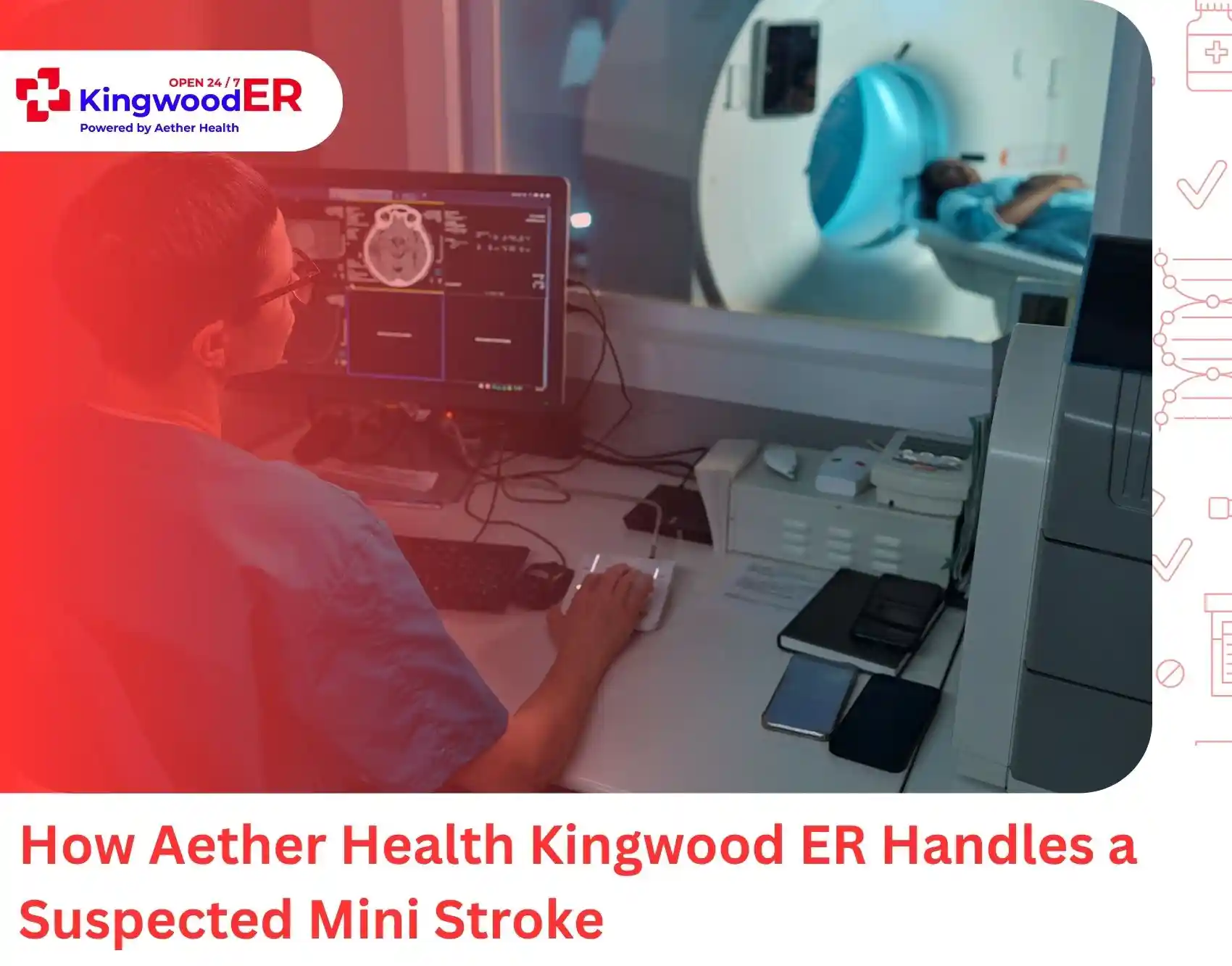
Aether Health Kingwood ER provides 24/7 stroke evaluation with on-site CT imaging, laboratory testing, EKG, and board-certified emergency physicians. For suspected mini stroke (TIA) or stroke, our team begins the full workup within minutes of arrival and coordinates immediate hospital transfer when higher-level care is needed.
Aether Health Kingwood ER is open 24 hours a day, 365 days a year. Time matters in stroke care because treatment options depend on how quickly you are evaluated. Our proximity to Kingwood, Humble, and Atascocita neighborhoods means faster access than a drive to Houston hospitals.
For a full list of conditions treated with 24/7 emergency capability, our severe emergencies page outlines what to expect during a critical visit.
Insurance & Billing
Aether Health Kingwood ER works with most major insurance plans. Call (713) 528-8703 or visit our Contact Us page to verify your specific coverage or get directions.
As required by Texas Health & Safety Code §254.155 (HB 2041), we disclose that this is a Freestanding Emergency Medical Care Facility. Our charges are comparable to a hospital emergency room and may include a facility fee. The federal No Surprises Act protects patients from unexpected billing during emergency care.
| Visit Aether Health Kingwood ER
Address: 2158 Northpark Dr, Kingwood, TX 77339 Phone: (713) 528-8703 Hours: Open 24 hours, 365 days a year For suspected stroke, call 911. For other emergencies, walk in anytime. |
Frequently Asked Questions
Can a mini stroke go away on its own?
Mini stroke symptoms resolve on their own within an hour in most cases. However, the underlying cause does not go away. Without medical evaluation, about 1 in 3 people who have a TIA will have a full stroke, often within days.
How long do mini stroke symptoms last?
Mini stroke symptoms typically last 1 to 60 minutes, though some can last up to 24 hours. Any sudden stroke-like symptoms that resolve are still a medical emergency and need immediate evaluation.
Can you have a mini stroke without knowing it?
Yes. Silent TIAs can cause minor symptoms people dismiss as fatigue, stress, or a bad headache. If you notice brief episodes of numbness, speech trouble, or vision changes, discuss them with a doctor.
What is the difference between a mini stroke and a stroke?
A mini stroke (TIA) causes temporary symptoms that resolve without permanent damage. A full stroke causes lasting brain damage because blood flow is blocked long enough to kill brain tissue. Both are medical emergencies.
Should I go to the ER if my mini stroke symptoms stopped?
Yes, absolutely. Even if TIA signs stop, you need emergency evaluation. The window to prevent a full stroke is narrow, and testing can identify the underlying cause so treatment can begin immediately.