
Reviewed by the emergency care team at Aether Health – Kingwood ER | 2158 Northpark Dr, Kingwood, TX 77339 | +1 (713) 528-8703
| Call 911 immediately: If your child has any fever with seizure, difficulty breathing, extreme lethargy or unresponsiveness, stiff neck, purple or non-fading rash, or bluish lips – call 911 now. For any fever in a baby under 3 months, go directly to Kingwood ER. Open 24/7 at 2158 Northpark Dr, Kingwood, TX 77339. |
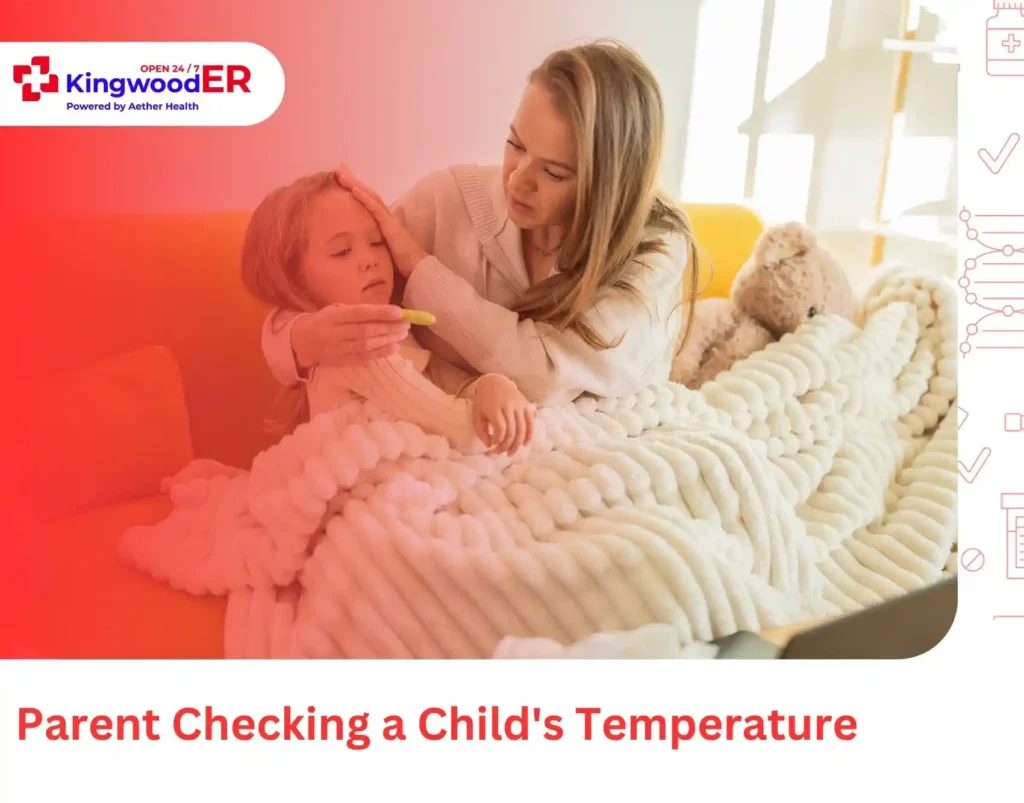
It is 2 AM. Your child is warm to the touch, cheeks flushed, and the thermometer just showed a number that makes your stomach drop. This guide walks through exactly what to do: how to take an accurate temperature, how to read your child’s behavior, safe comfort measures at home, and the clear signs that mean it is time to visit an ER.
Step 1: Take an Accurate Temperature
A rushed or incorrect reading can be off by a full degree, which changes the plan.
Best Method by Age
- Under 3 months: Rectal only. Forehead and ear methods are unreliable at this age.
- 3 months to 4 years: Rectal remains most reliable, with forehead or temporal artery as a reasonable backup.
- 4 years and older: Oral, forehead, or ear methods all work well.
Common Mistakes
Taking a reading right after a warm bath or being wrapped in blankets, using an ear thermometer on a baby under 6 months, and adding a degree to a reading “to be safe” (modern devices are already calibrated).
What Counts as a Fever
A fever is a temperature of 100.4°F (38°C) or higher. The commonly repeated “98.6°F is normal” is a myth. Normal body temperature actually ranges from about 97°F to 99°F throughout the day. Focus on 100.4°F as the threshold, not 98.6°F.
Step 2: Assess How Your Child Is Acting
Behavior matters more than the number on the thermometer. A child with a 103°F fever who is smiling and sipping juice is doing better than a child with a 101°F fever who is listless and refusing to drink.
Five Things to Observe
- Alertness: Responsive to their name, making eye contact
- Fluid intake: Taking sips of water, breastmilk, or formula, with regular wet diapers
- Comfort: Can they be soothed by being held or a favorite show
- Breathing: Normal, or fast, labored, or noisy
- Color: Normal, or pale, mottled, or bluish
A child who is difficult to wake, unusually limp, refusing all fluids, or breathing hard is more concerning than a child with a higher fever who is otherwise interactive. Trust your instincts. You know your child’s baseline better than any thermometer.
Step 3: Comfort Care at Home
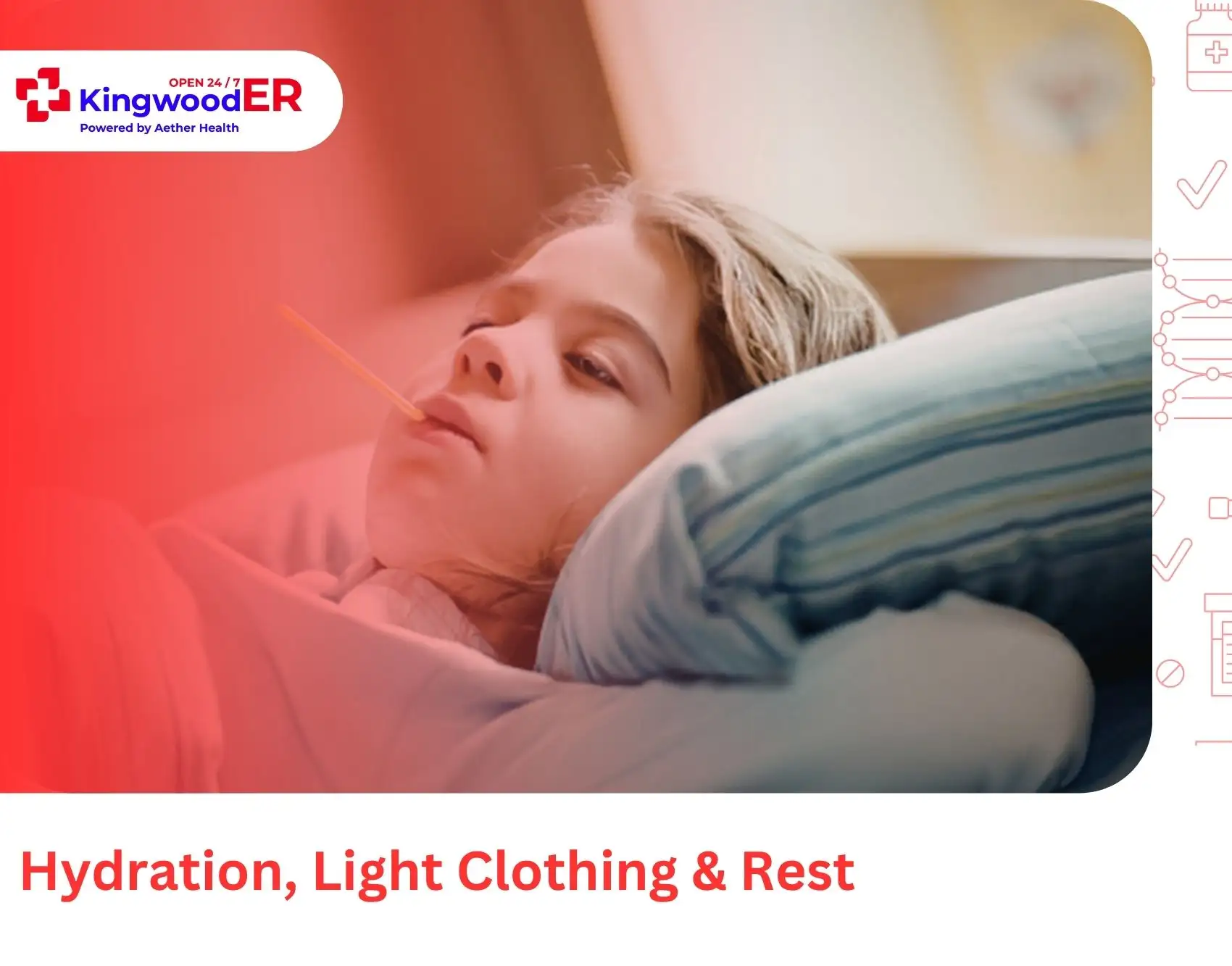
For most fevers between 100.4°F and 102°F, comfort care at home is the right response. The goal is not to eliminate the fever but to help your child feel better while their body fights the illness.
Cool the Environment, Not the Body
Keep the room around 68 to 72°F. Dress your child in light, breathable clothing. Never bundle a feverish child in heavy layers thinking it will sweat out the fever. Excess layering traps heat and drives the temperature higher.
Hydration Matters
Fever increases fluid loss through sweating and faster breathing. Offer small, frequent sips of water for children over 6 months, breast milk or formula for babies, or clear broths and popsicles for kids who resist drinking. Aim for at least one wet diaper or bathroom trip every 6 to 8 hours. A sticky mouth, sunken eyes, no tears when crying, or lethargy point to dehydration.
Rest and Calm Surroundings
Sleep is one of the body’s most effective tools for fighting infection. Let your child rest as much as they want, and avoid busy environments or activities during a fever.
Step 4: Know When Home Care Is Not Enough
Escalate to your pediatrician or the ER when:
- Fever climbs above 102.2°F combined with other severe symptoms
- Fever lasts more than 2 to 3 days without improvement
- Fever returns after seeming to resolve
- Behavior worsens even as the number comes down
- New symptoms appear, such as a rash, breathing changes, or a stiff neck
- Your child refuses all fluids or shows signs of dehydration
- Persistent vomiting accompanies the fever
- Your gut tells you something is off
A short evaluation ends in either reassurance or early treatment of something more serious. Waiting rarely helps.
Child Fever by Age: What Warrants a Visit
Under 3 Months
No home threshold applies. Any fever of 100.4°F or higher means go directly to the ER.
3 to 6 Months
Below 101°F with normal behavior is generally manageable at home with pediatrician guidance. Above 102.2°F, or any fever with concerning symptoms, means come to the ER.
6 Months to 2 Years
Below 102°F with normal behavior is usually manageable. Fever lasting more than 2 days warrants a pediatrician call. 104°F or higher, or fever with red-flag symptoms, means come to the ER.
2 to 12 Years and Teens
Below 102°F (below 103°F for teens) with normal behavior is typically manageable at home. 104°F or higher, or any red-flag symptom, means come to the ER regardless of age.
Behavior beats numbers at every age. A child in the home-manageable range who is acting seriously off may still need evaluation, and a child with a higher fever who is playing normally may just need continued monitoring.
When to Come to Kingwood ER
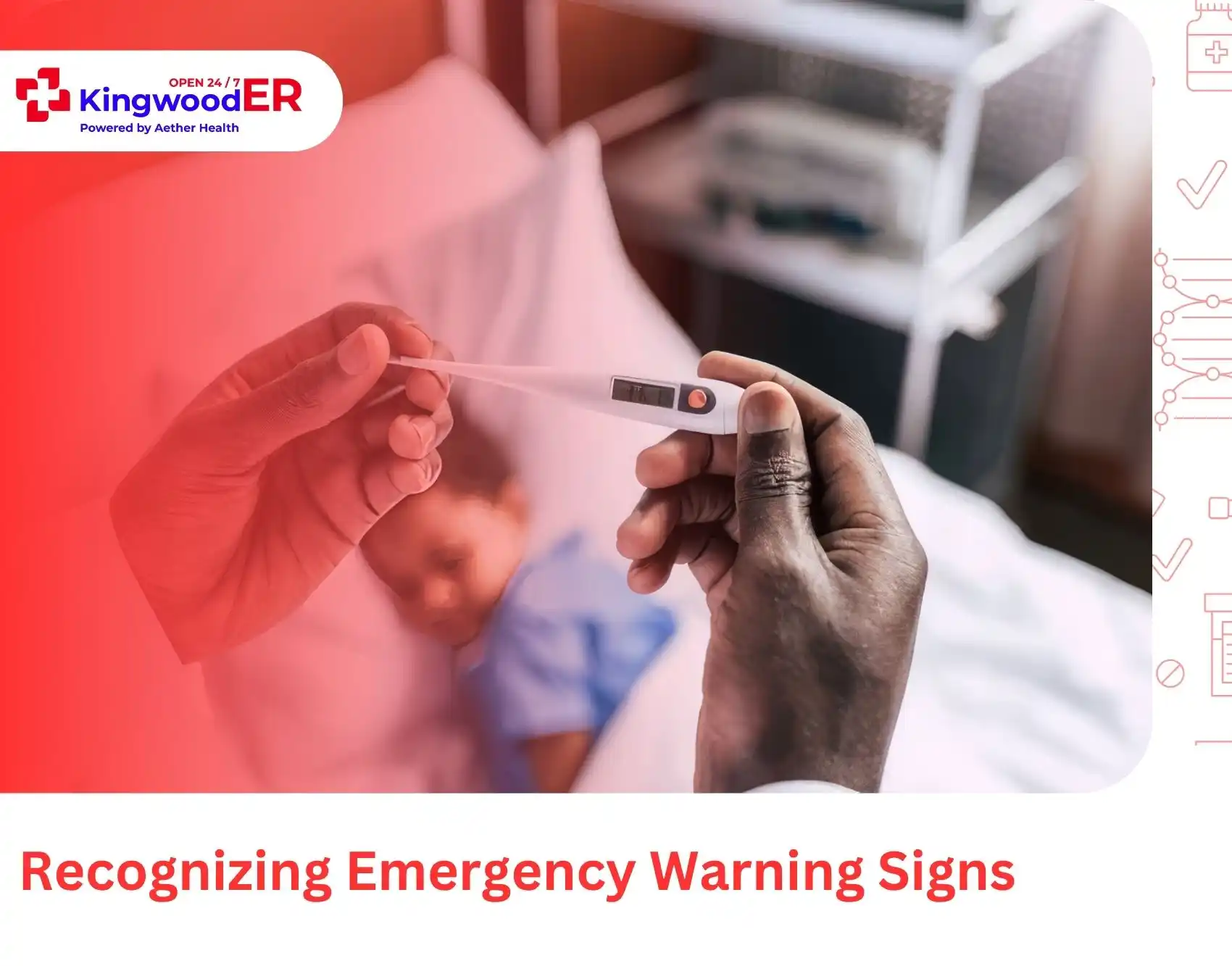
Come to the ER right away for any of the following:
- Any fever of 100.4°F or higher in a baby under 3 months
- Fever above 104°F that will not come down
- Fever with a seizure or convulsion
- Fever with a stiff neck, severe headache, or a bulging soft spot in an infant
- Fever with difficulty breathing, blue lips, or unusual breathing patterns
- Fever with extreme lethargy, difficulty waking, or unresponsiveness
- Fever with a rash that does not fade when pressed
- Fever with persistent vomiting or signs of dehydration
- Fever in a child with a serious underlying condition
- Any child who looks or acts seriously ill, regardless of temperature
For a closer look at what emergency-level fever care involves, see our high fever emergency care page.
What Evaluation at Kingwood ER Involves
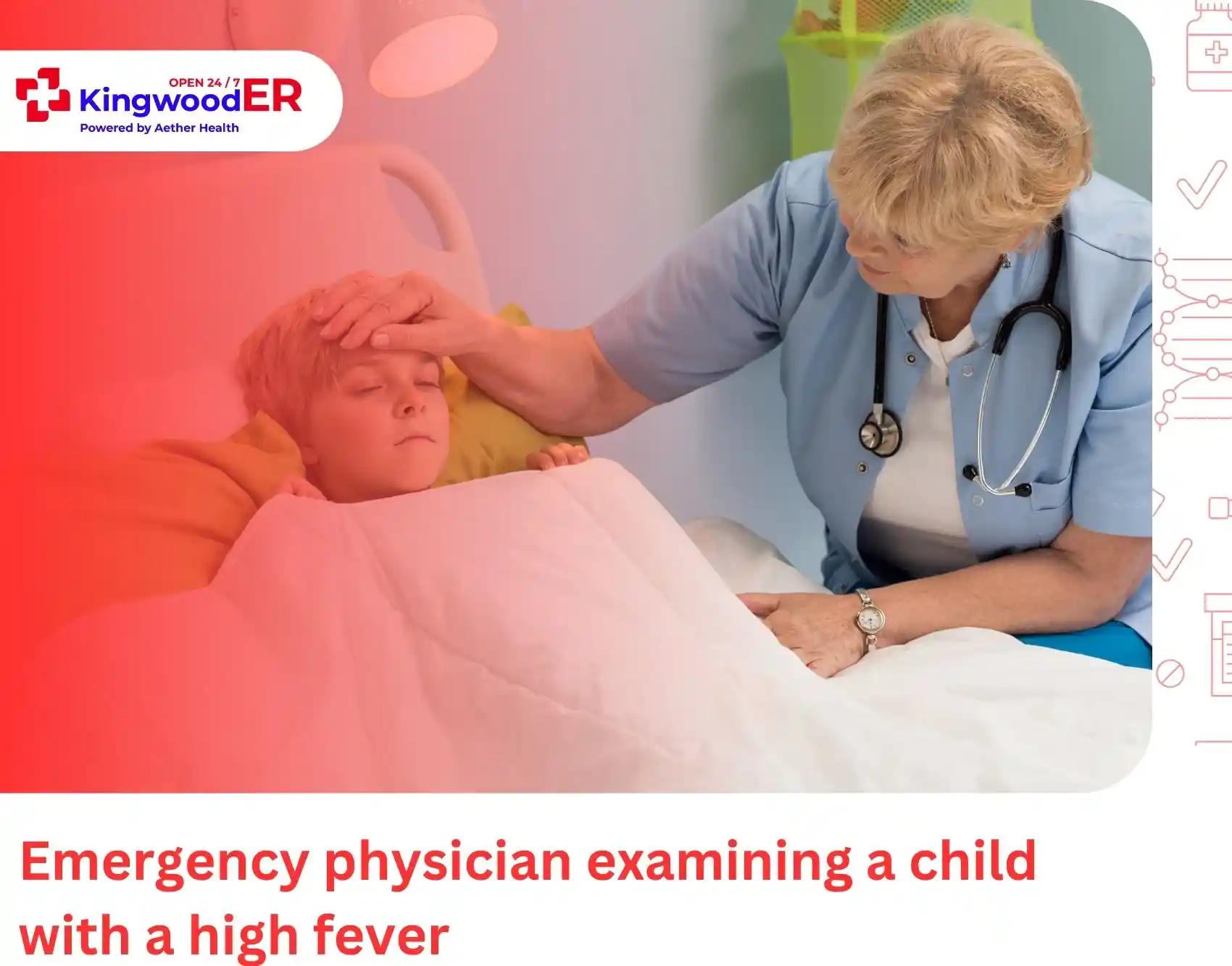
Evaluation begins within minutes of arrival. A board-certified emergency physician checks vital signs, performs a focused pediatric exam, assesses hydration, and identifies the likely source. On-site rapid testing for strep, flu, RSV, and COVID helps narrow the cause quickly, and if a serious infection is suspected, full lab work and imaging can run without leaving the building through our pediatric emergency care services.
What to Expect
Vital signs and a focused exam within minutes of arrival, a hydration and behavior assessment, rapid on-site infection testing when relevant, full lab work for concerning cases, on-site imaging if needed to rule out complications, and coordinated pediatrician follow-up when you leave.
Most straightforward child fever evaluations complete within 1 to 2 hours. Complex cases may take longer if extended observation or advanced imaging is needed.
Visit Us
Address: 2158 Northpark Dr, Kingwood, TX 77339
Phone: (713) 528-8703
Hours: Open 24/7, 365 days a year
Website: kingwooder.com
Serving Kingwood, Humble, and Atascocita. Walk-ins are always welcome, and online check-in is available before you arrive.
[CALL NOW: (713) 528-8703] [ONLINE CHECK-IN] [GET DIRECTIONS]
Frequently Asked Questions
What do you do first when a child has a fever?
Take an accurate temperature using the correct method for their age, then assess how they are acting. Behavior tells you more than the number. Provide comfort care at home for mild to moderate fevers, and know the red flags that mean it is time to come in.
When should you take a child to the ER for a fever?
For any fever in a baby under 3 months, fever above 104°F that will not come down, fever with a seizure, difficulty breathing, a stiff neck, extreme lethargy, a non-fading rash, or signs of severe dehydration.
Is 103°F fever dangerous in a child?
A fever of 103°F is uncomfortable but not automatically dangerous in an otherwise well-appearing child over 6 months. What matters more is behavior: alert and drinking is reassuring, while lethargic or breathing hard means come in.
What does a normal temperature range look like for kids?
Normal body temperature varies from about 97°F to 99°F throughout the day. A fever begins at 100.4°F. Readings between 99°F and 100.4°F are elevated but not clinically a fever.