

Reviewed by the emergency care team at Aether Health – Kingwood ER | 2158 Northpark Dr, Kingwood, TX 77339 | +1 (713) 5288703
| Call 911 immediately: For severe allergic reactions with swelling of the face, lips, or throat, difficulty breathing or swallowing, sudden dizziness or fainting, or widespread hives with breathing changes — call 911 now. If you have a prescribed epinephrine autoinjector, use it as your allergist has directed. Kingwood ER is open 24/7 at 2158 Northpark Dr, Kingwood, TX 77339. |
If you live in Kingwood, allergy season is not really a season. It is almost the whole year. Cedar fever hits in January, oak pollen coats every car in March, grass and weed pollen overlap through spring and summer, and ragweed makes fall miserable. Most of the time, pollen allergy symptoms are manageable at home. But they can also mimic other conditions, worsen underlying asthma, and in rare cases progress to anaphylaxis. This guide covers what to look for, Kingwood’s pollen calendar, and when symptoms mean it is time to come to Kingwood ER.
Why Kingwood Has One of the Longest Allergy Seasons in Texas
Warm, humid air holds pollen and mold spores longer than dry climates. Mature oak canopy dominates the community, cedar trees release dense pollen in winter, and grass, ragweed, and mold overlap through the warmer months. Gulf Coast storms redistribute mold spores with every rain.
Four factors drive this: a long growing season that keeps pollen-producing plants active longer than in colder climates, a wide species mix of cedar, oak, ragweed, and grass that leaves little relief between triggers, humidity that keeps pollen airborne, and storm cycles that disperse pollen fragments and mold.
Common Pollen Allergy Symptoms

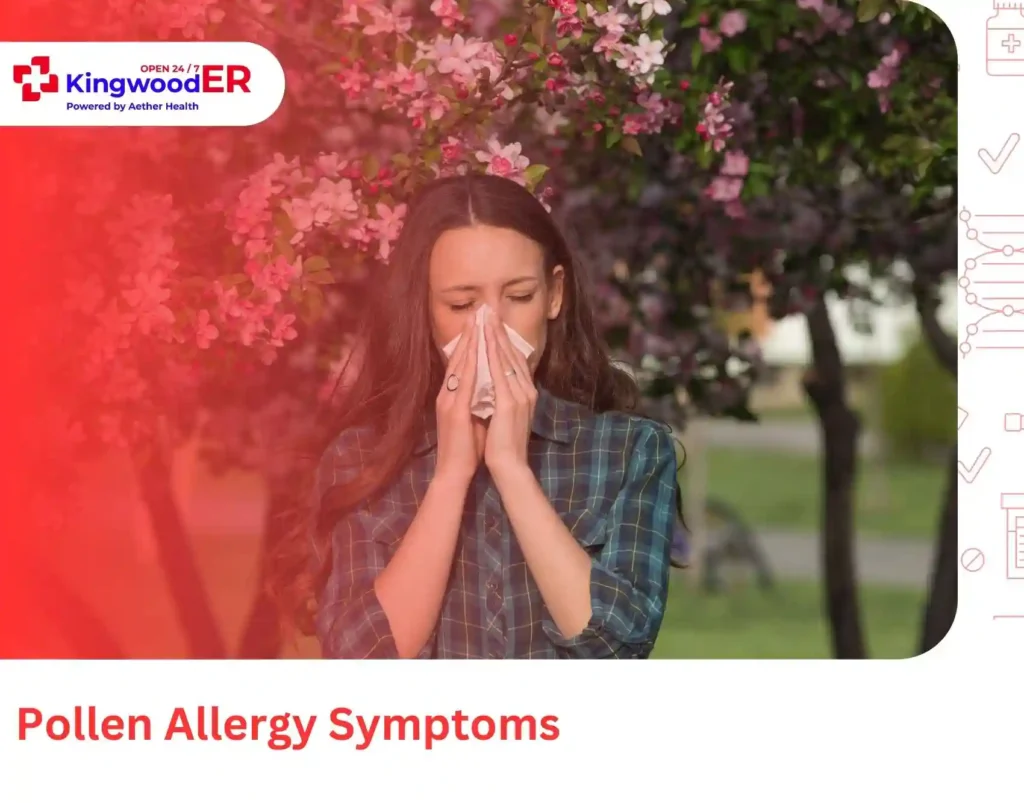
Pollen allergy symptoms happen when the immune system reacts to airborne pollen as if it were harmful, causing inflammation in the nose, sinuses, eyes, throat, and sometimes the lungs. Symptoms typically affect both sides, come and go with exposure, and improve when you avoid the outdoors.
Watch for sneezing in rapid bursts, a runny nose with clear thin discharge, nasal congestion, itchy nose, eyes, throat, or ears, watery or red eyes, postnasal drip with a mild cough, sinus pressure or mild headache, fatigue, reduced sense of smell or taste, trouble sleeping from congestion, dark circles under the eyes, and worsening symptoms in people who have asthma.
If symptoms are one-sided, come with fever, or last more than a few weeks despite pollen levels dropping, they may not be allergies at all.
Kingwood’s Pollen Calendar
- Winter (December to February): Cedar dominates, producing intense congestion, fatigue, sinus pressure, and general malaise that can feel flu-like despite no infection.
- Early spring (February to April): Oak, elm, and ash pollen coat every surface, triggering intense sneezing, itchy eyes, and congestion.
- Late spring and summer (April to September): Grass pollens including Bermuda, Bahia, and Johnson grass cause prolonged runny nose and symptoms that flare after mowing.
- Fall (August to November): Ragweed and mold trigger sneezing bursts, congestion, and worsening asthma after every rain.
- Year-round: Mold spores stay elevated constantly, with spikes after storms, causing chronic congestion, headache, and fatigue, especially indoors with poor ventilation.
Many local weather apps publish daily pollen counts. Tracking which pollens spike alongside your worst symptoms over a season or two can help identify your specific triggers.
Pollen Allergy vs. Cold vs. Sinus Infection
These three conditions share congestion and general misery but have different causes, and treating the wrong one wastes time and can worsen symptoms. Sinus infections in particular are one of the many conditions our emergency services are equipped to evaluate and treat alongside allergy complications.
Pollen Allergy
Sudden onset during pollen exposure, lasting weeks to months on a seasonal pattern, no fever, clear thin mucus, prominent itching in the nose, eyes, and throat, and mild sinus pressure. Not contagious.
Cold
Gradual onset over 1 to 3 days, lasting 7 to 10 days, occasional low-grade fever, mucus that may thicken over time, rare itching, and uncommon facial pain. Contagious.
Sinus Infection
Often follows a cold or allergy flare, lasting 10 or more days and often worsening after day 5. Fever is common, sometimes above 101°F, mucus turns thick yellow or green, itching is rare, and facial pain is significant, especially worse leaning forward.
If your symptoms match the pollen allergy pattern but you also develop thick colored mucus, fever, or severe facial pain, you may have a sinus infection layered on top of your allergies. This combination is common in Kingwood during cedar and oak season and often needs evaluation.
Severity Levels: When Pollen Allergies Cross the Line
Mild
Occasional sneezing, mild runny nose, mild itchy eyes, not disrupting sleep or activities. Pollen avoidance and home care are appropriate.
Moderate
Daily symptoms interfering with sleep, work, or activities, including congestion, drainage, itching, and fatigue. Worth discussing with your primary care provider, with allergy testing as an option.
Severe
Symptoms not responding to standard home measures, worsening asthma, chronic sinus infections, and significant impact on quality of life. Warrants allergist evaluation and long-term management planning.
Emergency
Severe asthma attack, anaphylaxis, throat swelling, or difficulty breathing. Come to Kingwood ER immediately, or call 911 if severe.
When Pollen Allergies Become an Emergency

Pollen allergies themselves are rarely an emergency, but they can trigger or overlap with conditions that are.
Severe Asthma Exacerbation
Pollen exposure can trigger significant asthma attacks in people with underlying asthma. Warning signs include struggling to complete a full sentence between breaths, rapid breathing or wheezing that will not calm, bluish lips or fingernails, and chest tightness with confusion or drowsiness. A severe attack is a medical emergency. Do not wait to see if it improves. Our breathing problems emergency care team treats allergy-triggered respiratory distress around the clock.
Anaphylaxis
Anaphylaxis is a life-threatening whole-body allergic reaction. While pollen alone rarely causes it, pollen exposure can be part of a combined trigger, and people with pollen-food syndrome can react seriously to certain foods during pollen season. Symptoms include swelling of the face, lips, tongue, or throat, difficulty breathing or swallowing, hives spreading over the body, sudden dizziness or fainting, a rapid pulse with lightheadedness, and nausea or vomiting alongside the above. Call 911 immediately if these appear. Emergency evaluation is essential even if symptoms initially seem to improve, because reactions can return in a second wave.
Sinus Complications
Long-standing pollen allergy inflammation can develop into sinus infections needing medical care. Warning signs include thick yellow or green mucus for more than 10 days, severe facial pain with fever, vision changes, eye swelling or pain, confusion or severe headache, and fever above 101.5°F. These can signal complications that warrant prompt evaluation with on-site diagnostic imaging, which allows us to check for deeper sinus or orbital involvement the same day.
When to Come to Kingwood ER
Home Care First
Mild to moderate symptoms usually respond well to staying indoors during peak pollen hours, showering and changing clothes after being outdoors, keeping windows closed on high pollen days, using an air purifier with a HEPA filter, and rinsing sinuses with saline solution.
See Your Primary Care Provider or an Allergist When
Symptoms are moderate to severe and interfere with daily life, home care is not helping, underlying asthma is worsening, symptoms last most of the year, or you want allergy testing to identify specific triggers.
Come to the ER Immediately For
Difficulty breathing or swallowing, swelling of the face, lips, tongue, or throat, a severe asthma attack that is not improving, hives spreading rapidly over the body, fainting or severe dizziness with a rapid pulse, signs of anaphylaxis affecting multiple body systems at once, or sinus symptoms with vision changes, eye swelling, or severe headache.
What Evaluation at Kingwood ER Involves
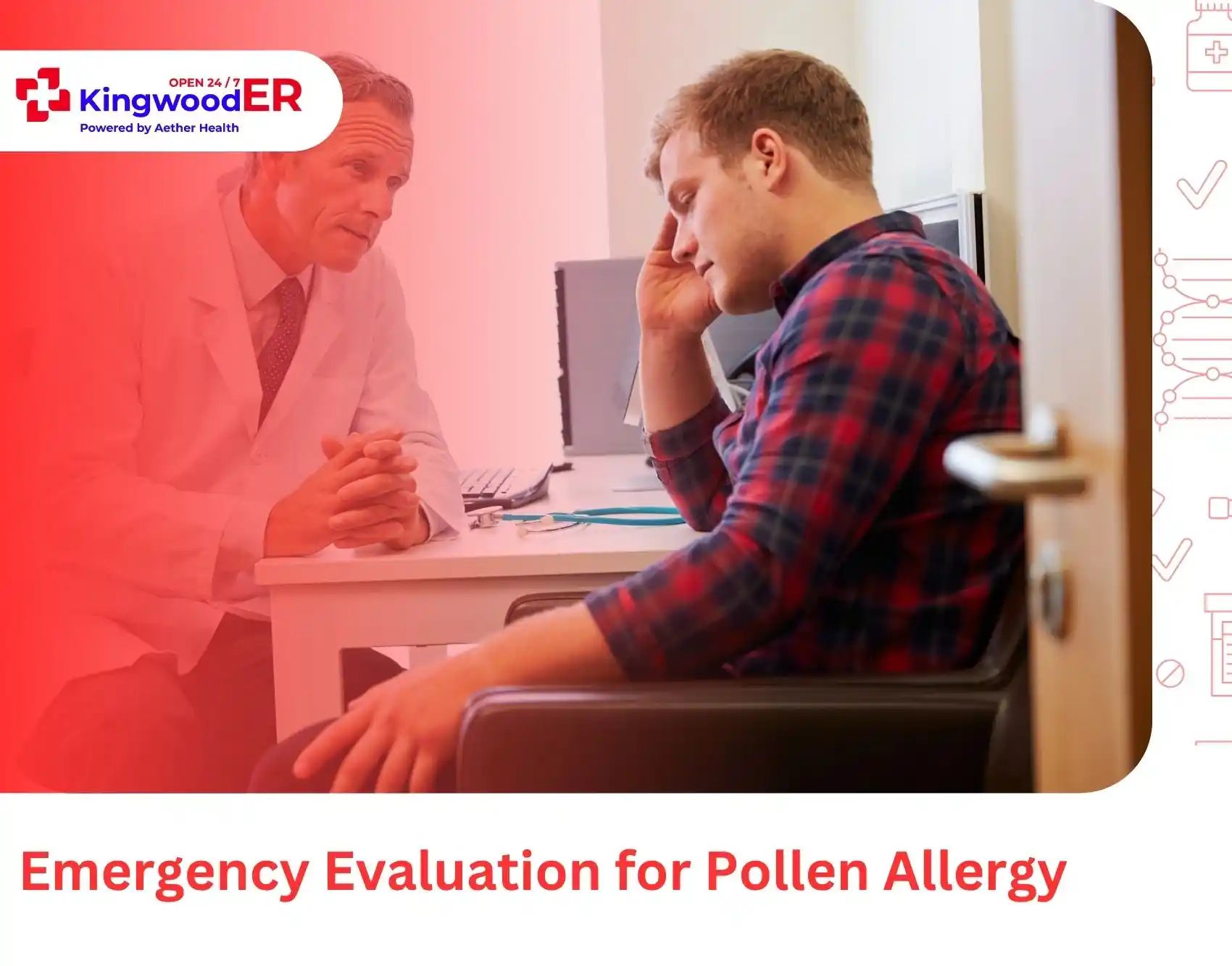
Evaluation of an allergy-related emergency starts within minutes. Our approach to emergency care means a board-certified emergency physician checks vital signs, assesses breathing, evaluates airway swelling, and stabilizes any acute reaction, while explaining every step along the way. For asthma flares, breathing support is available on-site, and for anaphylaxis, full emergency stabilization capabilities are on hand.
What to Expect
Immediate airway and breathing assessment, vital sign and oxygen monitoring, on-site rapid testing if infection is suspected, full lab work when needed, on-site imaging for suspected sinus complications, an observation period after any severe reaction since symptoms can return in a second wave, and clear discharge instructions with coordinated follow-up.
Most non-emergency allergy visits are completed within 1 to 2 hours. Severe reactions may require longer observation to ensure stability before discharge.
Visit Us
Address: 2158 Northpark Dr, Kingwood, TX 77339
Phone: (713) 528-8703
Hours: Open 24/7, 365 days a year
Website: kingwooder.com
Serving Kingwood, Humble, and Atascocita. Walk-ins are always welcome, and online check-in is available before you arrive.
[CALL NOW: (713) 528-8703] [ONLINE CHECK-IN] [GET DIRECTIONS]
Frequently Asked Questions
What are the most common pollen allergy symptoms?
Sneezing, runny nose with clear discharge, nasal congestion, itchy or watery eyes, itchy nose or throat, postnasal drip, mild cough, sinus pressure, and fatigue. Symptoms flare during pollen exposure and improve with avoidance.
When is pollen allergy season in Kingwood, TX?
Kingwood has pollen exposure nearly year-round. Cedar peaks December through February, oak February through April, grass April through September, and ragweed August through November. Mold spores stay elevated year-round with spikes after storms.
How do I know if it is a pollen allergy or a cold?
Pollen allergies cause clear, thin mucus, no fever, prominent itching, and symptoms that come and go with exposure. Colds cause mucus that may thicken, sometimes a low-grade fever, minimal itching, and last about 7 to 10 days.
Can pollen allergies cause an emergency?
Rarely, but yes. Severe asthma attacks triggered by pollen exposure and anaphylaxis both require emergency care. Symptoms include difficulty breathing, throat swelling, rapid pulse, and loss of consciousness. Call 911 if these appear.
What is cedar fever and is it really a fever?
Cedar fever is the name for intense allergic reactions to mountain cedar pollen during Texas winters. Despite the name, it does not usually cause a true fever above 100.4°F. Symptoms include severe congestion, fatigue, sinus pressure, and general malaise that can feel flu-like.