

Suffering from constant bad breath that is not getting better even after brushing or rinsing? Then this might be due to the tonsils. Many people, after experiencing the signs of tonsils, have this confusion about how to check for tonsil stones or how to be sure that the pain happening is due to tonsil stones.
It is important to know that many people have tonsil stones and live their lives normally without being aware of it. This is because they are not dangerous, but it is important to know their early signs so that you can take the right care on time.
Based on the common issues noticed by people, checking only a few signs can give you a rough idea about whether you have tonsil stones or not. However, if you constantly feel uncomfortable, smell bad, and face issues while swallowing food, then it is important to seek medical assistance.
In this blog, we will illustrate how to check whether you have tonsil stones or not, so that you can take the right precautionary steps on time.
What Are Tonsil Stones?
Tonsil stones are small lumps that are hard and form in the folds of your tonsils. Your tonsils have tiny pockets called crypts. These pockets trap dead skin cells, food bits, bacteria, and mucus over time. When that trapped material builds up and hardens, it turns into what looks like small white or yellowish pebbles sitting on the surface of the tonsils.
Most are tiny, barely the size of a small pea or even smaller. Some grow a little bigger. How much trouble they cause usually depends on their size and where they are sitting inside the tonsil.
If you’re unsure about what you’re seeing or experiencing persistent discomfort, the experienced team at ER of Kingwood can provide prompt evaluation, accurate diagnosis, and professional care to help identify and manage tonsil stones effectively.
What Causes Tonsil Stones?
Tonsil stones can happen suddenly due to different reasons. It is important to know about these reasons so that you can avoid them. Tonsil stones can appear in different ways, such as some might notice them in an uneven texture. Despite brushing your teeth regularly, it can appear.
Poor Oral Hygiene
Having poor oral health is one of the most common reasons why a tonsil stone can appear. When bacteria build up in the mouth, more of it ends up stuck in the tonsil pockets. These stuck bacteria cannot be removed with brushing, flossing, and rinsing, as it gets trapped.
Throat Infections
Suffering from repeated infections in the throat is another major factor in tonsil stones. People who suffer from tonsillitis often get tonsil stones more quickly. Since the infection is repeated, it might leave a scar behind that starts affecting the tonsil pockets.
Mucus
When the mucus starts dripping down, it might also cause tonsil stones. It happens mostly during allergy seasons or when the sinus causes issues. When the mucus comes back, it starts bringing back the extra infected material and starts building up issues.
Having Dry Mouth
Constantly having a dry mouth might also be a reason for tonsil stones. This is because the saliva might naturally wash away the debris in the mouth, and when the mouth becomes dry, the cleaning process decreases, and the material starts sitting long.
Not sure if it’s tonsil stones or strep throat? Learn the difference in How Long Is Strep Throat Contagious? Symptoms, Duration, Testing & When to Seek Care.
How to Check for Tonsil Stones
Checking for tonsil stones can be easy; it might just require a mirror from which you can check your mouth from the inside. Open your mouth wide open, and with the help of a torch or light, tilt your head. Check for two fleshy lumps on either side at the back of your throat.
Moreover, if you see small white or pale yellow spots in the folds or on the surface, then it might be tonsil stones. At times, the tonsil stones are not easy to detect, so they may require an additional medical examination, such as diagnostic imaging. Healthcare providers can easily identify them
Signs You Might Have Tonsil Stones
There are a few common signs that confirm whether you have tonsil stones or not. Noticing these symptoms gives you a hint to check for tonsil stones in more detail, as they are high chance of having them.
Below are a few common signs that you might be having tonsil stones:
- Bad Breath that does not go away
- White or yellow marks on the throat
- Low-level irritation in the throat
- Different tastes of food
- Mild discomfort in the throat while swallowing food
How Long Do Tonsil Stones Last?
The table below illustrates details on how long a tonsil stone lasts.
| Stone Size | How Long It Last | Goes Away on Its Own? |
| Very small | A few days to a week | Yes |
| Small to medium | One to a few weeks | Sometimes |
| Large | Weeks to months | Not common |
| Deep or hidden | Months or longer | Not common |
Do Tonsil Stones Go Away on Their Own?
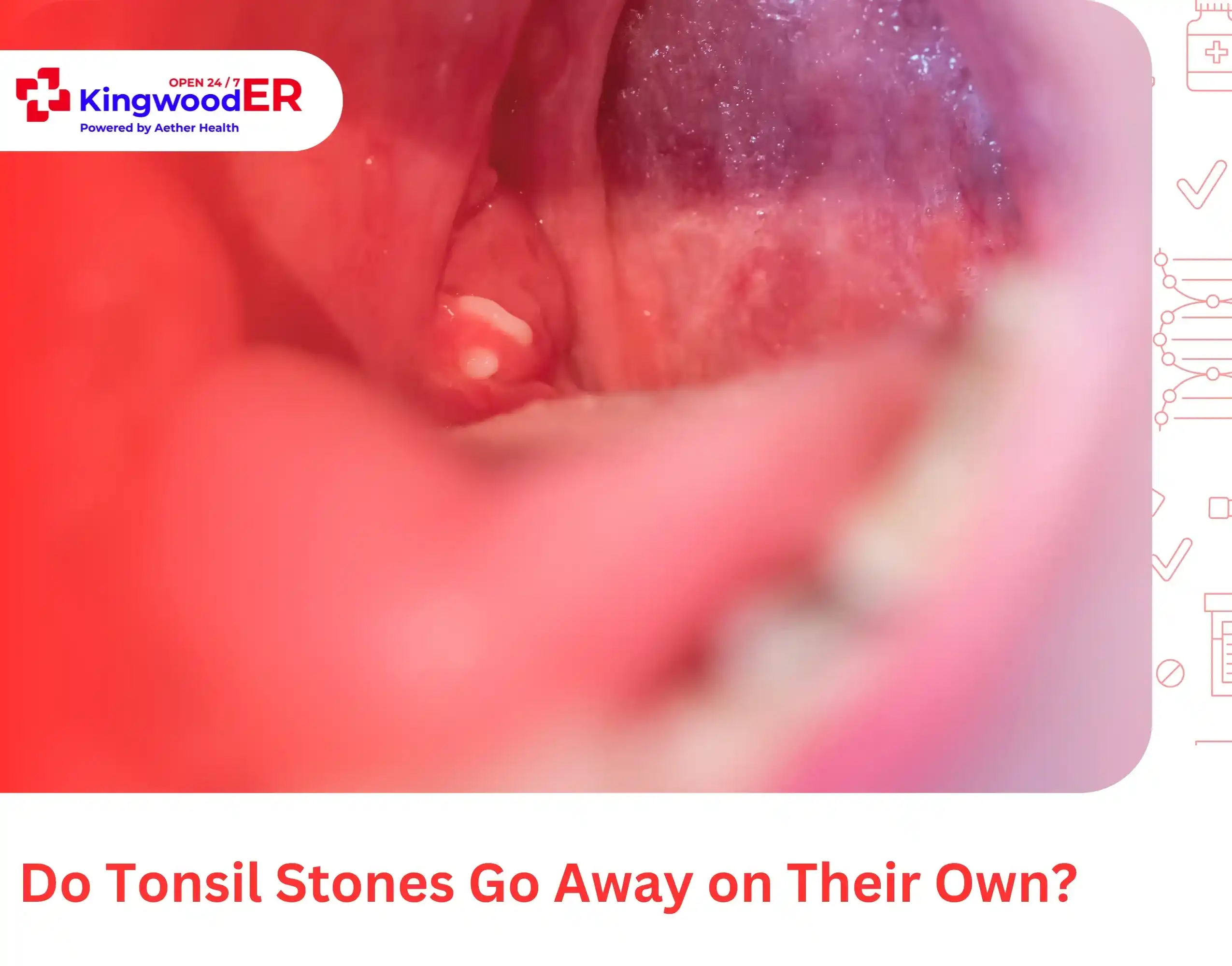
Yes, the majority of tonsils can go away on their own; they might take a few days to several months. If the stone is small and has a loose surface, then it might go away on its own. Doing gargles can help ease the pain. If the pain is deep down and it does not get better with anything, then it might require extra effort.
A Final Word
Tonsil stones are not something most people talk about, but they are more common than you might think. The smell is the worst part for most people, and that usually clears up pretty quickly once the stone is out.
If you have had unexplained bad breath or that nagging throat feeling for a while, take a look in the mirror with a good light. You might finally have your answer.
This article is for general information only. If you have ongoing throat pain, difficulty swallowing, or symptoms that keep coming back, please see a doctor.
Frequently Asked Questions (FAQs)
What do tonsil stones look like?
They appear as small white, yellow, or off-white lumps in the tonsil crevices.
Can I feel tonsil stones without seeing them?
Yes, it feels like something is stuck in your throat, or you notice discomfort while swallowing.
Do tonsil stones cause bad breath?
Yes, they often cause persistent bad breath due to bacterial buildup.
Is it possible to have hidden tonsil stones?
Yes, some stones are deep in the tonsils and not visible easily.
Should I use a flashlight to check for tonsil stones?
Yes, proper lighting helps you clearly see inside the throat.