
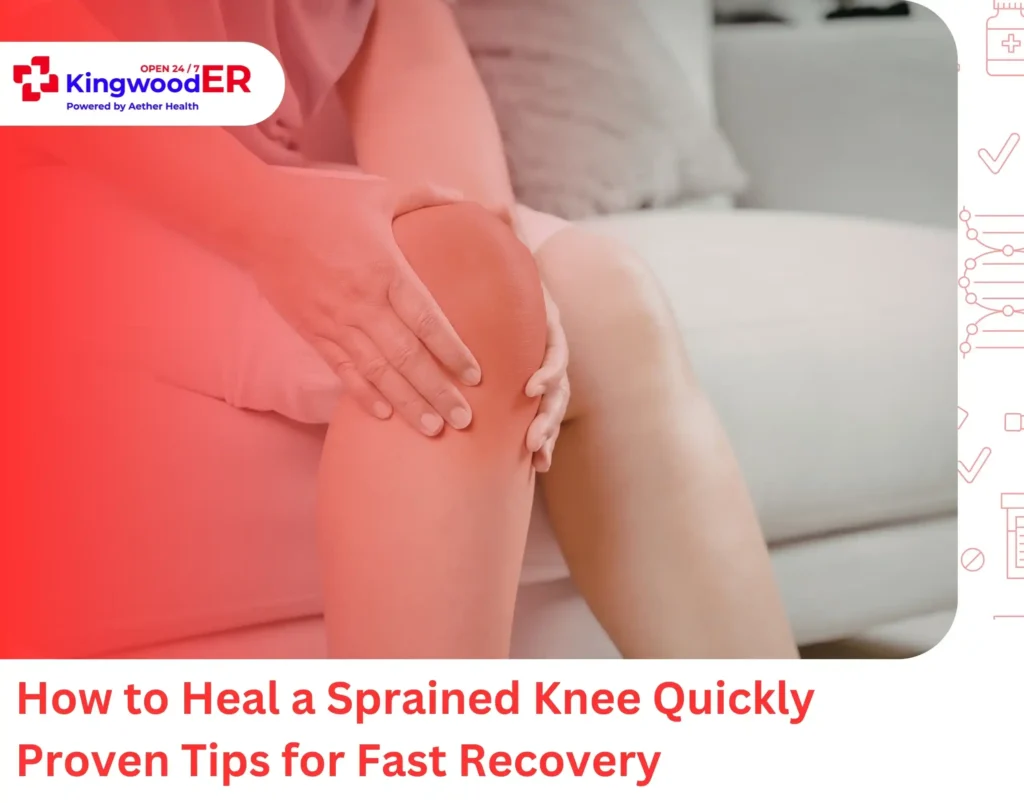
A sudden sprained knee is a joint injury that can happen to people of any age. It might occur suddenly, but it can strongly affect mobility and normal activities. This can happen due to different reasons, including a fall, excessive strain, or a forceful twist.
Knowing how to heal a sprained knee quickly can help get rid of the pain easily. However, if nothing is helping, then it is better to take professional care, as it might be due to other issues, including a dislocated rib, slipped rib, soleus strain, or trauma-related issues.
In this blog, we will illustrate how to heal a sprained knee quickly, with a few helpful tips that support speedy recovery.
Twisted Knee Symptoms: What You’re Probably Feeling
Twisted knee symptoms follow a pattern. Pain hits right at the moment of injury, usually sharp at first, then settles into a dull throb. Swelling shows up fast in some cases, slowly in others. Swelling within minutes usually means blood is pooling inside the joint, which points toward a more serious injury.
Bruising may not appear until the next day. Stiffness around the knee, difficulty fully bending or straightening it, and a general feeling that the knee might give way are all common. Some people hear or feel a pop. That pop, especially with rapid swelling, often means a ligament was torn rather than stretched.
Here is what separates a twisted knee from something worse: if the joint looks visibly off-angle, if you genuinely cannot put any weight on it, or if it feels completely unstable when you try to stand, stop guessing. Get it looked at.
If your knee pain becomes severe or doesn’t improve with home care, visiting ER of Kingwood can ensure prompt evaluation, accurate diagnosis, and immediate treatment
How to Tell If a Bone Is Fractured or Bruised
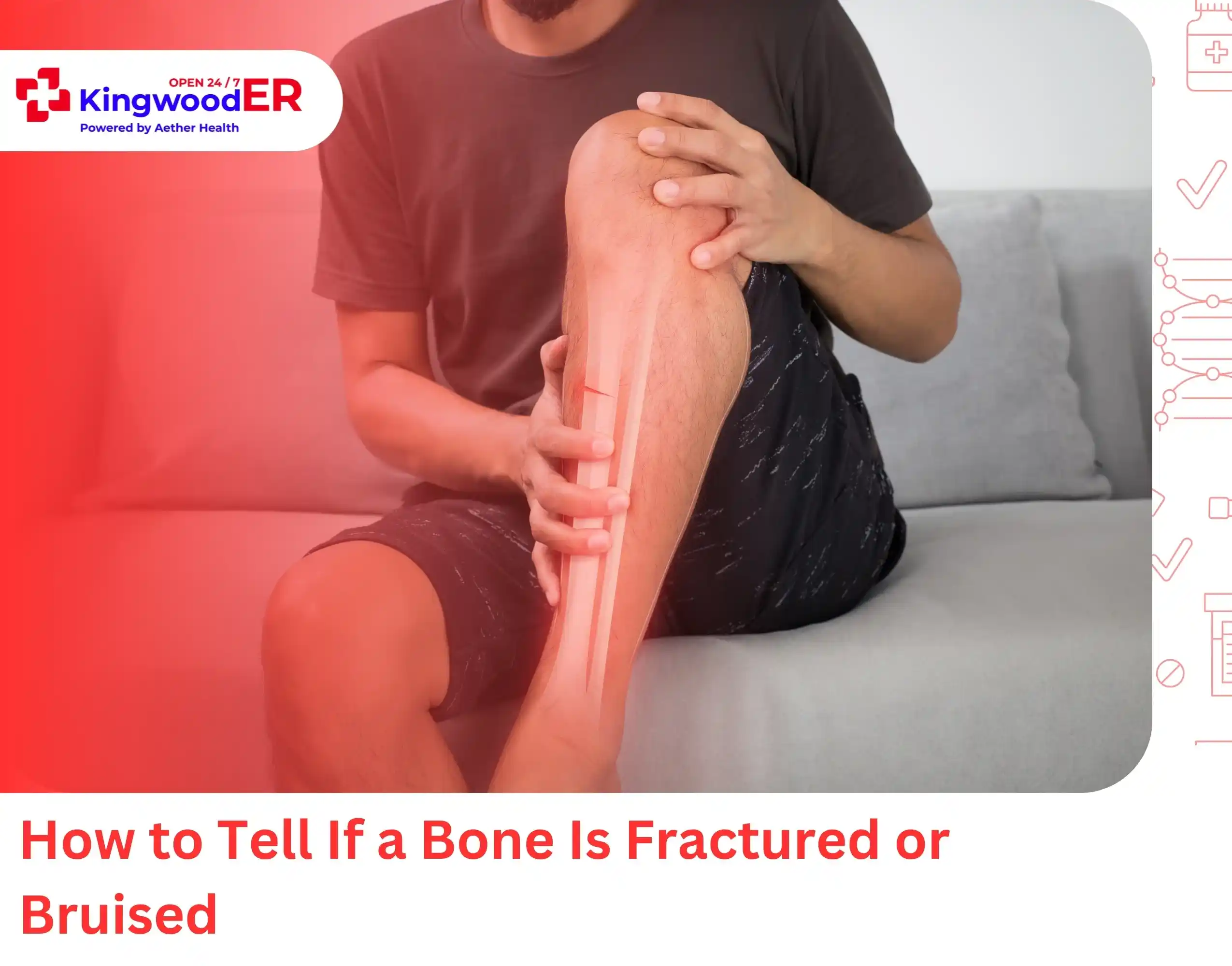
Before you start any home treatment, it is worth knowing how to tell if a bone is fractured or bruised rather than simply sprained.
A fracture causes pain that sits directly on the bone itself, not on the soft tissue around it. Press your finger along the bone, and the pain will be focused and intense at one spot. A bruised bone feels similar, but without any structural damage. A sprain, by contrast, tends to be tender along the joint line, not the bone.
Rapid swelling in under 30 minutes, any visible deformity, numbness in the foot, or an inability to take even a few steps all push toward a fracture rather than a sprain. There is a clinical checklist called the Ottawa Knee Rules. If you are over 55, cannot move your knee past 90 degrees, or feel tenderness directly on the kneecap or the top of the fibula, you need a digital X-ray, not a compression bandage.
When in doubt, get it checked.
Rest, Ice, Compression, and Elevation
One of the most common methods to get rid of a sprained knee is to follow the RICE method. It means Rest, Ice, Compression, and Elevation, and is only effective when applied carefully.
Rest: Take proper rest when the injury is caused; for a mild sprain, gently walk after 24-72 hours.
Ice: Apply ice cubes to the knee for 15-20 minutes in the first 48 hours. Once the first 48 hours pass, the heat becomes effective.
Compression: Using the elastic bandage keeps swelling from increasing. Immediately remove it if the toe starts getting blue, as it is an indication that the compressor is too tight.
Elevation: Elevate your leg above heart level, and give it rest by placing pillows underneath. The fluid starts moving away from the swollen area with the help of gravity.
Exercises That Help Get Your Sprained Knee Moving
There are a few exercises that help in getting rid of a sprained knee easily. These exercises improve the blood circulation and gently ease the pain. Although these exercises are effective, it is advised to seek a doctor’s guidance before starting them.
Quad Sets
Start with only a few sets after 3-4 days. Sit on the floor and put the injured leg straight out in front. Squeeze the muscle on top of your thigh, push the back of your knee down toward the surface, hold for five seconds, then let go.
Heel Slides
Start by lying flat on your back. Now, slowly pull your heel toward your body, bend the knee until you feel a gentle pull, then slide it back out.
Try Straight Leg Raises and Standing Calf Raises
Do this exercise almost after the 1st week, as they help in knee stability.
Mini Wall Squats
Start this after two weeks by placing the back against the wall. Place your feet apart and gradually slide them down to 30-40 degrees.
For more insight into identifying foot injuries, you can also explore our blog How to Know If Your Toe Is Broken: Signs, Symptoms, and When to Visit ER of Kingwood.
Knee Sprain Recovery Time
The table below shows a highlight of the recovery time of the knee sprain based on different grades.
| Grade | What it means | Healing time | Return to sport |
| Grade 1 | Ligament stretched | 1 – 3 weeks | 2 – 3 weeks with rest and exercises |
| Grade 2 | Partial tear | 4 – 8 weeks | 6 – 8 weeks with active rehab |
| Grade 3 | Complete tear, | 3 – 6 months+ | 6 – 12 months |
For a better understanding of identifying serious foot injuries, you can also read our detailed guide on How to Tell If Your Foot Is Broken: Symptoms, What It Looks Like & Recovery Time.
When to Stop Managing It at Home
At the end, it can be demonstrated that if the swelling is severe and the knee looks deformed, then seeing a doctor becomes important. However, if the pain felt severe at first and then gradually starts getting less, then simple and helpful home tricks can heal it completely.
Try making use of RICE treatment, exercises, and gentle walking. This gradually starts healing the pain, and it starts improving after 72 hours. In worst cases, if nothing is working, then immediately visit a healthcare provider to seek guidance.
Frequently Asked Questions (FAQs)
How long does a sprained knee take to heal?
Mild sprains heal in 1–3 weeks. Partial tears take 4–8 weeks. A complete tear can mean 6–12 months.
Can I walk on a sprained knee?
Yes, for a mild sprain. If you are limping badly, then avoid walking.
Can it heal without physiotherapy?
Yes, if it is of grade 1, grade 2, or above, it requires physio.
What makes recovery take longer?
Resuming the normal activities soon affects the recovery time period.
Ice or heat on a sprained knee?
Ice for the first 48 hours, then apply heat after that to ease stiffness.