

Carbon monoxide poisoning symptoms are easy to miss because they often mimic the flu, but the gas itself is odorless, colorless, and tasteless. Hundreds of Americans die each year from CO poisoning, and thousands more end up in emergency rooms with preventable injuries.
Recognizing the signs quickly can save your life or a loved one’s. This guide maps carbon monoxide poisoning symptoms by exposure level, explains the causes, and tells you exactly when to come to Aether Health Kingwood ER.
What to Do If You Suspect Carbon Monoxide Poisoning
If you suspect carbon monoxide poisoning, get into fresh air immediately. Open doors and windows, turn off suspected sources, and call 911 if anyone shows severe symptoms. Even mild carbon monoxide poisoning symptoms need emergency evaluation because CO continues to harm the body after exposure ends.sup¹
Three immediate steps that matter most:
- Get everyone, including pets, out of the building and into fresh air
- Call 911 and report suspected CO poisoning
- Do not re-enter the building until it is ventilated and the source is identified
For the full list of life-threatening conditions handled around the clock, our severe emergencies treated 24/7 page outlines what to expect during a critical visit.
Mild Carbon Monoxide Poisoning Symptoms
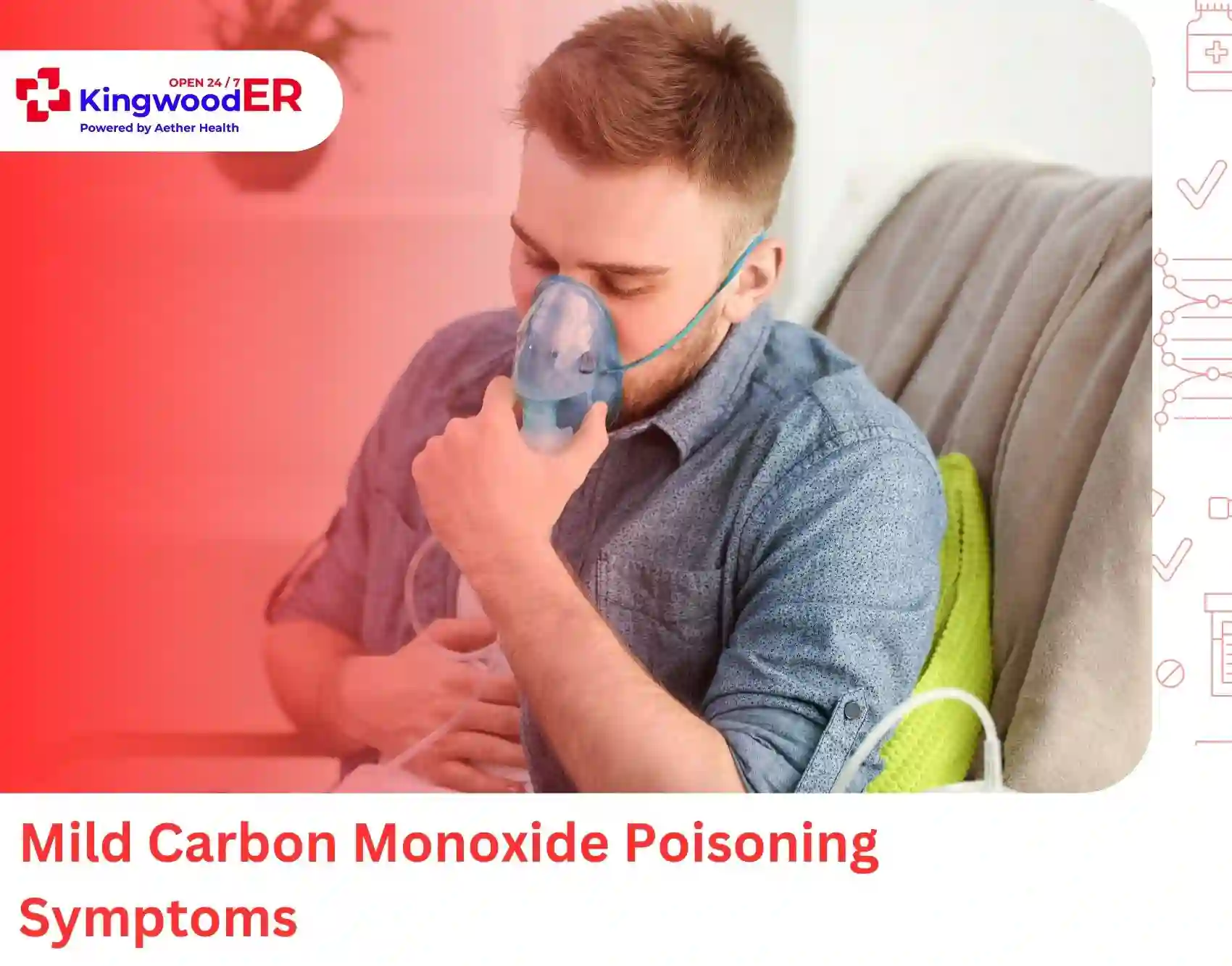
Mild carbon monoxide poisoning symptoms include dull headache, mild dizziness, fatigue, and nausea that feels like coming down with the flu. These signs appear at low CO levels and often improve when you step outside, which is a critical early clue that CO exposure is the cause.
Early warning signs of CO exposure:
- Dull, throbbing headache (often the first symptom)
- Mild dizziness or lightheadedness
- Nausea with or without vomiting
- Fatigue and weakness
- Shortness of breath with mild exertion
- Symptoms that improve when you leave the building
For a full clinical overview of CO exposure effects, the CDC’s Carbon Monoxide Poisoning Basics page explains how CO affects the body at each level. ¹
Moderate Signs of Carbon Monoxide Poisoning
Moderate signs of carbon monoxide poisoning include severe headache, confusion, chest pain, rapid heartbeat, and vomiting. At this stage, symptoms no longer improve simply by getting fresh air because CO has bound significantly to red blood cells, reducing oxygen delivery to vital organs.
Moderate exposure signs include:
- Severe, throbbing headache
- Confusion or trouble thinking clearly
- Chest pain or tightness
- Rapid or irregular heartbeat
- Persistent nausea and vomiting
- Difficulty breathing even at rest
- Vision problems or blurred vision
CO affects breathing by blocking oxygen transport. Our emergency care for breathing problems page explains how we evaluate oxygen levels and respiratory distress.
Severe and Life-Threatening Carbon Monoxide Poisoning Symptoms
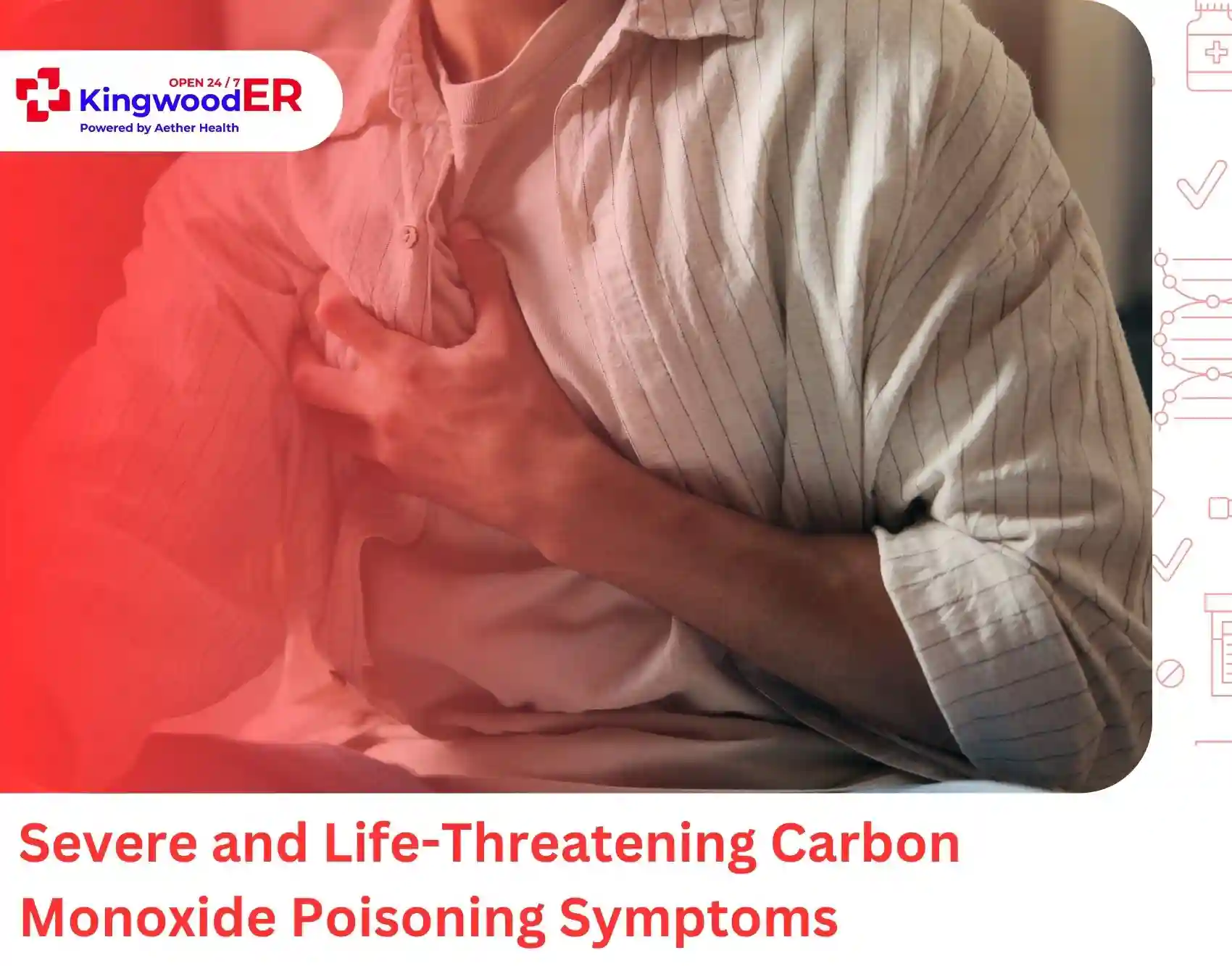
Severe carbon monoxide poisoning symptoms include loss of consciousness, seizures, cardiac arrest, and respiratory failure. At these exposure levels, brain and heart damage can occur within minutes. Call 911 immediately for anyone showing these signs. Do not attempt to drive the person yourself.
Life-threatening red flags:
- Loss of consciousness or unresponsiveness
- Seizures or convulsions
- Cardiac arrest
- Severe chest pain or heart attack symptoms
- Bright red or cherry-colored skin (classic sign, often appears late)
- Respiratory failure or very slow breathing
- Coma
Pregnant women, infants, elderly adults, and people with heart or lung disease can show severe symptoms at lower exposure levels than healthy adults.
Children are especially vulnerable to CO because they breathe faster and absorb more per body weight. Our pediatric emergency room page covers how we evaluate young patients.
Carbon Monoxide Poisoning Causes: Where Does the Gas Come From?
Carbon monoxide poisoning causes trace back to incomplete combustion of fuel. Common sources include gas furnaces, water heaters, car engines in attached garages, portable generators, charcoal grills used indoors, gas stoves, and wood-burning fireplaces with blocked chimneys.
Common sources of dangerous CO exposure:
- Faulty or poorly ventilated furnaces and water heaters
- Running a car engine in an attached or enclosed garage
- Portable generators placed too close to windows or doors
- Charcoal grills, camp stoves, or kerosene heaters used indoors
- Gas stoves used for heating
- Fireplaces or wood stoves with blocked chimneys
- Boats with cabins and inboard engines
- Running power equipment in enclosed spaces
For other urgent poisoning concerns, our accidental food poisoning emergency care explains how we evaluate suspected ingested toxins.
Carbon Monoxide Poisoning Prevention
Carbon monoxide poisoning prevention starts with installing CO detectors on every level of your home, especially near sleeping areas. Have fuel-burning appliances inspected yearly, never run engines or generators indoors, and never heat your home with a gas stove or charcoal grill.
Key prevention steps:
- Install battery-backed CO detectors on every level of your home
- Test detectors monthly and replace batteries twice a year
- Have furnaces, water heaters, and fireplaces inspected annually
- Never run a vehicle engine in an attached garage, even with the door open
- Keep portable generators at least 20 feet from the house, away from windows
- Never use charcoal grills, camp stoves, or gas ovens for indoor heating
- Ensure chimneys and flues are clear and not blocked by debris or snow
For a comprehensive prevention checklist, the CDC’s guide to preventing carbon monoxide poisoning walks through home safety steps in detail. ²
Carbon Monoxide Poisoning Treatment at the ER
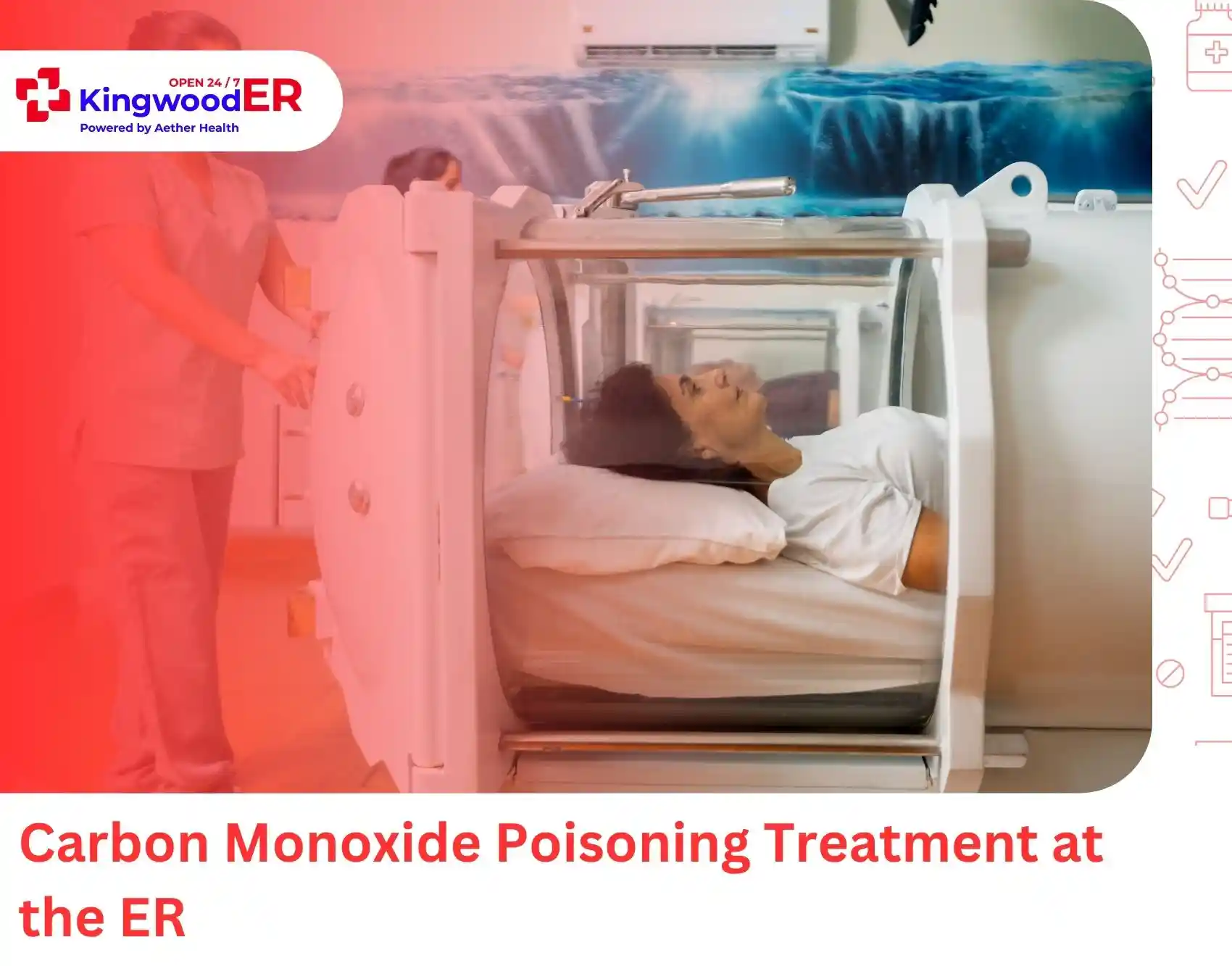
Carbon monoxide poisoning treatment begins with high-flow oxygen through a non-rebreather mask to displace CO from red blood cells. Severe cases may require hyperbaric oxygen therapy at a specialized facility. Treatment time depends on blood CO levels and how long oxygen therapy takes to clear the gas.
What to expect at the ER:
- Rapid assessment of breathing, heart rate, and oxygen levels
- Blood tests to measure carboxyhemoglobin (CO level in blood)
- High-flow oxygen therapy, often for several hours
- EKG to check for heart damage
- Neurological exam to assess brain function
- CT scan when prolonged exposure or severe symptoms are present
- Transfer for hyperbaric oxygen therapy for the most severe cases
For more on how we evaluate complex breathing-related conditions, our guide on hyperinflated lungs causes and symptoms walks through our respiratory assessment approach.
How Aether Health Kingwood ER Handles Suspected CO Poisoning
Aether Health Kingwood ER provides 24/7 evaluation for suspected carbon monoxide poisoning with on-site oxygen therapy, laboratory testing, EKG, and CT imaging. Board-certified emergency physicians can confirm CO exposure, assess organ damage, and coordinate transfer for hyperbaric treatment when severe exposure is confirmed.
Aether Health Kingwood ER is open 24 hours a day, 365 days a year. For suspected CO poisoning, immediate oxygen therapy begins the moment you arrive, with rapid blood testing to confirm the exposure level.
First time visiting? Our guide on what to expect at Aether Health ER in Kingwood walks through the arrival process.
Insurance & Billing
Aether Health Kingwood ER works with most major insurance plans. Call (713) 528-8703 or visit our Contact Us page to verify coverage or get directions.
Per Texas Health & Safety Code §254.155 (HB 2041), this is a Freestanding Emergency Medical Care Facility. Charges are comparable to a hospital ER and may include a facility fee. The federal No Surprises Act protects patients from unexpected billing during emergency care.
| Visit Aether Health Kingwood ER
Address: 2158 Northpark Dr, Kingwood, TX 77339 Phone: (713) 528-8703 Hours: Open 24 hours, 365 days a year For suspected severe CO poisoning, call 911 first. |
Frequently Asked Questions
How quickly do carbon monoxide poisoning symptoms appear?
Symptoms can appear within minutes at high concentrations or build gradually over hours at lower levels. Low-level exposure often feels like a lingering flu that improves outdoors.
Can carbon monoxide poisoning be mistaken for the flu?
Yes. CO poisoning closely mimics flu: headache, nausea, fatigue, and body aches. A key clue is symptoms improving when you leave the building and returning when you come back.
Do CO detectors always warn you in time?
Only if installed, maintained, and working. Detectors should be on every level near sleeping areas. Test monthly and replace batteries twice a year.
Is carbon monoxide poisoning permanent?
Mild cases usually resolve with oxygen therapy. Severe exposure can cause lasting brain, heart, or neurological damage. Early treatment reduces the risk of long-term problems.
Should I go to the ER for mild CO symptoms?
Yes. Even mild carbon monoxide poisoning symptoms need medical evaluation and blood testing. CO can continue harming the body after exposure ends.