
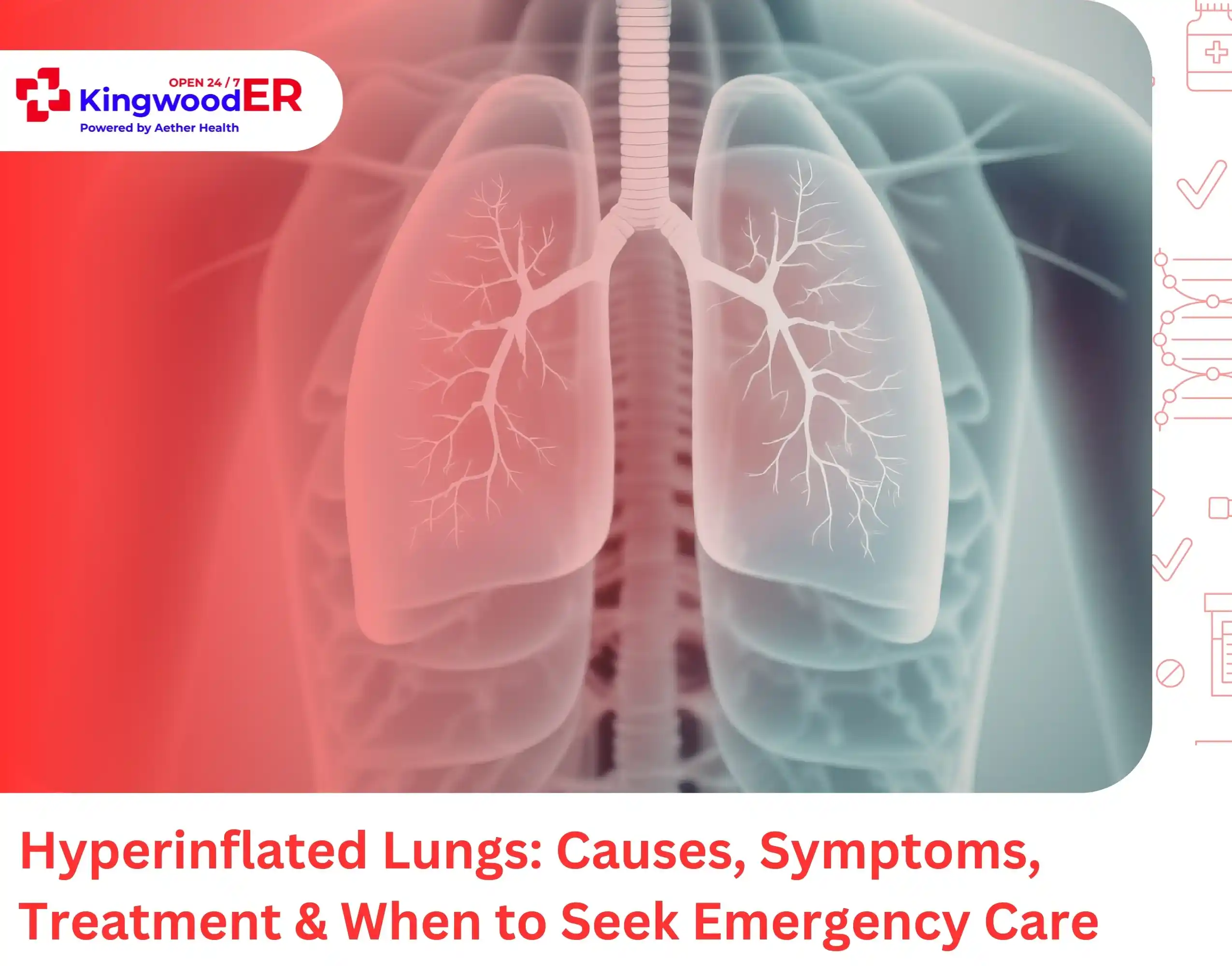
Breathing should feel normal and should create no hustle; a minor difficulty makes you feel severely uneasy. Trapped air in the lungs is one of the reasons that causes breathing issues. When an excess of air becomes restricted, it could result in hyperinflated lungs.
While hyperinflated lungs itself is not a disease, it often signals an underlying respiratory issue that requires attention. Patients might experience shortness of breath, chest wall pain, or inflammation in chest tissues, and imaging tests may reveal the extent of lung hyperinflation.
At the ER of Kingwood, we provide rapid evaluation through advanced diagnostic imaging and urgent respiratory care, ensuring patients receive the right treatment before symptoms worsen.
Understanding Hyperinflated Lungs and What It Really Means
People experience hyperinflation of lungs when lungs expand beyond their normal size. This restricts exhalation and traps air in the lungs. The lungs do not empty, causing discomfort and tightness.
Hyperinflated lungs are not a disease in themselves but occur due to an underlying issue that requires attention. It requires medical evaluation and necessary treatment, as it might gradually grow, causing chronic airway disorders.
Hyperinflated lungs causes: Why Do Lungs Become Hyperinflated?
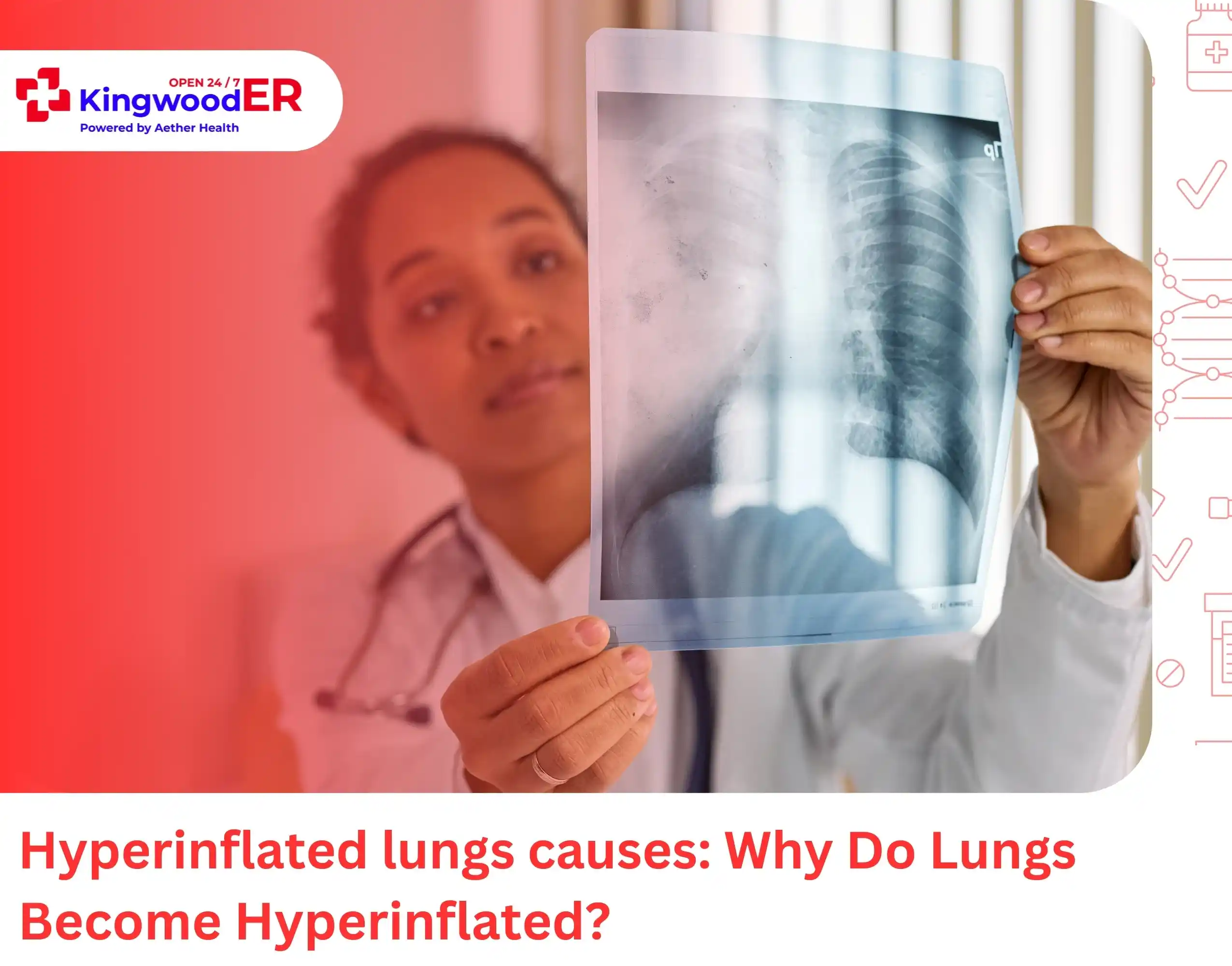
Air gets trapped in the lungs when the airflow is restricted, which leads to lung enlargement due to reduced elasticity.
This condition occurs for various reasons. The severity of lung hyperinflation depends upon its cause. Below are a few common causes of hyperinflated lungs:
- Chronic Obstructive Pulmonary Disease (COPD)
- Emphysema
- Severe asthma
- Airway blockages
- Chronic bronchitis
- Recurrent respiratory infections
A few patients suffering from pulmonary vascular congestion that requires emergency breathing treatment may experience fluid building up in the lung blood vessels. Such a condition increases the pressure inside the chest.
No matter how severe the cause is, early prevention assists in the recovery process.
Hyperinflated lungs symptoms
Hyperinflation in the lungs does not appear overnight but grows gradually and might occur after an asthma attack. By knowing its early signs, it becomes easy to know when to seek medical evaluation.
Below are a few common signs of hyperinflated lungs:
- Shortness of breath during physical activities
- Difficulty exhaling
- Wheezing
- Persistent cough
- Rapid breathing
- Fatigue
- Chest muscle pain
- Chest wall pain
- Chest tightness or constant pressure
If you feel constant pain during breathing or exhaling, then it becomes essential to seek urgent service evaluation.
Is Lung Hyperinflation a Medical Emergency?
Yes, hyperinflated lungs become a medical emergency if the symptoms become intense and severe. It requires an immediate medical evaluation if breathing becomes difficult, as it restricts oxygen exchange.
Mild hyperinflation might not require urgent intervention, especially if the signs are not severe. However, if you experience sudden shortness of breath, chest tightness, chest muscle pain, rapid breathing, or bluish discoloration of the lips, immediate medical evaluation is necessary.
In cases of urgency or when the signs are severe, rapid diagnostic imaging becomes important to identify the issue and initiate necessary treatment.
Is Hyperinflation Lungs a Sign of Serious Lung Disease?
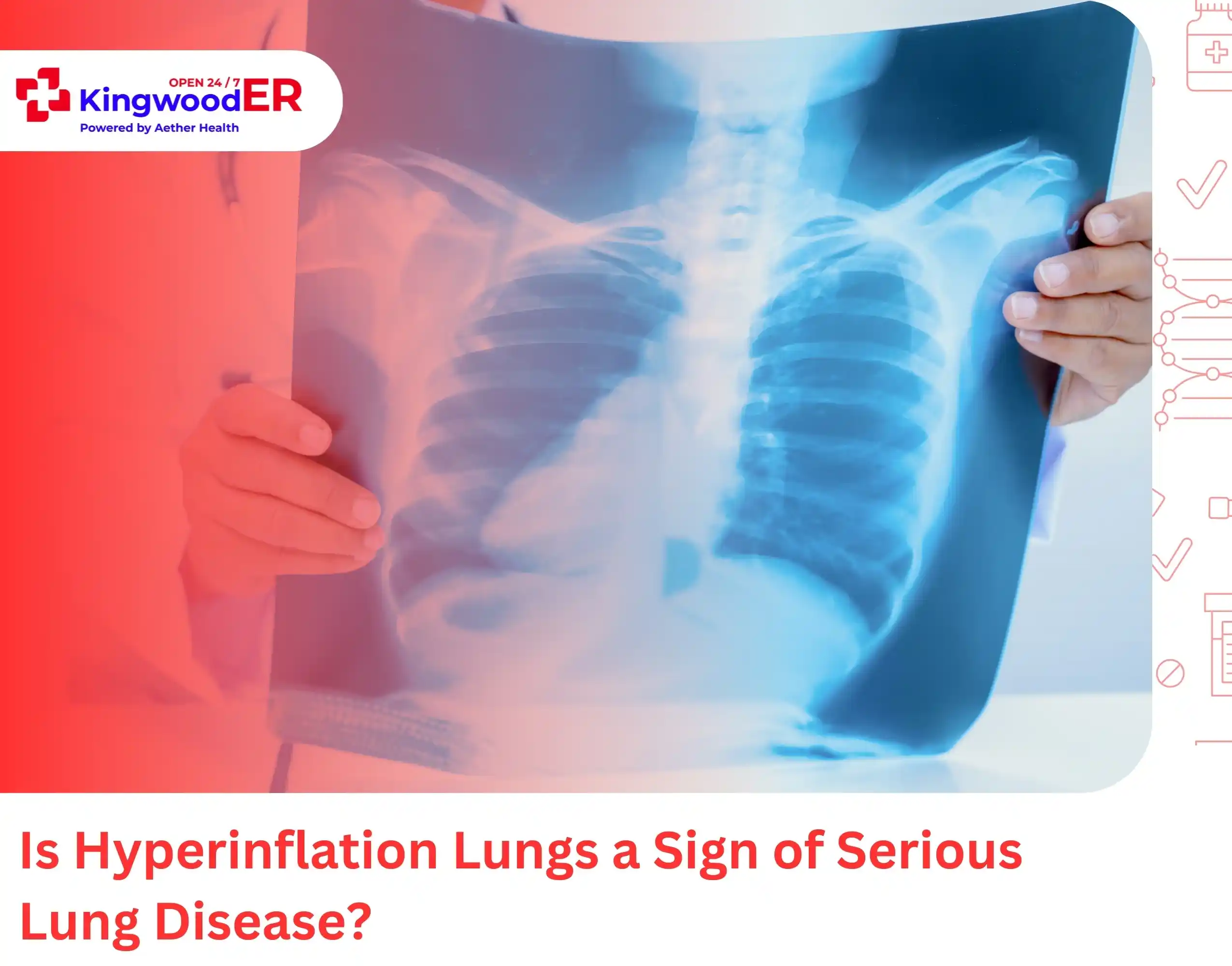
Yes, it could be a sign of serious lung disease, but it could not always be a life-threatening disease. The severity is based on the cause. Conditions such as asthma can temporarily lead to hyperinflation of the lungs during flare-ups, and with proper treatment, breathing usually improves.
If the air gets restricted, then the diaphragm flattens, and breathing muscles must work harder. Over time, this extra strain can reduce oxygen exchange efficiency and cause fatigue, chest tightness, and exercise intolerance. Leaving this breathing issue untreated can lead to chronic lung hyperinflation, which may gradually limit lung capacity and worsen quality of life.
Hyperinflated lungs treatment
The table below illustrates a few treatment options for hyperinflated lungs and when they should be adopted.
| Method of Treatment | How It Helps | When It’s Used |
| Bronchodilators | Relax the airway muscles, helping in easy air escape. | Asthma, COPD, airway narrowing |
| Corticosteroids | Reduces inflammation in the chest | Asthma flare-ups, chronic inflammation |
| Oxygen Therapy | Improves oxygen levels in the blood | Treats severe cases |
| Pulmonary Rehabilitation | Strengthens breathing muscles | Chronic lung hyperinflation |
| Antibiotics | Treat underlying respiratory issues | Pneumonia or bacterial infections |
| Emergency Respiratory Support | Stabilizes severe breathing distress | Perfect during life-threatening health issues |
Take Action Early: Protect Your Lung Health
Hyperinflated lungs may sound alarming, but it is primarily a sign that the lungs are experiencing stress due to trapped air. While mild cases may not require emergency care, persistent symptoms such as shortness of breath, chest tightness, chest wall pain, or fatigue can indicate a more serious underlying condition like asthma, COPD, or pulmonary vascular congestion.
Early detection, proper management, and timely treatment significantly improve breathing comfort and overall lung function.
At the ER of Kingwood, our team provides immediate urgent service and advanced diagnostic imaging to assess and treat hyperinflated lungs effectively, helping patients breathe easier and stay healthy.
Frequently Asked Questions (FAQs)
Should I worry about hyperinflated lungs?
Yes, if the signs are severe, then it should be taken seriously.
Are hyperinflated lungs dangerous?
It depends on the cause; mild cases may not be serious, but persistent symptoms need medical evaluation.
What causes hyperinflation of the lungs?
Common causes include asthma, COPD, chronic bronchitis, and airway obstructions.
What are the symptoms of hyperinflated lungs?
Shortness of breath, chest wall pain, wheezing, and fatigue are typical signs.
Can hyperinflated lungs be treated?
Yes, treatment focuses on the underlying condition using medications, oxygen therapy, or pulmonary rehab.