
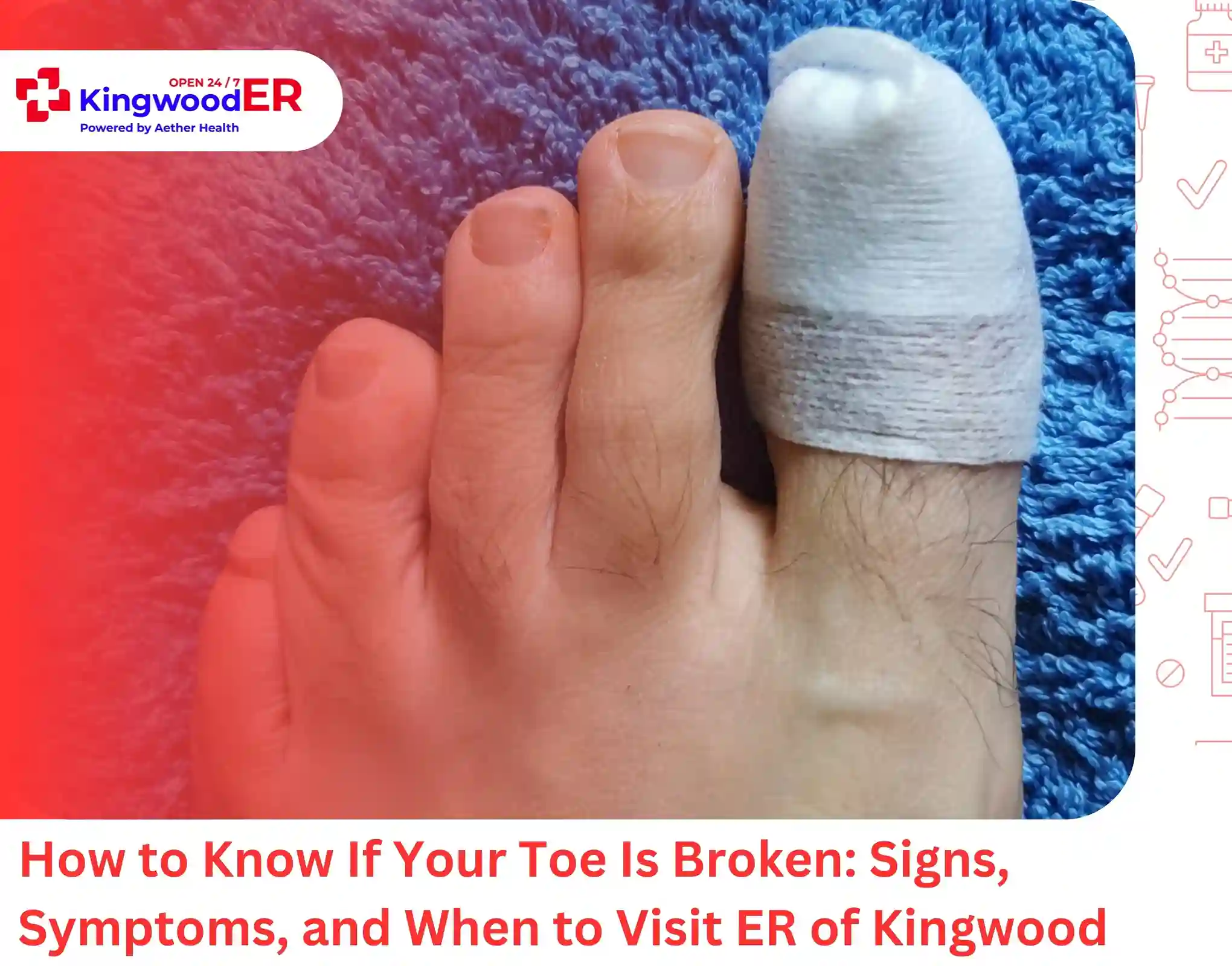
Discomfort in the toe might seem minor at first, but if the pain is caused by an injury, typically due to a broken toe, then it can cause significant pain, mobility issues, and long-term complications if left untreated.
Many people visit emergency rooms with this complaint that they have a simple bruise or a fracture. Understanding how to know if your toe is broken can help you decide when immediate medical attention is necessary.
This guide elaborates on the most common symptoms of a broken toe, how it differs from a bruise, and when emergency care becomes essential.
What breaks a toe?
Toe fractures can occur due to multiple reasons, including:
- Stubbing the toe on hard surfaces
- Accidentally hitting a hard object on the foot
- Sports-related injuries
- Slips, falls, or workplace accidents
- Repetitive or overuse of stress
Even injuries that look like a small bruise can result in fractures, especially if pain and swelling persist beyond a few days. It is always advised to visit a reliable ER for instant and accurate medical assistance. At the 24/7 open ER of Kingwood, we offer the best urgent care when you need it the most.
Common Signs of Broken Toe
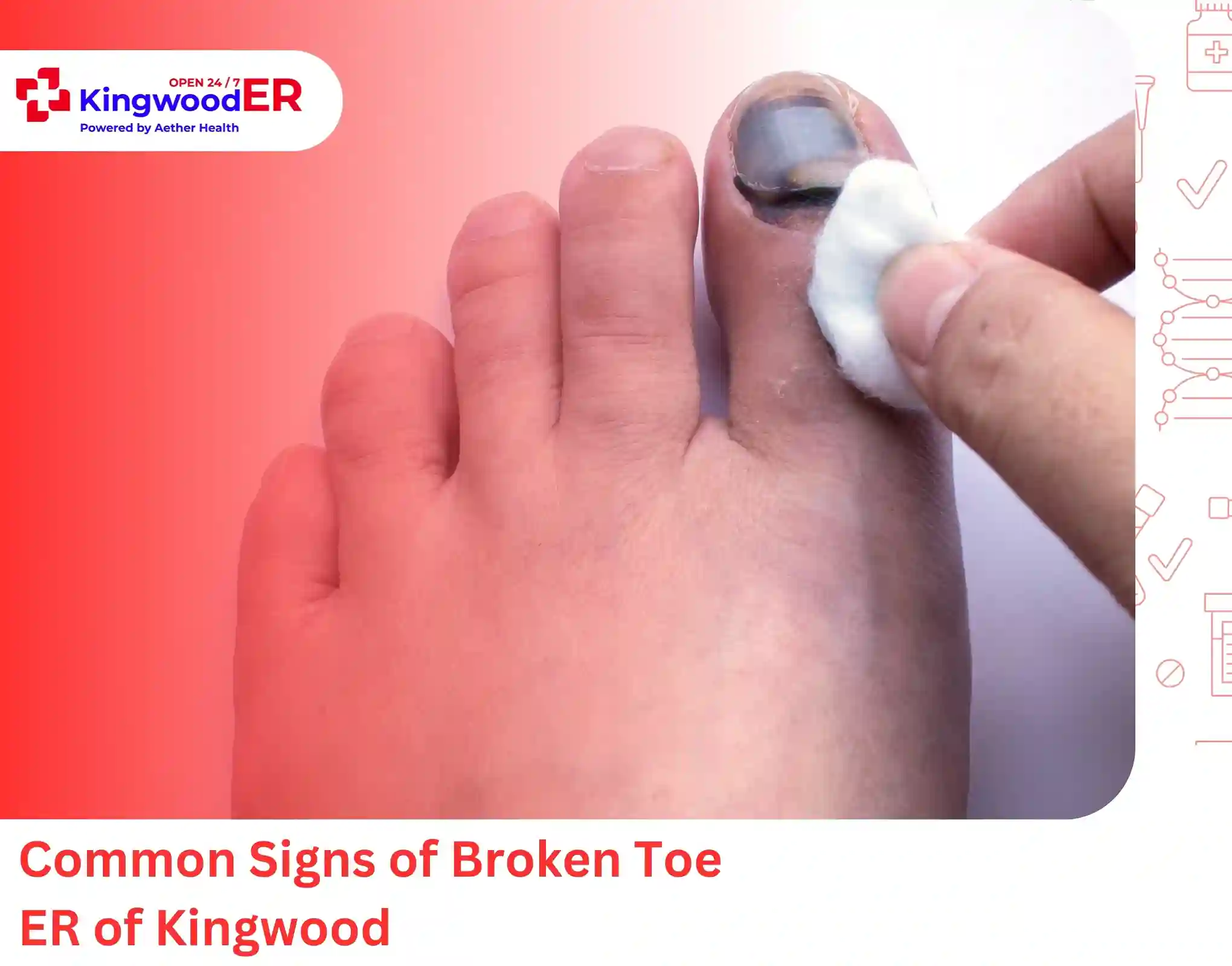
Having a clear understanding of a broken toe can help you implement the right treatment plan.
Immediate and Intense Toe Pain
The most common indicator of a fracture is immediate, intense toe pain at the time of injury. Most times, patients report severe pain radiating into the foot or neighboring toes, which may be a sign of a more serious injury.
Unlike bruising, fracture pain is sharper and worsens with movement or pressure.
Throbbing Pain and Swelling
Constant throbbing pain and swelling are other strong signs of a broken toe. Swelling from fractures usually increases over the first few hours and gets better with proper rest, elevation, or ice.
If swelling interferes with walking or wearing shoes, medical evaluation is recommended.
Red, Bruised, Painful, and Swollen Toe
If you have a broken toe, you might notice:
- Red or bruised toe
- Painful and swollen toe
- Warm to the touch
Bruising caused by fractures is darker and more widespread. More severe bruising and swelling often indicate bleeding under the skin caused by broken bone tissue.
Difficulty Walking or Bearing Weight
If a normal walk becomes strenuous for you, then it is a key warning sign. A fractured toe can make even light pressure painful, causing limping or complete avoidance of weight-bearing.
Persistent pain when standing or walking should never be ignored.
Little to No Movement
A broken toe results in little to no movement, most commonly if swelling restricts joint motion or the fracture causes instability. Limited movement is more commonly associated with fractures rather than bruises.
Attempting to bend the toe may result in intense pain or complete stiffness.
How Do I Know If My Toe Is Broken or Just Bruised?

Many patients wonder, “How do I know if my toe is broken or just bruised?” As their symptoms can overlap, there are still a few important noticeable differences.
The table below illustrates a few common differences between a bruised and broken toe.
| Symptom | Bruised Toe | Broken Toe |
| Pain | Mild to moderate | Severe or worsening |
| Swelling | Mild | Significant and persistent |
| Bruising | Light | Deep or spreading |
| Movement | Mostly normal | Painful or restricted |
| Walking | Slight discomfort | Difficult or painful |
If symptoms do not improve within 48–72 hours, then it is a fracture or a more complicated underlying issue. In such cases, it is always recommended to instantly visit the ER for urgent diagnostic imaging.
Can You Have a Broken Toe and Not Know It?
Yes, majority times you can have a broken toe and not know it. This mostly happens, particularly if the fracture is small or nondisplaced. They are called hairline fractures, which may cause tolerable pain initially but worsen with activity.
If these injuries are left untreated, then they can lead to:
- Improper bone healing
- Chronic pain or stiffness
- Reduced mobility
- Long-term foot complications
This is why it is essential to get persistent symptoms evaluated by a medical professional. During severe emergencies, timely evaluation helps in speedy recovery and avoids the chances of severe complications.
When to Visit ER of Kingwood for a Suspected Broken Toe

Immediately seek assistance from the ER of Kingwood if you experience:
- Severe or increasing pain
- Reddness swelling, or bruising
- Toe deformity or misalignment
- Numbness or tingling
- Inability to walk or bear weight
At the ER of Kingwood, providers use advanced diagnostic imaging to confirm fractures and assess their severity. Based on the diagnosis, we offer emergency fracture treatment available 24/7 so that the right recovery steps help you feel better fast.
In certain cases, laboratory services may also be utilized to rule out infection or other underlying issues, especially if swelling or pain is excessive.
Final Thoughts: Don’t Ignore Toe Pain
Understanding the signs of a broken toe, you can adopt the right treatment on time. If you know the answer to how to know if your toe is broken, you can implement a significant difference in recovery.
While bruises heal on their own, fractures often require medical attention. This is why knowing the difference between bruises and fractures not only helps you get the right treatment on time but also supports faster recovery.
If your toe remains painful, swollen, bruised, or difficult to move, visiting the ER of Kingwood ensures an accurate diagnosis and immediate care is provided anytime, whether day or night.
Frequently Asked Questions (FAQs)
Is a broken toe an emergency?
Yes, if there is severe pain, visible deformity, numbness, or difficulty walking.
Should I go to the ER for a broken toe?
Yes, if pain and swelling worsen, bruising spreads, or walking becomes difficult. Emergency care ensures timely diagnosis and proper treatment.
Can a broken toe heal on its own?
No, but improper healing is common without medical care. An untreated fracture can lead to chronic pain, stiffness, or long-term foot problems.
How long does a broken toe take to heal?
It takes around 4–6 weeks, depending on the severity of the fracture and how quickly treatment begins.
Will I need an X-ray for a broken toe?
Yes, diagnostic imaging helps confirm the fracture and determine the best treatment approach.