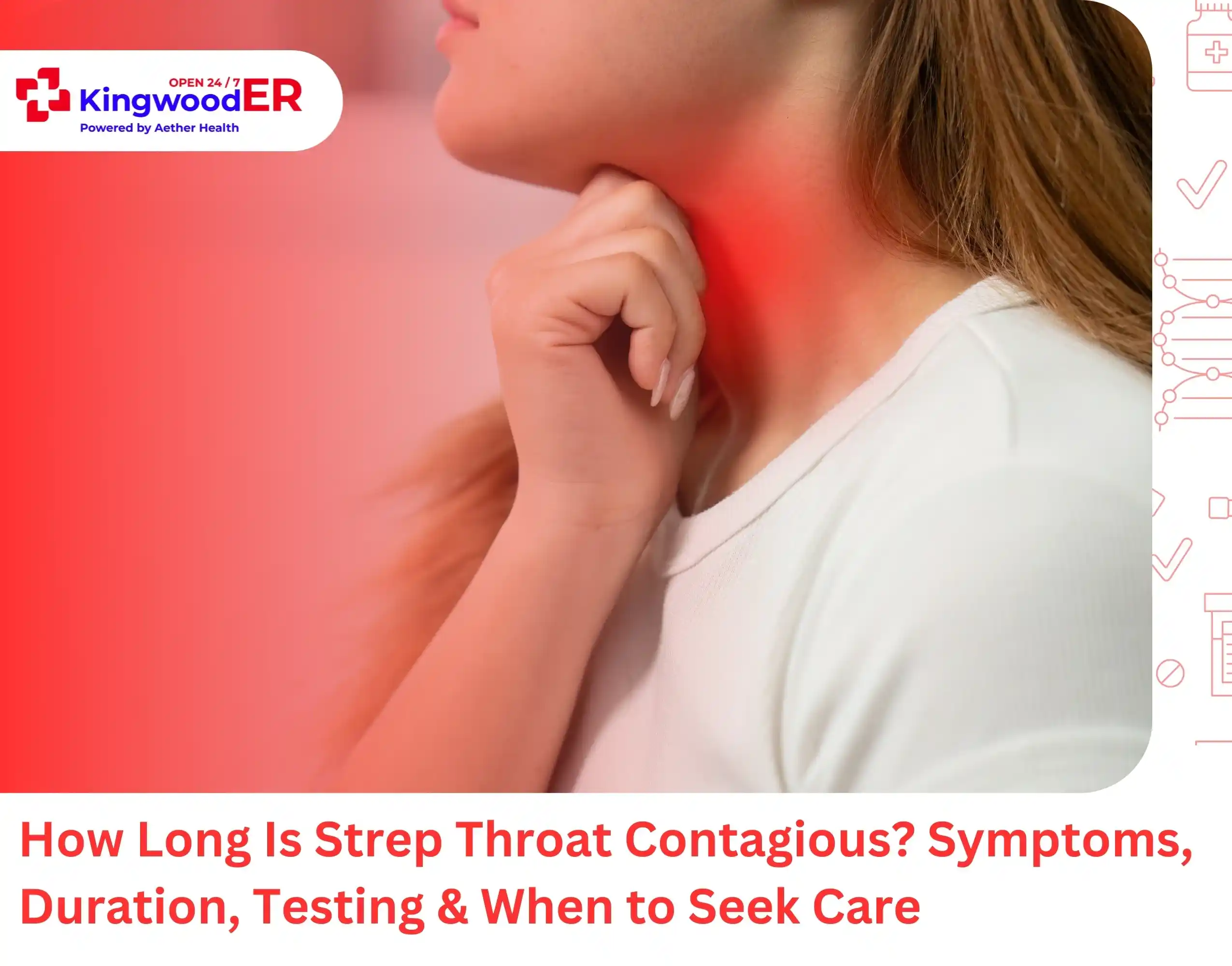
Strep throat is one of the most common bacterial infections, especially in school-aged children. If your child (or you) wakes up with a sudden, severe sore throat, fever, and no cough, strep might be the culprit. Many people search for clear answers to questions like:
- How long is strep throat contagious?
- How long does strep last?
- How do you know if you have strep throat?
- What is strep throat in toddlers?
- How quickly do antibiotics work?
- How do you know strep throat is healing?
- How long does strep last on surfaces?
This guide from Kingwood ER answers all these questions (and more) with up-to-date, evidence-based information from trusted medical sources. While this article is for education only, it can help you understand what to expect and when a professional evaluation makes sense.
What Is Strep Throat and How Do You Get It?
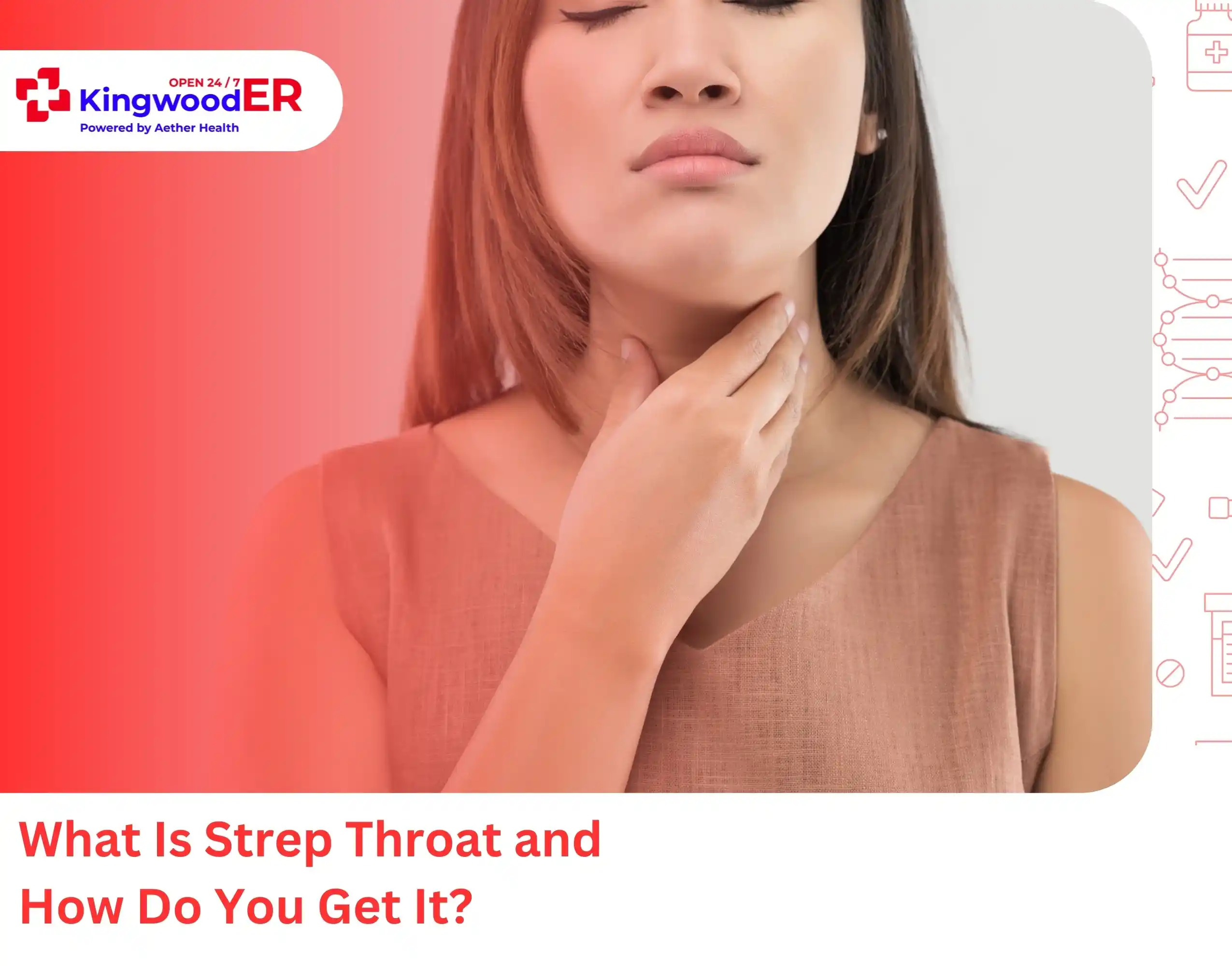
Strep throat is a bacterial infection of the throat and tonsils caused by group A Streptococcus bacteria (also called group A strep or Streptococcus pyogenes). Unlike most sore throats (which are viral), strep throat is bacterial and responds to antibiotics.
You get strep throat through close contact with an infected person. The bacteria spread via:
- Respiratory droplets (from coughing, sneezing, or talking)
- Direct contact (sharing drinks, utensils, or touching sores)
- Touching contaminated surfaces, then your mouth/nose/eyes
It spreads easily in households, schools, and daycares. Even people without symptoms (asymptomatic carriers) can spread it, though symptomatic individuals are more contagious.
What are Strep Throat Symptoms?
Strep throat symptoms come on suddenly — often within hours — and typically include:
- Severe sore throat and pain when swallowing
- Fever (often 101°F or higher)
- Red, swollen tonsils with white patches or pus streaks
- Tiny red spots (petechiae) on the roof of the mouth
- Swollen, tender lymph nodes in the neck
- Headache, body aches, chills
- Stomach pain, nausea, or vomiting (more common in children)
Important note: Strep throat usually does not cause a cough, runny nose, or hoarseness — those point toward a viral infection.
Strep Throat Symptoms in Adults
Adults often experience the classic sore throat, fever, and swollen glands. Headache and fatigue are common, but GI symptoms (nausea/vomiting) are less frequent than in kids.
What Is Strep Throat in Toddlers?
Strep throat is rare in children under 3 years old (less than 5% of cases), but it can happen. Toddlers may show:
- Irritability and fussiness
- Refusal to eat or drink
- Drooling
- Milder fever or no fever at all
- Strawberry tongue (red, bumpy tongue)
- Sandpaper-like rash (if scarlet fever develops)
- More prominent stomach upset or diarrhea
Because toddlers can’t describe symptoms well, parents often notice sudden changes in behavior or eating habits.
Comparison Table: Strep Throat vs. Viral Sore Throat
| Feature | Strep Throat (Bacterial) | Viral Sore Throat (e.g., Cold/Flu) |
| Onset | Sudden | Gradual |
| Fever | High (often >101°F) | Low-grade or none |
| Cough | Rare/absent | Common |
| Runny nose | Rare | Common |
| White patches on tonsils | Common | Rare |
| Swollen neck glands | Very tender | Mild |
| Stomach pain/nausea | Common in children | Less specific |
| Responds to antibiotics | Yes | No |
How Does Strep Spread and How Long Are You Contagious With Strep?
Strep is highly contagious. The incubation period (time from exposure to symptoms) is usually 2–5 days, and you’re contagious during this window — even before feeling sick.
- With antibiotics: Most people are no longer contagious after 24–48 hours of appropriate antibiotic treatment (often cited as 24 hours by CDC guidelines).
- Without antibiotics: Contagious for 2–3 weeks or until symptoms resolve naturally (though untreated cases can linger longer).
- Asymptomatic carriers can spread it intermittently.
How Long Does Strep Throat Last?

- With antibiotics: Symptoms improve significantly in 1–2 days; full recovery typically takes 7–10 days.
- Without antibiotics / untreated: Can last 3–7 days for acute symptoms, but bacteria may persist for weeks, increasing complication risk.
- How long does strep last after antibiotics start? Pain and fever often drop within 24–48 hours, but complete healing (including throat appearance) takes 7–10 days.
- How long does strep last on surfaces? Group A strep can survive on doorknobs, toys, or utensils for hours to several days (up to 1–2 weeks in ideal conditions), though it loses infectivity quickly outside the body. Regular cleaning helps.
How Quickly Do Antibiotics Work for Strep Throat?
Antibiotics (usually penicillin or amoxicillin) start killing bacteria immediately. Most people feel noticeably better in 12–48 hours:
- Fever often breaks within 24 hours.
- Sore throat eases significantly by day 2.
- You must complete the full 10-day course (or as prescribed) to fully eradicate the bacteria and prevent complications/recurrence — even if symptoms vanish early.
How Do You Know Strep Throat Is Healing?
Signs of healing usually appear within 1–3 days of starting antibiotics:
- Fever resolves and stays gone.
- Sore throat pain decreases day by day (able to swallow more comfortably).
- Energy level improves; appetite returns.
- White patches on tonsils fade or disappear (usually 1–3 days).
- Swollen glands shrink.
Strep throat still hurts after antibiotics? Mild residual soreness for a few days is normal (throat tissue takes time to heal). If pain worsens after 48 hours or new symptoms appear, follow up with a provider.
How Soon Will a Strep Test Show Positive?
Testing is most accurate once symptoms start.
- Rapid strep test: Throat swab; results in 10–20 minutes. Positive = confirmed strep. Negative may need a follow-up culture (false negatives occur in 5–10% of cases).
- Throat culture: Gold standard; results in 24–48 hours. Best if the rapid test is negative, but suspicion remains high.
- Best timing: After symptoms appear (not during early incubation).
How Quickly Do Antibiotics Work for Strep?
Antibiotics begin fighting the bacteria immediately, but noticeable improvement follows a typical pattern:
- Fever reduction: 24 to 48 hours
- Decreased throat pain: 48 to 72 hours
- Energy improvement: 2 to 3 days
- Contagiousness drops significantly after 24 hours of treatment
It is essential to complete the full course of antibiotics even if symptoms resolve earlier.
Is Strep Throat Dangerous? Possible Complications
Strep throat is usually mild and treatable, but untreated cases can lead to:
- Ear/sinus infections
- Peritonsillar abscess
- Scarlet fever (rash)
- Rheumatic fever (heart damage)
- Post-strep kidney inflammation
- Rare invasive infections (e.g., toxic shock)
Prompt strep throat treatment dramatically reduces these risks.
How long is strep throat contagious?
Without Antibiotics
If untreated, a person can remain contagious for up to 2 to 3 weeks, even if symptoms begin to improve.
After Starting Antibiotics
Most individuals are no longer contagious 24 hours after starting appropriate antibiotics, provided the fever has resolved.
Are You Contagious Before Symptoms Appear?
Yes. During the 2 to 5 day incubation period, the bacteria can spread even before noticeable symptoms begin.
How Long Does Strep Last on Surfaces?
Group A Streptococcus bacteria can survive:
- On hard surfaces for up to 24 to 48 hours
- On soft surfaces for shorter periods
Regular handwashing and disinfecting shared surfaces significantly reduce transmission risk.
When to Seek Medical Care for Strep Throat (Red Flags)
See a healthcare provider promptly if:
- Severe difficulty swallowing/breathing
- High fever persisting for>3 days
- Rash, joint pain, or dark urine
- No improvement after 48 hours of antibiotics
- Dehydration signs (dry mouth, reduced urine)
- Symptoms in a toddler under 3 (always evaluate)
Urgent care or ER settings often offer same-day rapid testing and treatment — especially helpful evenings/weekends when symptoms worsen.
Conclusion
Strep throat is highly treatable when addressed early—symptoms usually improve within 1–2 days of starting antibiotics, with contagiousness dropping to near zero after 24–48 hours. Completing the full course is crucial to prevent complications, especially in young children, where red flags should never be ignored. If symptoms match what you’ve read here, prompt testing and care bring fast relief and peace of mind.
For Kingwood-area residents, Aether Health – Kingwood ER offers 24/7 no-wait rapid strep testing, board-certified emergency physicians, and compassionate treatment in a modern facility at 2158 Northpark Dr—walk in anytime or check in online when you need help fast.
FAQ
- How long is strep throat contagious?
Typically 24–48 hours after starting antibiotics; up to 2–3 weeks without treatment.
- How long does strep last without antibiotics?
Acute symptoms 3–7 days, but bacteria can linger for weeks; the risk rises.
- How long does strep last with antibiotics?
Improvement in 1–2 days; full recovery 7–10 days.
- How long does strep last on surfaces?
Hours to days (up to weeks in rare cases); clean surfaces to reduce risk.
- What is strep throat in toddlers?
Rare under age 3; shows as irritability, refusal to eat, drooling, possible strawberry tongue or rash.
- How quickly do antibiotics work for strep?
Noticeable relief in 12–48 hours; fever often gone in 24 hours.
- How do you know strep throat is healing?
Fever gone, pain decreasing daily, energy/appetite returning, white patches fading.
- How soon will a strep test show positive?
Rapid test: 10–20 min once symptoms start; most accurate after onset.
- Can strep throat go away on its own?
Yes, but takes longer and raises complication risk; antibiotics are recommended.
- Is strep throat dangerous?
Usually not with treatment; untreated cases can lead to serious issues like rheumatic fever.