
If you experience chest pain and undertake a heart test, but your report says “borderline ecg” then you might feel concerned instantly. After noticing it, people often get confused about whether it’s something serious developing or just a normal rise, making you constantly feel anxious.
A borderline ECG does not relate to heart disease. In general, it means the electrical activity of your heart showed minor variations that are not clearly normal but not completely abnormal. In a few cases, it can be harmless, but in others, it can be serious and require immediate medical attention.
If you notice a borderline ecg and want a medical evaluation, then do not hesitate to visit our state-of-the-art emergency healthcare centre at ER of Kingwood, where we offer you reliable urgent care services.
What Is a Borderline ECG?
An electrocardiogram (ECG or EKG) measures the electrical signals controlling your heart. With the help of these signals, the heart muscle contracts in a coordinated rhythm and pumps blood efficiently throughout the body.
If the report demonstrates a borderline ECG or borderline ECG on EKG, it means the tracing has some slight irregularities. These may include small rhythm changes, minor differences in wave pattern, or subtle interval shifts that fall just outside standard limits.
A borderline ECG is not a diagnosis or a disease. It is simply a finding that must be interpreted along with your symptoms, medical history, and physical condition.
Causes of Borderline ECG
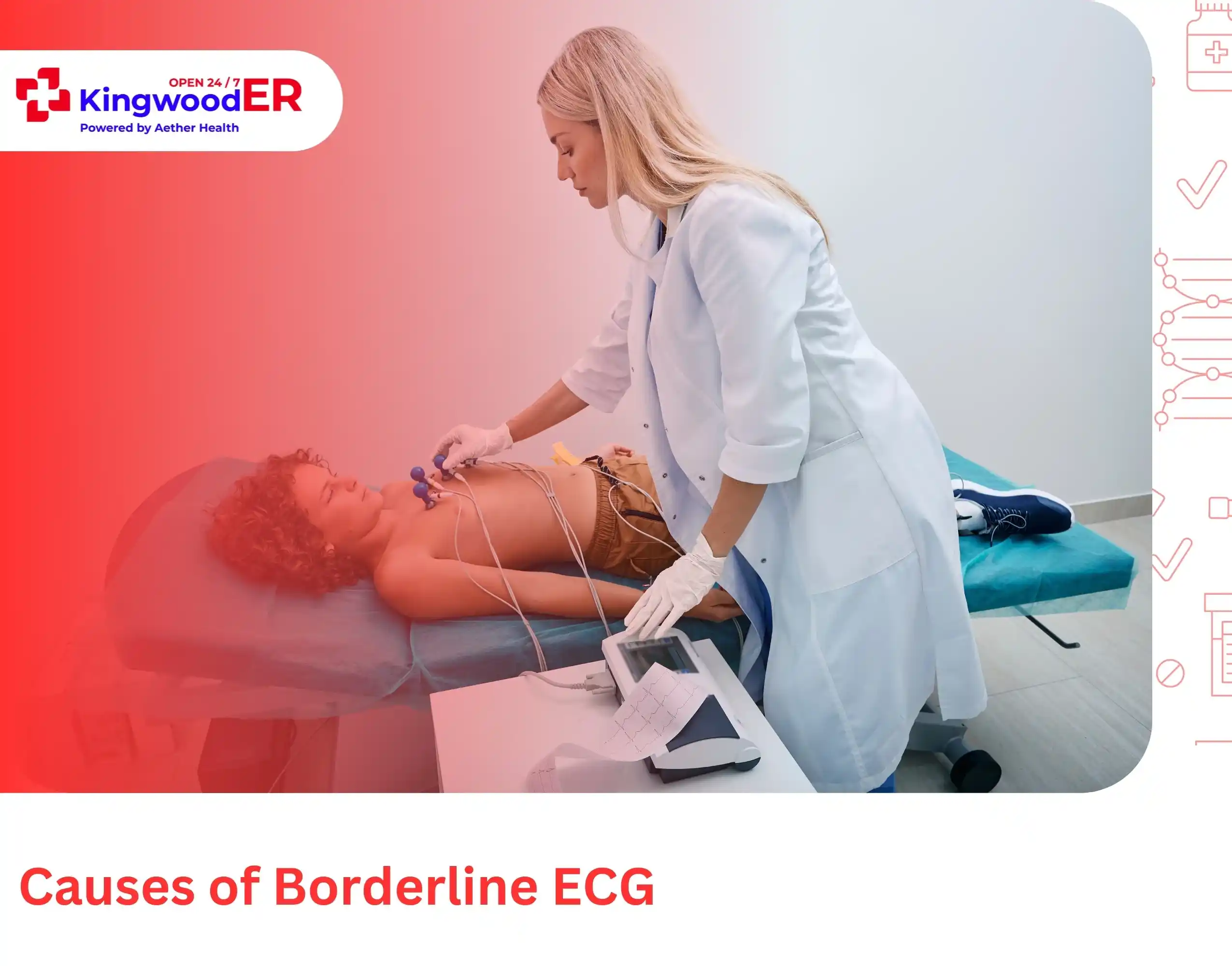
A borderline ECG can develop for many reasons. In some cases, the cause is temporary and harmless. In other situations, it may reflect early heart strain or rhythm irregularities that need closer monitoring.
Understanding the cause is important because treatment depends entirely on what is triggering the electrical changes.
These causes are often reversible and may normalize once corrected:
- Stress or anxiety
- Dehydration
- Lack of sleep
- Excess caffeine or stimulant intake
- Mild electrolyte imbalance
- Recent intense physical activity
These factors can create slight changes in cardiac rhythm without underlying heart disease.
Is a Borderline ECG Normal?
Yes, having borderline ECG can be normal and also completely harmless in the majority of cases. These irregularities can be noticed due to a few factors, such as stress, dehydration, lack of sleep, or caffeine intake affecting cardiac rhythm.
At times, healthy young adults and athletes can witness minor electrical variations that are not considered dangerous or borderline. In such cases, a treatment is not essential; one can get well easily by making a few lifestyle changes. But if it comes along with symptoms such as chest discomfort, dizziness, or shortness of breath, a borderline ECG should be evaluated immediately. In such severe emergencies, it needs to be evaluated immediately so that appropriate emergency service treatment can be undertaken.
Is Borderline ECG With Chest Pain an Emergency?
Yes, experiencing chest pain along with borderline ECG should always be taken seriously.
Even small electrical changes can sometimes indicate early heart strain or a serious underlying heart problem. When chest tightness, sweating, nausea, or arm and jaw discomfort occur alongside borderline findings, urgent evaluation is necessary.
At ER of Kingwood, our Emergency Irregular Heartbeat (Arrhythmia) Treatment in Kingwood, TX provides immediate heart rhythm assessment, helping patients easily stabilze overcome their serious concerns.
Symptoms of Borderline ECG
A borderline ECG alone does not have any signs. Many patients discover it after a routine checkup. However, if an underlying condition is present, warning signs may develop.
Symptoms vary depending on the cause and severity of the electrical changes.
Below is a list of a few mild signs that some people might notice:
- Occasional mild palpitations
- Brief awareness of the heartbeat
Below are a few serious signs that need to be evaluated:
- Chest pressure or chest tightness
- Constant irregular heartbeat
- Shortness of breath
- Dizziness
- Fainting or near-fainting
- Unexplained fatigue
Symptoms Severity Table
| Symptom | Monitor at Home | Schedule Evaluation | Immediate Emergency Care |
| No symptoms | ✔ | — | — |
| Mild palpitations | ✔ | ✔ | — |
| Persistent irregular rhythm | — | ✔ | ✔ |
| Chest discomfort | — | ✔ | ✔ |
| Severe chest pain | — | — | ✔ |
| Fainting | — | — | ✔ |
Should I Be Worried About a Borderline ECG?
No, you should not panic and get extremely worried, but it should not be ignored either.
While feeling completely well with no visible health issues, your physician might recommend monitoring.
If you have diabetes, high blood pressure, a smoking history, or a family history of heart disease, then further comprehensive evaluation is still required.
At the ER of Kingwood, we offer advanced laboratory services to assess cardiac enzymes, electrolytes, and other important markers.
Can Borderline ECG Be Cured?
No, a borderline ECG alone cannot be “cured” because it is not an actual disease. Treatment depends entirely on the underlying cause. Changes that are related to dehydration, stress, or mild electrolyte imbalance need to be addressed first, as they may normalize the tracing. If an arrhythmia or heart condition is identified, medications or further cardiac management may be required.
Our on-site Medical Pharmacy ensures patients receive necessary medications immediately, without delay.
Listen to the Early Warning Signs
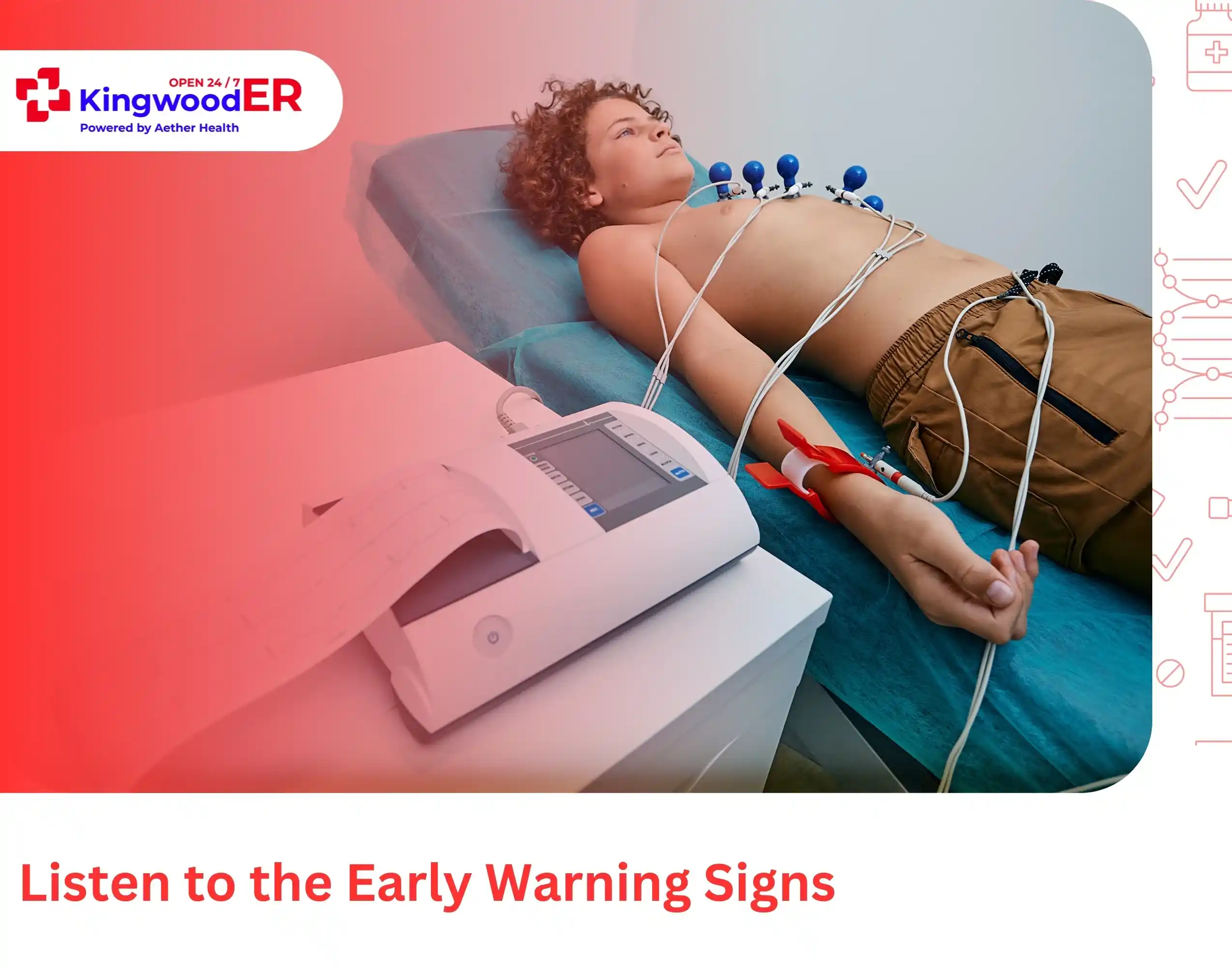
A borderline ECG does not always indicate something serious. In the majority of cases, it reflects temporary factors that can be cured with minor changes and monitoring. However, the result should never be ignored without knowing its root factors.
Different aspects, including symptoms, medical history, and risk factors, all have a strong impact on tracing. Chest discomfort, shortness of breath, fainting, or persistent palpitations alongside a borderline ECG require immediate evaluation.
If you have heart issues, then early assessment can minimize the chances of complications. ER of Kingwood is available 24/7 to provide rapid cardiac evaluation and emergency care when it matters most.
Frequently Asked Questions (FAQs)
What is a borderline ECG?
A borderline ECG shows minor changes in your heart’s electrical activity that are not clearly normal or abnormal.
Is a borderline ECG normal?
Yes, it is normal if it is not associated with any serious issues. Temporary factors like stress, dehydration, or caffeine can cause minor changes.
Can lifestyle changes improve borderline ECG results?
Yes, addressing stress, sleep, hydration, and caffeine intake can help normalize minor electrical changes.
What can cause a borderline ECG?
It is normally caused by stress, lack of sleep, or electrolyte imbalance.
Can borderline ECG be cured?
A borderline ECG itself is not a disease. Treatment focuses on the underlying cause, such as hydration, medications, or rhythm monitoring.