
A bump on the head after a fall, a car accident, or a hit during sports can be hard to judge on your own. Some head injuries look alarming but turn out to be minor, and some that seem mild are hiding something more serious. If you’re searching for a concussion emergency room in Kingwood, TX, Aether Health – Kingwood ER offers on-site CT imaging and neurological exams 24 hours a day, with board-certified emergency physicians ready to evaluate you within minutes, no appointment needed.
As a freestanding emergency room, our role is to evaluate the injury, run the imaging needed to check for anything dangerous, and stabilize and treat what we find. If your scan shows bleeding or swelling that needs neurosurgical care, we begin stabilizing treatment immediately and coordinate emergency transfer to a hospital equipped for that next step.
If someone loses consciousness after a head hit, won’t wake up normally, has a seizure, repeated vomiting, worsening headache, or unequal pupils, call 911 or come to our ER immediately.
1. Arrival and assessment. We ask how the injury happened and perform a neurological exam checking your alertness, memory, coordination, and pupil response.
2. Imaging if needed. A CT scan is ordered when your symptoms or the mechanism of injury suggest a risk of bleeding or a skull fracture.
3. Stabilization and treatment. For a typical concussion, this means symptom management and clear guidance. For anything more serious, we begin immediate stabilizing care.
4. Referral or transfer if needed. Most concussions are discharged with a recovery plan and follow-up instructions. If imaging reveals a bleed, significant swelling, or a skull fracture requiring neurosurgery, we stabilize you and coordinate immediate transfer to a hospital.


Most bumps to the head are not emergencies, but certain signs mean you should be seen right away. Watch for:
• Loss of consciousness, even briefly
• A headache that keeps getting worse rather than better
• Repeated vomiting
• Confusion, slurred speech, or trouble staying awake
• Seizures
• Weakness, numbness, or difficulty walking
• Unequal pupil size
• Clear fluid or blood draining from the nose or ears
• Any head injury in someone taking blood thinners
If none of these apply but you’re still unsure, it’s always reasonable to get checked out. A quick evaluation is far better than wondering for the next 24 hours.
Go to the ER any time a head injury is followed by loss of consciousness, confusion that doesn’t clear quickly, repeated vomiting, a worsening headache, or any change in alertness. A concussion is a brain injury, even without a visible mark on the head, and the outward appearance of the injury often has little to do with how serious it actually is. High-risk mechanisms, a fall from height, a car accident, a hard hit during contact sports, or any injury in a child under two, deserve extra caution even if symptoms seem mild at first.
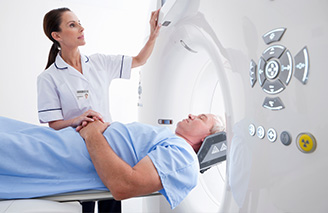
A concussion evaluation at Aether Health – Kingwood ER typically includes:
• A neurological exam checking memory, concentration, balance, and pupil response
• Symptom review covering headache, dizziness, nausea, sensitivity to light or sound, and confusion
• CT imaging when your symptoms or the injury mechanism suggest a risk of bleeding
• Clear discharge guidance on rest, gradual return to activity, and symptoms that should bring you back
Most concussions do not show up on a CT scan, since a CT looks for structural damage like bleeding or fractures rather than the functional changes that cause concussion symptoms. That’s actually a reassuring result. It means we’ve ruled out the dangerous possibilities, and your brain simply needs time to recover.
A CT scan is used selectively, based on your symptoms and how the injury happened, not for every head bump. Physicians typically order one when there’s loss of consciousness, repeated vomiting, a worsening headache, confusion, a dangerous mechanism of injury, or if you’re on blood thinners. Our on-sitediagnostic imaging means that scan happens the same visit, so you’re not left waiting or driving to a separate facility for results.
Concussion symptoms often show up immediately, but they can also develop gradually over the first 24 to 48 hours. This delayed onset is one reason it’s worth being cautious even if you feel fine right after the injury. Headache, dizziness, fatigue, trouble concentrating, or irritability can all emerge later, which is why anyone with a significant head injury should be watched closely for a day or two, even after being cleared in the ER.
Children, especially younger ones, often can’t describe what they’re feeling clearly. Watch for:
| In Older Children & Teens | In Infants & Toddlers |
|---|---|
| Headache, dizziness, confusion | Excessive crying, unable to be consoled |
| Sensitivity to light or noise | Refusing to eat, vomiting |
| Difficulty concentrating in school | Unusual sleepiness or listlessness |
| Balance problems, clumsiness | A soft spot on the head that bulges |
| Mood changes, unusual irritability | Loss of new skills, like unsteady walking |
Our team provides pediatric emergency care around the clock and is experienced in evaluating head injuries in infants, toddlers, and older kids, whose symptoms often look different from an adult’s.
Yes, sleep is not dangerous after a concussion, and rest actually supports recovery. The old advice about waking someone up every hour through the night has been largely set aside; current guidance focuses on making sure the person is medically cleared first and that anyone with them knows to seek care if new symptoms develop, such as repeated vomiting, worsening confusion, or difficulty waking normally. If you’ve been evaluated and told it’s safe to go home, normal sleep is part of a healthy recovery.
Return to sports should always follow a gradual, step-by-step process guided by a doctor, not a fixed number of days. Most concussion protocols move through stages, starting with light activity and progressing to full contact only after each stage is completed symptom-free. Returning to play too soon raises the risk of a second injury before the brain has fully healed, which can be more serious than the first. If your child had a concussion, follow up with a physician experienced in concussion management before clearing them to return to any contact sport.
• Open 24/7, 365 days a year
• On-site CT imaging when red-flag symptoms call for it
• Board-certified emergency physicians experienced in head injury evaluation, adult and pediatric
• Average 1-3 minutes to see a doctor, no appointment needed
• Coordinated transfer to a hospital for any injury needing neurosurgical care
• Most PPO insurance accepted, see our insurance and billing information
We serve Kingwood, Humble, Atascocita, Porter, and Northeast Houston from our facility on Northpark Drive, just off Highway 59/I-69.

Go to the ER if a head injury involves loss of consciousness, confusion that doesn’t clear quickly, repeated vomiting, a worsening headache, or any change in alertness. When in doubt after a head injury, it’s worth getting evaluated.
A concussion evaluation includes a neurological exam, a review of your symptoms, and a CT scan if your symptoms or the injury mechanism suggest a risk of bleeding, followed by clear guidance on rest and recovery.
Not for every head bump. A CT scan is ordered based on specific factors like loss of consciousness, repeated vomiting, worsening headache, or a dangerous injury mechanism, since it screens for bleeding rather than concussion itself.
Symptoms often appear immediately but can also develop gradually over the first 24 to 48 hours, which is why monitoring continues even after you feel okay right after the injury.
Older children may report headache, dizziness, or trouble concentrating. Infants and toddlers may show excessive crying, refusing to eat, unusual sleepiness, or a loss of recently learned skills like steady walking.
Yes. Sleep supports recovery and is not dangerous once you’ve been medically evaluated. The old practice of waking someone every hour has largely been replaced with watching for specific warning symptoms instead.
Return to sports should follow a gradual, physician-guided process through symptom-free stages, not a fixed timeline. Returning too soon raises the risk of a more serious second injury.
A head injury deserves a clear answer, not a guessing game. Aether Health – Kingwood ER offers 24/7 concussion evaluation with on-site CT imaging in Kingwood, TX, walk in anytime, no appointment needed.
Call Now: (713) 528-8703 | Visit us: 2158 Northpark Dr, Kingwood, TX 77339
This content is for general educational purposes and is not a substitute for professional medical advice. If you are experiencing a medical emergency, call 911 or go to the nearest emergency room.