

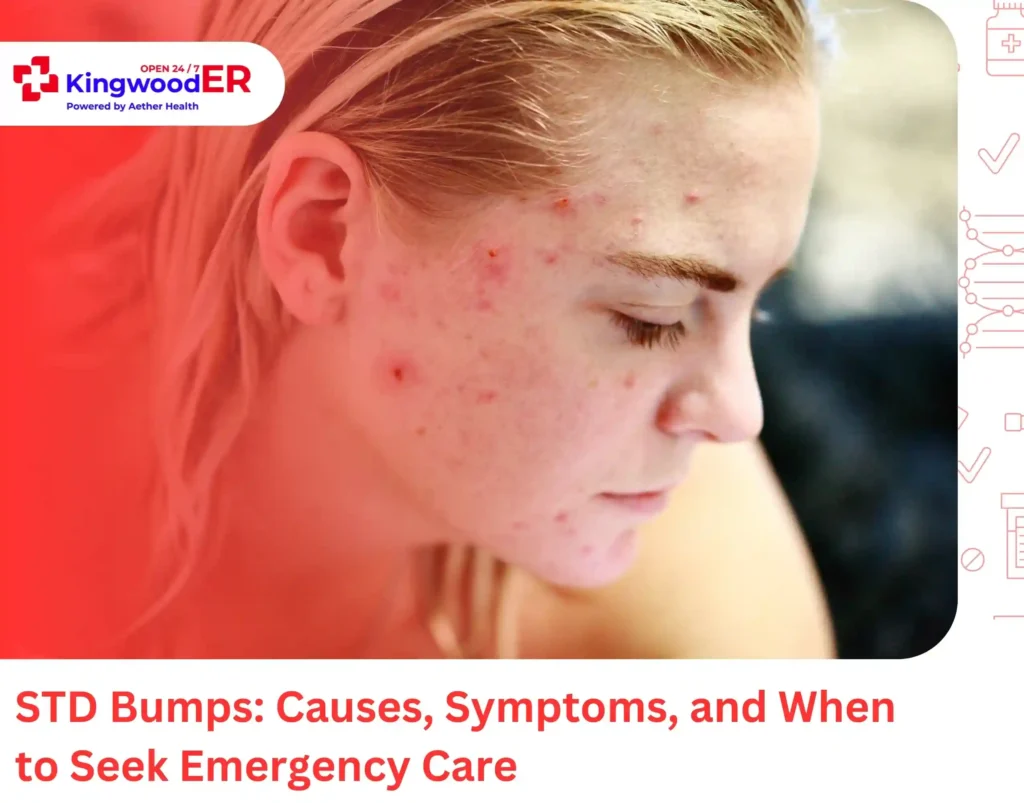
If you notice sudden, unexpected bumps on your skin, especially in private areas, this might be an alarming sign. Many patients who notice these unusual bumps immediately visit the emergency room, asking whether STD bumps are serious.
Sexually transmitted diseases (STDs) come with a few early warning signs that appear in different ways, such as bumps or sores. By visiting a reliable emergency room such as ER of Kingwood, you can get it diagnosed early. We provide confidential evaluations for patients experiencing sudden or unexplained skin changes.
Early assessment helps identify the cause, rule out serious conditions, and guide appropriate treatment. It also helps you make lifestyle changes so you can stay alert and conscious.
What Are STD Bumps?
STD bumps are raised areas, sores, or lesions in red bumps that appear on the skin or mucous membranes caused by certain sexually transmitted infections. It may vary in size, color, texture, and pain level depending on the underlying infection.
Similar to genital herpes, syphilis, and chancroid, STDs can also cause sores or bumps, which may appear suddenly or worsen over time. Rarely, bumps caused by STDs may be confused with ingrown hairs, pimples, or allergic reactions; this makes a professional evaluation important.
Common Types of Bumps Caused by STDs
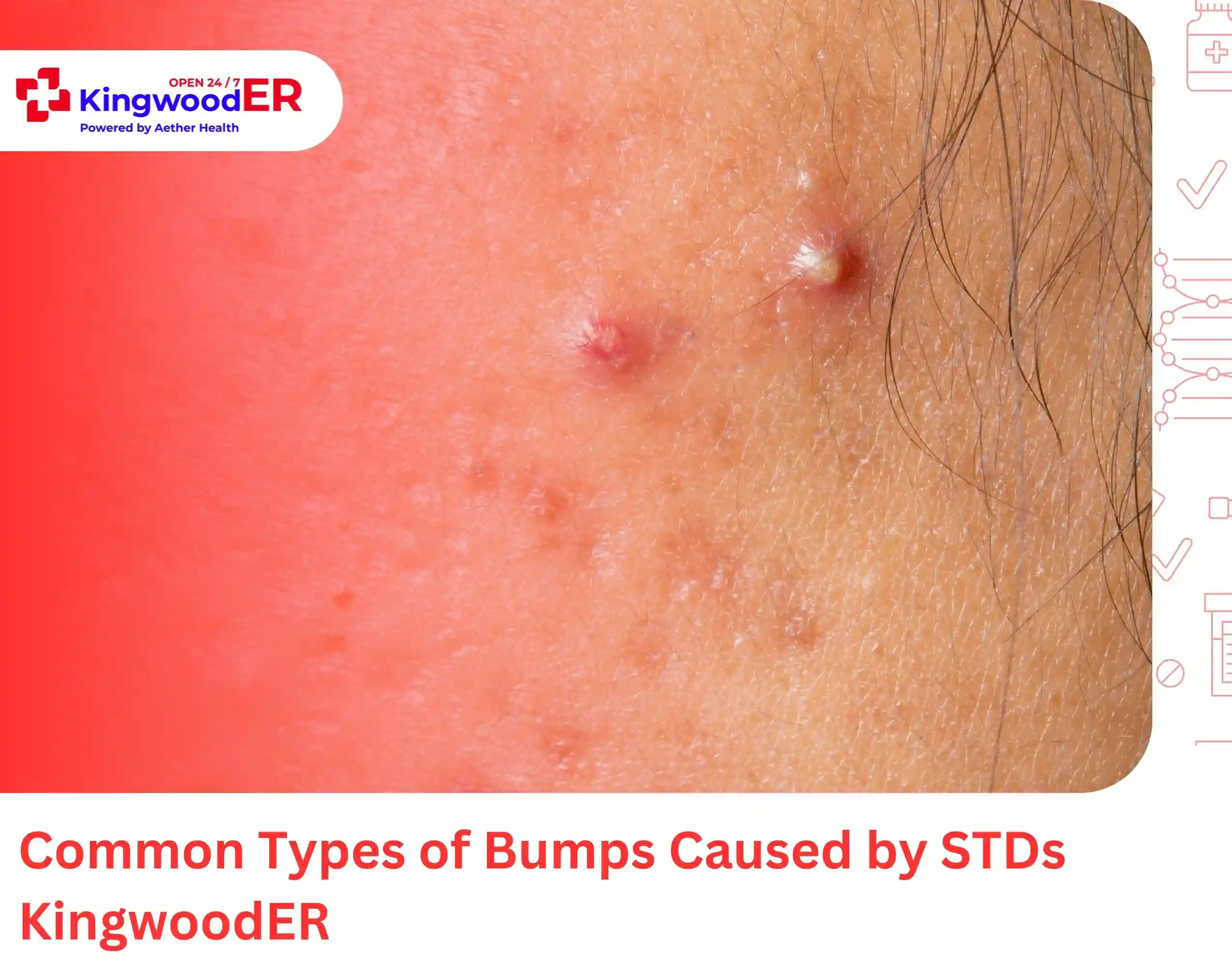
STD bumps might look different in various people. Its appearance, pain, and texture depend on the severity of the infection.
Below are a few common types of how STD bumps are caused:
- Small, red bumps or white blisters
- Small bump or group of small bumps in the genital area
- Painless, fleshy, cauliflower-looking bumps
- Firm or open sores seen with syphilis or chancroid
When these STD bumps appear suddenly and are accompanied by other symptoms such as itching, burning, or flu-like illness, then they need to be evaluated immediately. If you experience such a problem, then immediately seek our laboratory services at the ER of Kingwood.
Symptoms of STD in Females
STD bumps in women might have a different impact. They can come along with a few extra symptoms, including:
- Genital sores or blisters
- Vaginal itching or abnormal discharge
- Pelvic pain
- Burning during urination
- Intense pain during intercourse
Some women may experience mild or no symptoms at first, but over time, it rises the risk of delayed diagnosis and complications increases.
Symptoms of STD in Males
Men experience different signs of STDs. Their body might react in a different way than females.
Below are a few common signs males experience:
- Bumps, sores, or blisters on the penis
- Urethral discharge
- Pain or burning with urination
- Discomfort in the testicles
- Skin irritation or redness
Prompt evaluation helps reduce transmission and prevent worsening symptoms.
Different Areas of the Body where STD bumps appear
STD-related bumps are not limited to the sensitive area. It might appear in different parts of the body based on exposure and the type of infection.
Below are a few common areas apart from genital areas where STD bumps might appear:
- Clear bump on inside of lip (STD)
- STD red bumps on the tongue
- Bumps on the stomach
- Genital, anal, or groin bumps are the most commonly reported locations
Getting urgent diagnostic imaging is the best way to diagnose whether the bumps are STD or some other underlying skin condition.
Can STD Bumps Be Serious?
Yes, STD bumps can be serious, and in most cases, they are caused by genital herpes, syphilis, or chancroid. In some cases, when the STDs are untreated, they can increase the chances of complications, long-term health risks, or easy transmission.
Although STD bumps are serious and require immediate medical evaluation but not every bump is due to an STD. Some might be due to ingrown hairs, skin irritation, allergic reactions, or benign cysts.
However, since STD-related bumps can closely resemble non-STD conditions, professional evaluation is often the safest way to determine the cause and ensure appropriate care.
Why Sudden STD Bumps Should Not Be Ignored
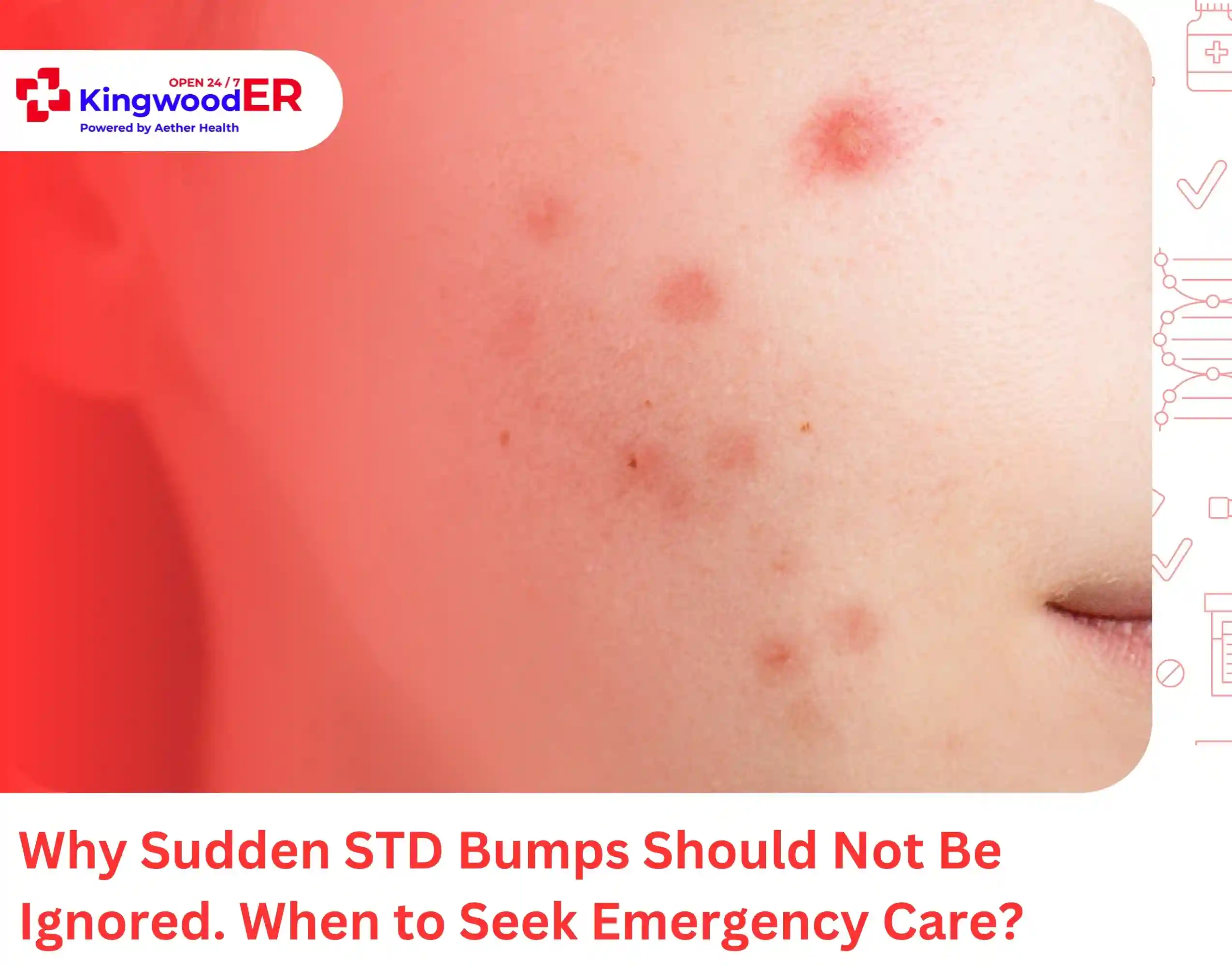
Sudden bumps on the skin can appear due to STDs, which require urgent medical attention. Some infections may progress, spread, or cause complications if left untreated. In a few cases, these signs may overlap with conditions that require urgent care, including severe infections or inflammatory reactions.
At ER of Kingwood, we offer rapid assessment, immediate rash treatment, and diagnostic testing to determine whether symptoms are STD-related or caused by another medical condition.
When to Seek Emergency Care for STD Bumps
In majority of cases, STD bumps are not life-threatening; however, there are certain symptoms that require immediate medical attention. It is medically advised to seek emergency care if bumps become extremely painful, rapidly increase in size, begin bleeding, or develop signs of infection such as swelling, warmth, or pus.
Moreover, if the pain is severe and interferes with urination, walking, or daily activities, it should also be evaluated promptly.
Moreover, if the STD is accompanied by high fever, chills, severe abdominal or pelvic pain, confusion, dizziness, or difficulty swallowing or breathing, then it should be immediately evaluated. Such signs indicate spreading infection or a more serious systemic reaction that needs urgent treatment.
Conclusion: Don’t Ignore Unexplained STD Bumps
Observing STD bumps can be stressful. Whether the bumps appear as small red spots, white blisters, painless fleshy growths, or sudden sores, they are early signs that your body may be responding to an infection or underlying condition.
At times, these bumps might appear due to harmless skin irritations, while others can be early signs of sexually transmitted diseases that require timely diagnosis and treatment.
STDs do not appear with a clear sign, and few people report having visible bumps that disappear while the infection continues to progress internally. Conditions such as genital herpes, syphilis, and HPV can evolve over time, increasing the risk of complications if left untreated.
Early medical evaluation helps identify the cause, prevent the spread of infection, and reduce the likelihood of long-term health issues.
At ER of Kingwood, patients receive rapid assessment, confidential testing, and clear guidance so they can understand their condition and take the next appropriate steps.
Frequently Asked Questions (FAQs)
What do STD bumps look like?
STD bumps look like small red bumps, white blisters, open sores, or painless fleshy growths, depending on the infection.
Are all genital bumps caused by STDs?
No, some bumps may be caused by ingrown hairs, cysts, or skin irritation.
Are STD bumps painful?
Yes, a few, such as herpes sores, can be painful, while others, such as syphilis or genital warts, may be painless.
How long do STD bumps last?
Its duration depends upon the severity of infection; some last 1–2 weeks, while others may persist longer without treatment.
Can STD bumps appear in the mouth?
Yes, oral STDs can cause bumps or sores on the lips, tongue, or inside of the mouth.