
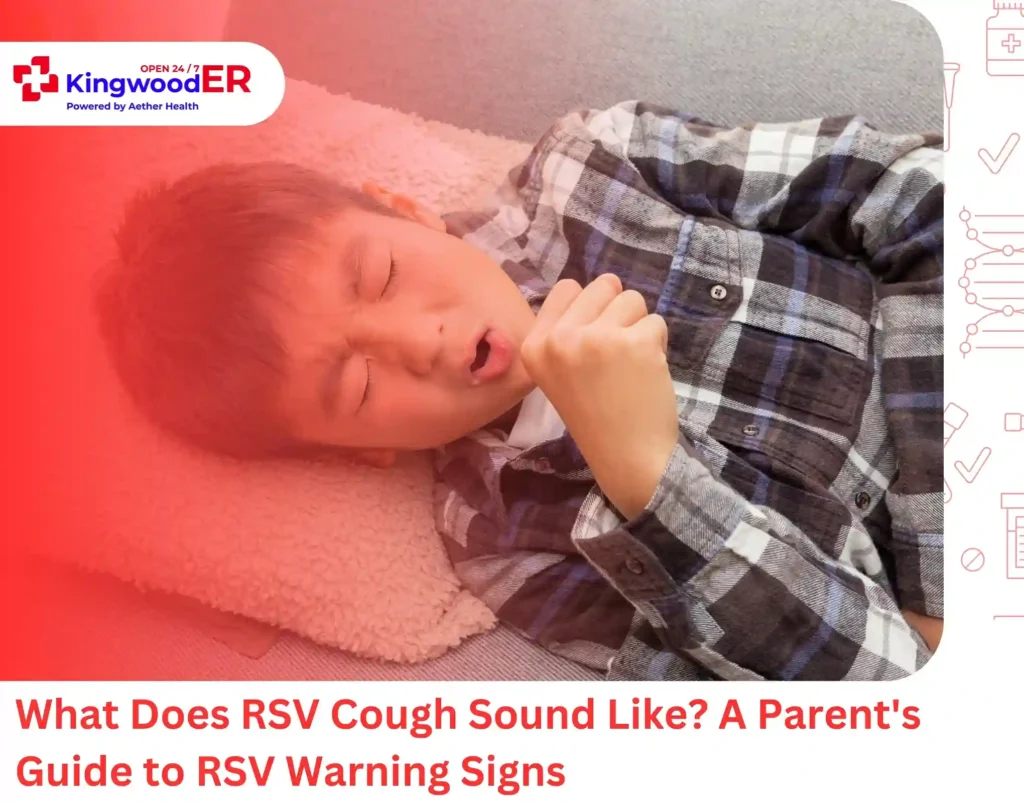
RSV (respiratory syncytial virus) is the leading cause of hospitalization in infants under one year old. It infects the lower airways, producing a distinctive cough that parents often describe as “rattly,” “wheezy,” or “like Rice Krispies crackling in the chest.” Recognizing the RSV cough sound, and knowing when it signals an emergency, can make a critical difference.
This guide explains what RSV cough sounds like at different ages, how it differs from croup and other childhood coughs, how symptoms progress day by day, and the warning signs that mean you need the ER now.
What Does RSV Cough Sound Like?
An RSV cough sounds wet, rattly, and wheezy, like mucus is trapped deep in the chest. Parents often describe it as “phlegmy” or compare it to Rice Krispies crackling when their child breathes.
Unlike the harsh, barking cough of croup (which affects the upper airway), RSV produces a lower airway cough with a whistling wheeze on exhale. The cough is persistent, comes in fits, and typically worsens at night when lying down allows mucus to pool in the airways.
Key Sound Characteristics
- Wet and productive: RSV cough produces mucus. You may hear gurgling or bubbling sounds as your child breathes between coughs.
- Wheezing on exhale: A high-pitched whistling sound when breathing out indicates inflammation and mucus in the small airways (bronchioles).
- Rattling in the chest: Place your hand on your child’s back during breathing. You may feel vibrations from mucus moving in the lower lungs.
- Persistent coughing fits: RSV cough comes in clusters rather than isolated coughs, often disrupting sleep and feeding.
- Worsening at night: Lying flat allows mucus to accumulate, intensifying symptoms between midnight and early morning.
Why RSV Cough Sounds Different
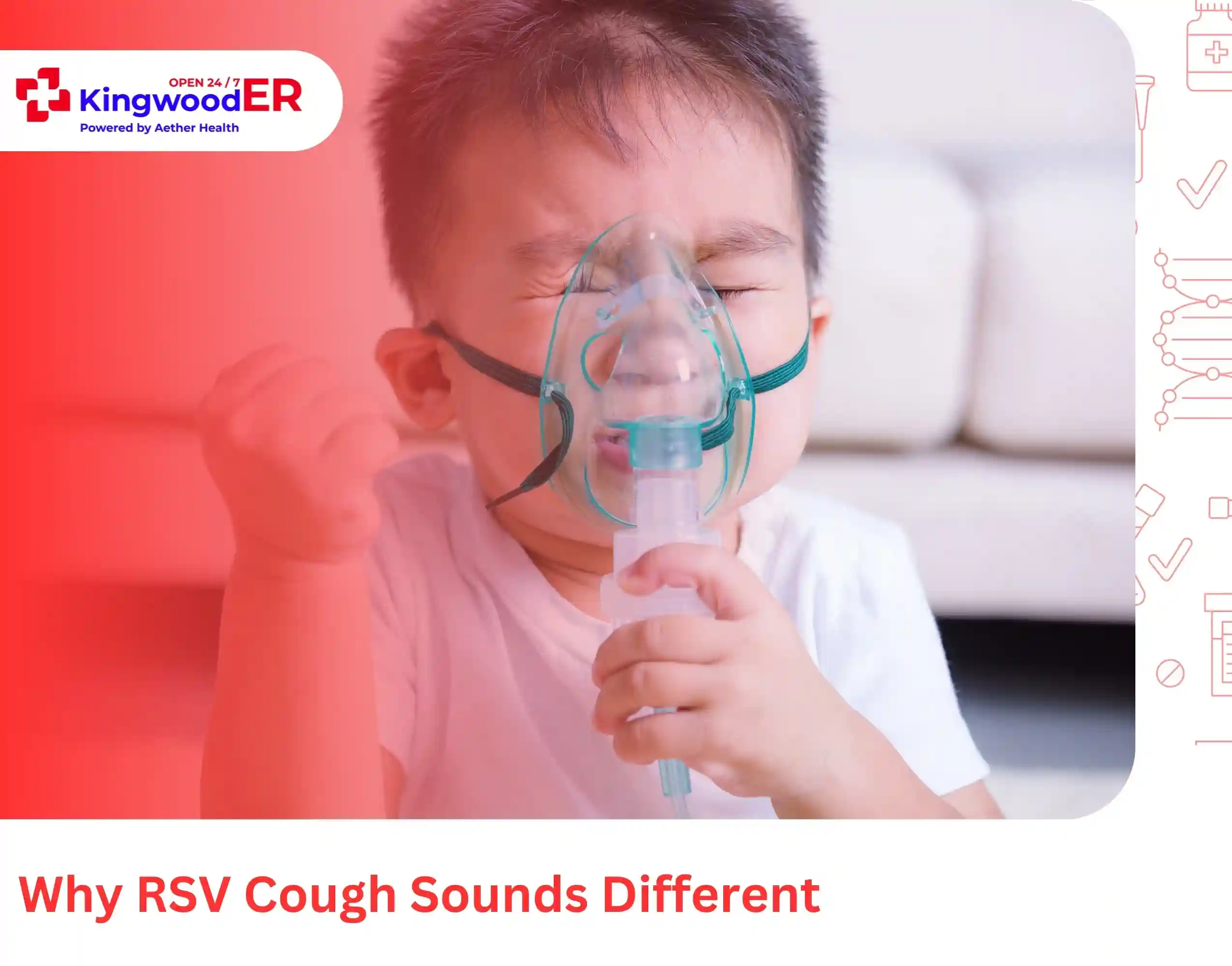
RSV targets the bronchioles; the smallest airways deep in the lungs. When these tiny passages become inflamed and fill with mucus, air must squeeze through narrowed tubes. This creates the characteristic wheezing sound, similar to air being forced through a pinched balloon.
The “crackling” sound parents hear comes from air bubbling through mucus in the alveoli (air sacs). Healthcare providers listening with a stethoscope often describe these as “crackles” or “rales”, sounds that indicate fluid where there should only be air.
Is RSV Cough Wet or Dry?
RSV cough can be both; it depends on the stage of illness. Early RSV often starts with a dry, hacking cough that resembles a common cold. As the virus moves deeper into the lungs over 2-4 days, the cough becomes wet, productive, and phlegmy as mucus builds up.
- Days 1-2: Typically dry, tickly cough with runny nose and mild fever.
- Days 3-5: Cough turns wet and rattly. Wheezing This is the peak danger period.
- Days 6-10: Gradual improvement, though cough remains productive.
- Weeks 2-4: Lingering cough (wet or dry) as lungs heal. This extended cough is normal and doesn’t indicate worsening infection.
The wet, wheezy cough with visible breathing effort is the hallmark of RSV bronchiolitis, the lower respiratory infection that makes RSV dangerous for infants.
RSV Cough Vs Croup Vs Other Childhood Coughs
Parents often confuse RSV with croup because both cause alarming coughs in young children. The key difference lies in where the infection sits: RSV affects the lower airways (bronchioles and lungs), while croup affects the upper airways (voice box and windpipe). This produces distinctly different sounds.
| Condition | Cough Sound | Breathing Sound | Key Distinction |
| RSV | Wet, rattly, phlegmy | Wheezing on exhale | Lower airway; chest rattles |
| Croup | Harsh, barking (seal-like) | Stridor on inhale | Upper airway; hoarse voice |
| Whooping Cough | Rapid hacking fits | “Whoop” gasp after coughing | Severe fits; vomiting after |
| Common Cold | Dry or mildly wet | Normal; nasal congestion | No wheezing; no distress |
The Critical Difference: Inhale vs. Exhale
RSV: Wheezing occurs when breathing OUT. The problem is getting air out of mucus-filled lower airways.
Croup: Stridor (a harsh, vibrating sound) occurs when breathing IN. The problem is getting air past a swollen voice box.
If you hear a seal-like bark with noisy inhales, it’s likely croup. If you hear wet rattling with whistling exhales, suspect RSV.
How RSV Cough Differs by Age
RSV doesn’t present the same way in every child. Age dramatically affects how symptoms appear, and how dangerous they become.
Newborns (0-3 Months)
RSV in newborns is deceptive. Infants this young may show minimal coughing or wheezing. Instead, watch for irritability, poor feeding, lethargy, and apnea (pauses in breathing lasting 10+ seconds). A newborn with RSV may simply “look sick” without the typical respiratory sounds, which makes it more dangerous, not less.
ER warning: Any breathing difficulty, fever over 100.4°F, or feeding refusal in a baby under 3 months requires immediate evaluation.
Infants (3-12 Months)
RSV cough in infants shows the classic RSV cough sound: wet, rattly, wheezy. You’ll hear mucus moving with each breath and see visible effort, such as nostrils flaring, ribs pulling inward, and belly pushing out. RSV cough in babies this age often disrupts feeding because they can’t breathe and suck simultaneously.
Toddlers (1-3 Years)
RSV cough in toddlers typically starts like a cold, then moves into the chest over 3-5 days. The cough becomes productive with audible wheezing. Toddlers may refuse to eat, have trouble sleeping, and breathe faster than normal (over 40 breaths per minute indicates distress).
Older Children and Adults
In healthy older children and adults, RSV usually resembles a bad cold—runny nose, cough, low-grade fever—and resolves without complications. However, adults over 60 and those with chronic lung or heart conditions face serious risk. RSV causes up to 180,000 hospitalizations annually among U.S. adults 50 and older.
RSV Cough Progression: What to Expect Day by Day
Understanding how RSV progresses helps you anticipate when symptoms will peak, and when to worry.
Days 1-2: Cold Symptoms Begin
RSV starts like any cold: runny nose, sneezing, mild cough, low-grade fever. The cough is typically dry at this stage. Most parents don’t suspect RSV yet.
Days 3-5: Peak Symptoms (Highest Risk)
This is the danger window. The virus moves into the lower airways, and the cough transforms; becoming wet, rattly, and wheezy. Breathing effort increases. Fever may spike. Watch closely during this period; most RSV hospitalizations occur between days 3-5.
Days 6-10: Gradual Improvement
Breathing usually eases. Fever resolves. The cough remains but becomes less frequent. Your child may still sound congested but should show improved energy and appetite.
Weeks 2-4: Lingering Cough
A persistent cough lasting 3-4 weeks after RSV is normal and doesn’t indicate ongoing infection. The airways need time to heal and clear residual mucus. Contact your pediatrician if the cough worsens, fever returns, or new symptoms develop.
How Long Does RSV Cough Last?
RSV cough typically lasts 1-3 weeks, though some children cough for up to 4 weeks as their airways recover. The acute illness, with fever, wheezing, and breathing difficulty, usually resolves within 7-10 days.
- Active infection: 5-7 days (contagious period)
- Acute symptoms: 7-10 days
- Lingering cough: 2-4 weeks
A cough that worsens after initial improvement, returns with fever, or lasts beyond 4 weeks warrants medical evaluation to rule out secondary bacterial infection or other complications.
When to Go to the ER for RSV
Most RSV cases resolve at home. But RSV can become life-threatening in infants, and certain warning signs require emergency care immediately.
Call 911 or Go to the ER Immediately If Your Child Shows:
- Severe breathing difficulty: Gasping, grunting with each breath, or unable to cry or speak normally.
- Chest retractions: Skin pulling inward between ribs, above the collarbone, or below the ribcage with each breath.
- Blue or gray color: Lips, tongue, fingernails, or skin turning blue, gray, or purple; a sign of dangerously low oxygen.
- Nasal flaring: Nostrils spreading wide with each breath as your child works harder to get air.
- Apnea: Pauses in breathing lasting 10 seconds or longer, especially in infants under 3 months.
- Extreme lethargy: Difficult to wake, unusually limp, or unresponsive.
- Dehydration signs: No wet diapers for 8+ hours, no tears when crying, sunken soft spot on infant’s head.
- Fever in newborns: Any fever (100.4°F or higher) in a baby under 3 months old.
High-Risk Groups Who Need Earlier Medical Evaluation
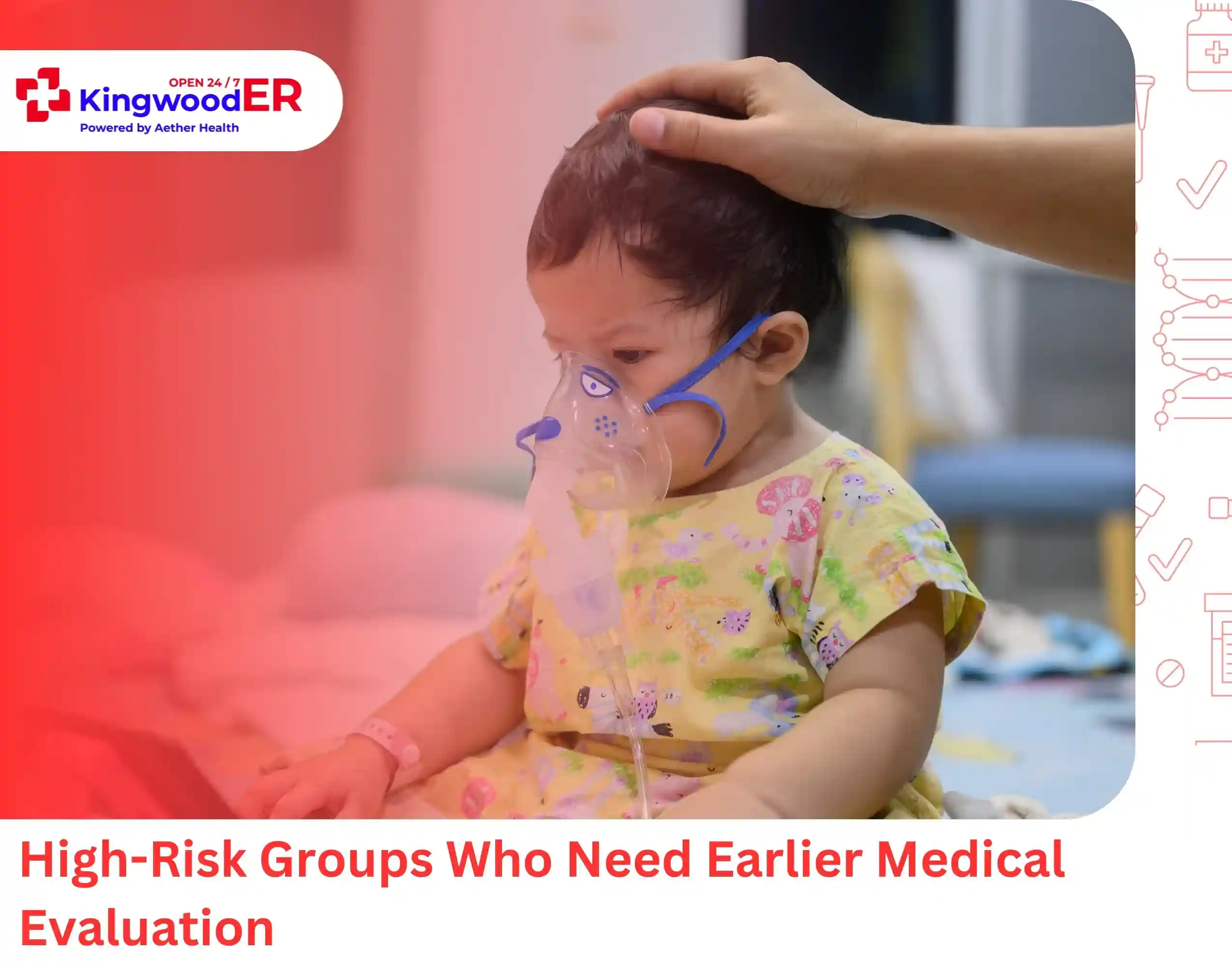
Seek care sooner (before emergency RSV warning signs appear) if the person falls into these categories:
- Premature infants (born before 37 weeks)
- Infants under 6 months old
- Children with congenital heart disease or chronic lung disease
- Children with weakened immune systems
- Adults over 65 with heart or lung conditions
RSV Cough Treatment: What Actually Helps
RSV is a virus, so antibiotics don’t work. Treatment focuses on supporting your child’s breathing and hydration while their immune system clears the infection.
Home Care for Mild RSV
- Saline drops and nasal suctioning: Clear mucus from nasal passages before feeding and sleeping.
- Cool-mist humidifier: Adds moisture to air, loosening mucus. Clean daily to prevent mold growth.
- Fluids: Offer frequent small feedings (breast milk, formula, or electrolyte solutions). Hydration keeps mucus thin.
- Upright positioning: Hold your baby upright or elevate the head of the crib mattress slightly to ease breathing.
- Fever management: Acetaminophen or ibuprofen as directed by age. Never give aspirin to children.
What Doesn’t Help RSV
- Antibiotics: RSV is viral. Antibiotics treat bacteria, not viruses.
- Over-the-counter cough medicines: Not recommended for children under 4 and not effective for RSV.
- Steroids or bronchodilators: Studies show these don’t significantly help most children with RSV bronchiolitis.
Hospital Treatment for Severe RSV
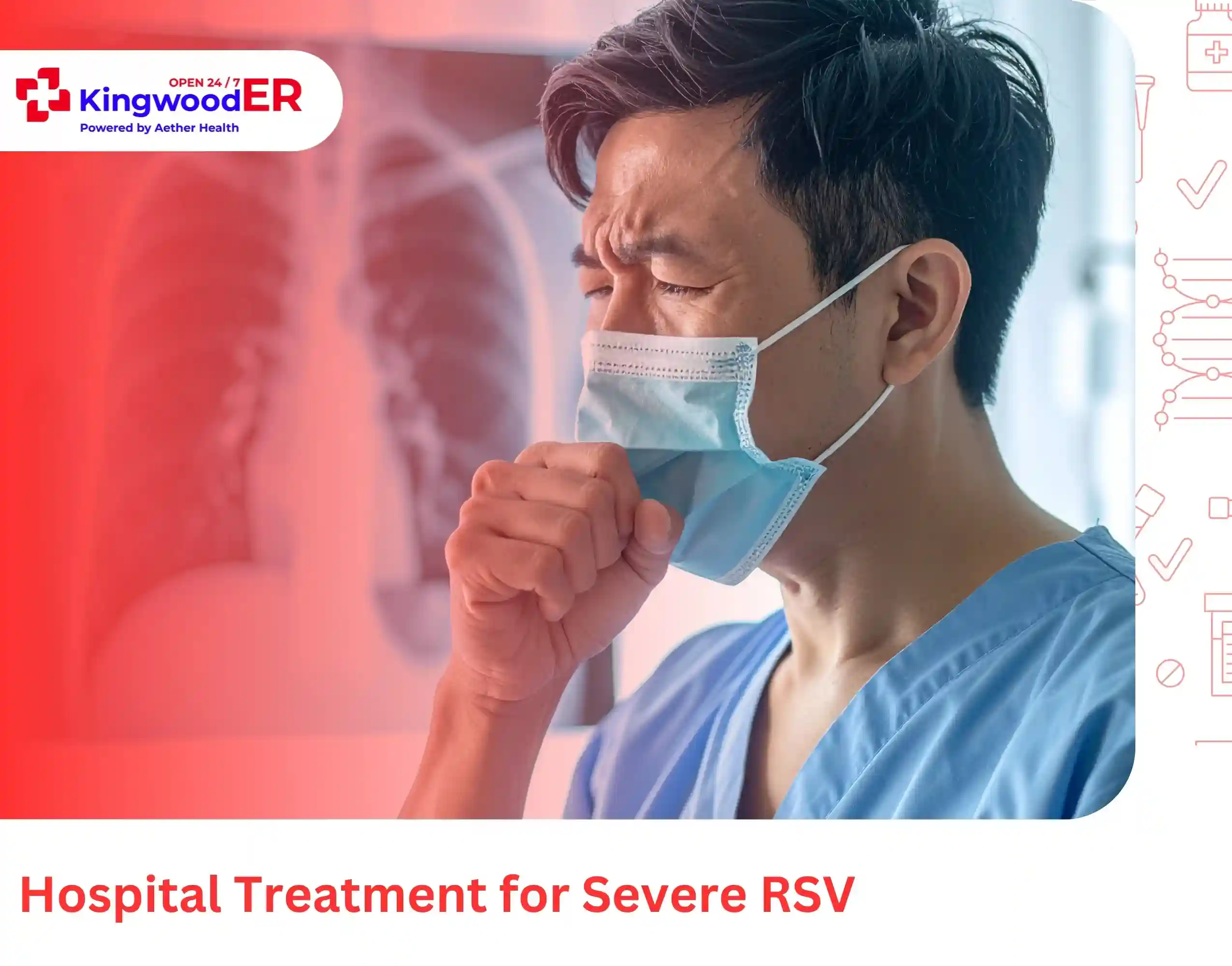
Children hospitalized with RSV may receive supplemental oxygen if levels drop below 90%, IV fluids for dehydration, nasal suctioning to clear airways, and continuous monitoring. In severe cases, high-flow oxygen or mechanical ventilation may be necessary.
RSV Myths That Mislead Parents
❌ “No fever means it’s not RSV.” False. Many children with RSV have low-grade or no fever, especially older infants and toddlers.
❌ “A barking cough means RSV.” False. Barking cough is the hallmark of croup, not RSV. RSV produces wet, wheezy coughs.
❌ “The cough should clear in a week.” False. RSV cough commonly persists 2-4 weeks. A lingering cough alone isn’t cause for concern.
❌ “Antibiotics can treat RSV.” False. RSV is a virus. Antibiotics only help if a secondary bacterial infection develops.
❌ “If my child had RSV once, they’re immune.” False. Children can get RSV multiple times, though subsequent infections are usually milder.
Final Thoughts
The RSV cough sound (wet, rattly, wheezy) is your signal to watch closely. Most children recover at home with supportive care, but RSV can turn serious quickly, especially in infants under 6 months.
Trust your instincts. If your child’s breathing looks labored, if you see skin pulling between ribs, if their color changes, or if they simply “look wrong” to you, don’t wait. Kingwood ER is open 24/7 with pediatric-capable staff ready to evaluate RSV symptoms, check oxygen levels, and provide immediate treatment when needed.
FAQs About RSV Cough Sound
1. Can RSV cough sound like croup?
In some cases, yes. If RSV causes significant upper airway swelling, it can produce a barking cough similar to croup. However, RSV more commonly produces wet, wheezy coughs affecting the lower airways, while croup’s barking cough comes with stridor (noisy breathing on inhale).
2. Why is RSV cough worse at night?
Lying flat allows mucus to pool in the airways rather than draining. Nasal congestion also worsens when horizontal. Try elevating your child slightly and running a cool-mist humidifier to ease nighttime symptoms.
3. How can I tell if my baby has RSV or just a cold?
Cold symptoms stay in the upper respiratory tract. RSV moves into the lower airways, causing wheezing, visible breathing effort, and a wet, rattly cough. If you hear wheezing or see your baby’s ribs pulling in with each breath, suspect RSV.
4. When is RSV cough no longer contagious?
People with RSV are typically contagious for 3-8 days, though infants and immunocompromised individuals may spread the virus for up to 4 weeks. The lingering cough that persists for weeks after acute illness is not necessarily a sign of ongoing contagiousness.
5. Can RSV turn into pneumonia?
Yes. RSV can cause viral pneumonia on its own or weaken the lungs enough for secondary bacterial pneumonia to develop. Signs include worsening symptoms after initial improvement, returning fever, and increased breathing difficulty.
6. Should I take my child to the ER for wheezing?
Mild wheezing alone may not require the ER if your child is eating, drinking, and breathing comfortably. However, wheezing combined with labored breathing, poor feeding, lethargy, or any color change warrants immediate evaluation. When in doubt, call your pediatrician or come to the ER.