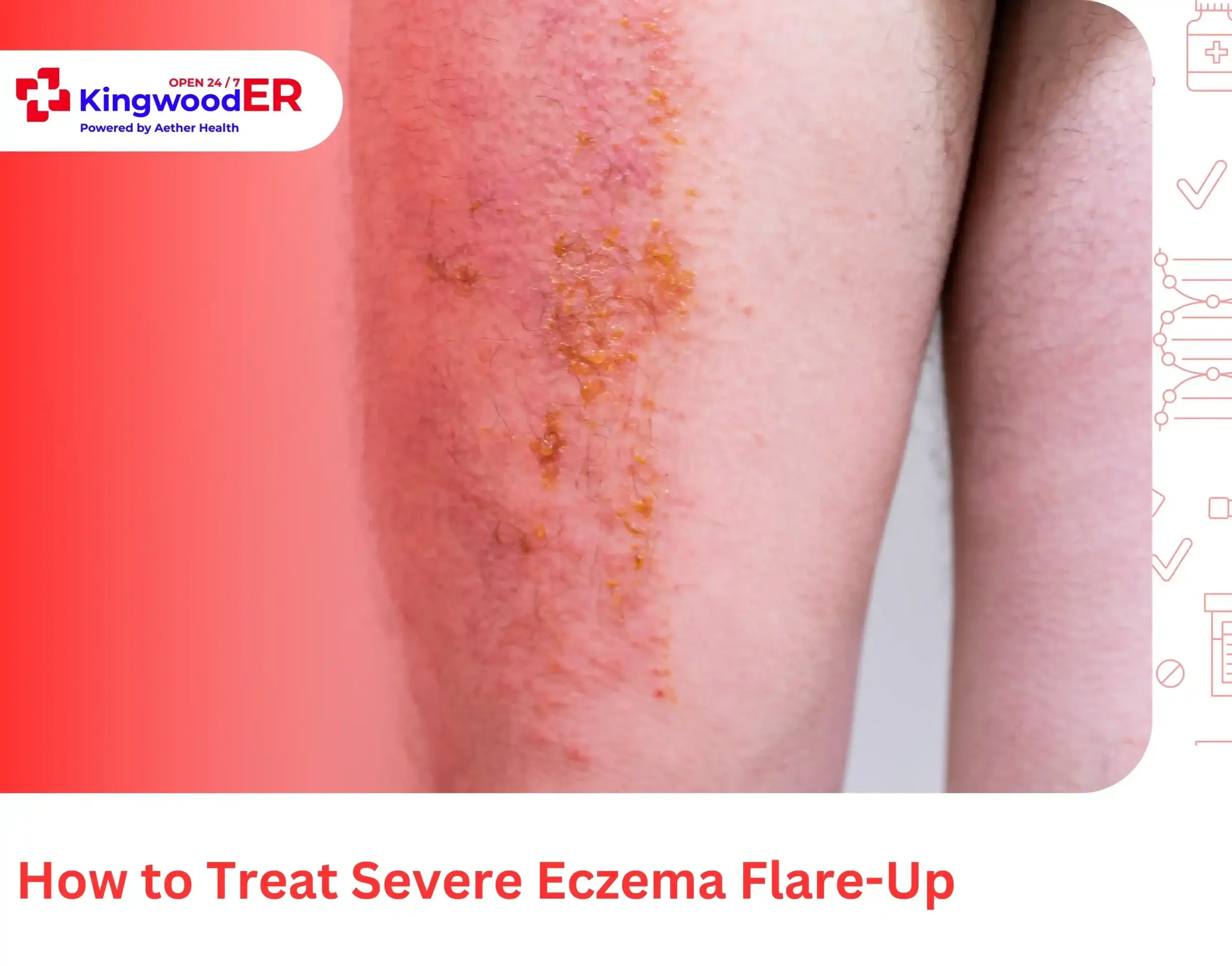
Eczema is common, but severe eczema flare-up can be overwhelming. More than 31 million Americans live with eczema, and flare-ups can happen suddenly when the skin barrier weakens.1
However, the good news is you can take a few steps right away to soothe the flare, protect your skin, and reduce future episodes. Let’s find them now.
Immediate Actions to Calm Severe Eczema Flare-Up
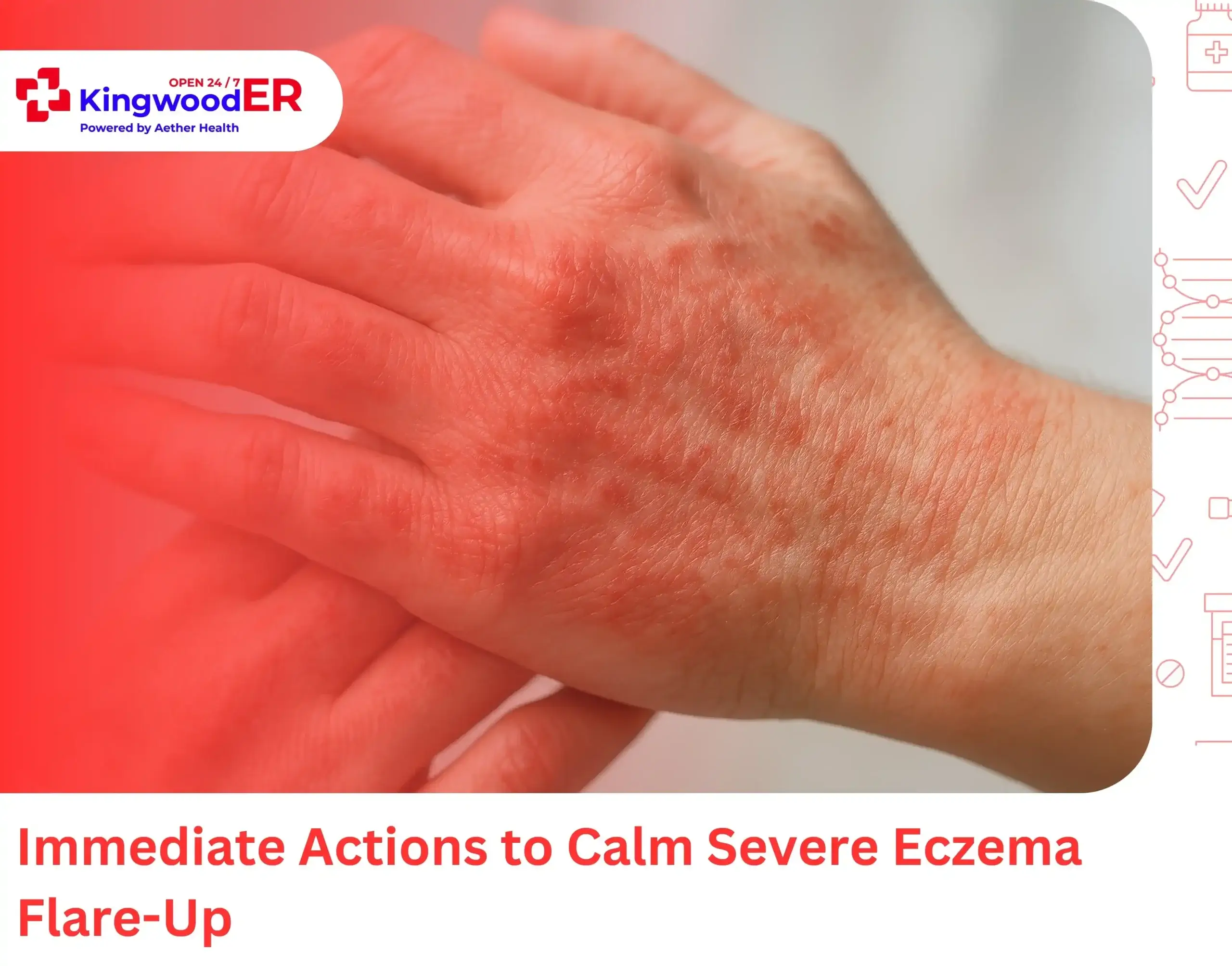
A severe eczema flare needs quick but gentle care. Your skin barrier is currently weak, allowing it to lose moisture quickly and react easily. The goal is straightforward: calm the skin, add moisture, and avoid anything that exacerbates irritation.
1. Gentle Cleansing
Use lukewarm water only; hot water can worsen symptoms. Keep showers or baths short, 5–10 minutes. Pat skin dry gently, and apply a thick moisturiser within three minutes to lock in hydration.
2. High-Frequency Moisturising and Barrier Repair
During a flare, your skin needs constant support. Use thick, fragrance-free creams or ointments instead of lotions. Reapply two to four times a day, especially in arid areas. Look for ingredients like ceramides or petrolatum, which help repair the skin barrier. If your home air feels dry, using a humidifier can keep your skin from drying out further.
3. Anti-Inflammatory Topical Treatments
If needed, use the prescribed medicated cream first, then moisturise. Follow your doctor’s guidance and avoid strong steroids on sensitive areas unless advised.
4. Sleep with Cotton Gloves or Socks
If you scratch in your sleep, wear cotton gloves or lightly wrap sensitive areas in soft cotton fabric to avoid breaking the skin and triggering an infection.
5. Switch to Hypoallergenic Laundry Products
If your flare suddenly worsens, it may be due to the detergent or softener you are using. Use fragrance-free, dye-free, sensitive-skin formulas to avoid further irritation.
What to Avoid When the Flare Is Active
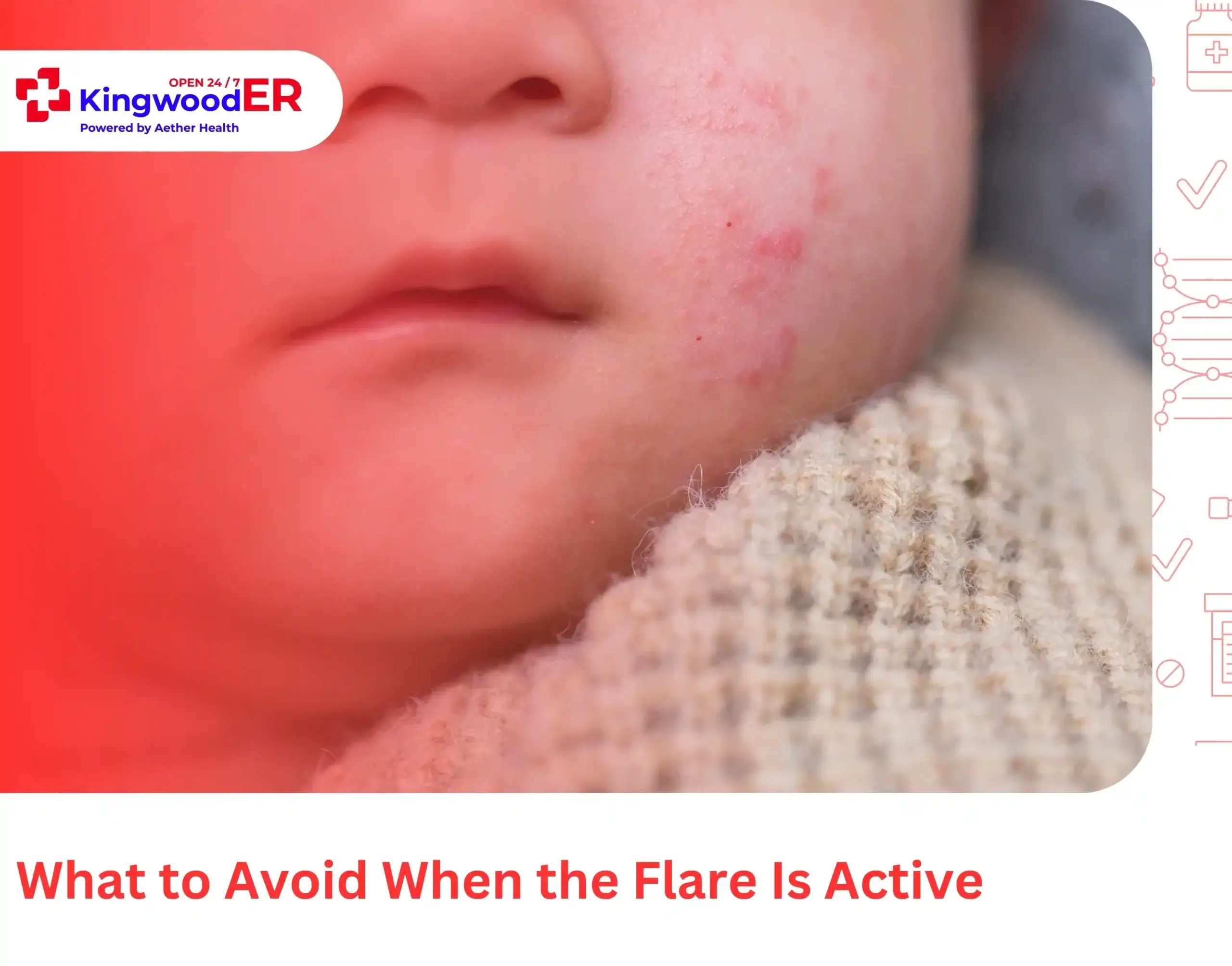
During a severe eczema flare up, skin is especially sensitive and easily irritated. Avoid certain habits and products to help your skin recover and prevent further deterioration. Small mistakes such as using the wrong soap or scratching, can slow down the healing process, so be cautious during this stage.
1. Harsh Soaps and Baths
Hot showers and harsh soaps strip the skin of its natural oils, leaving it dry and inflamed. Choose lukewarm water and gentle, fragrance-free cleansers. Avoid using scented, colored, or antibacterial products unless a healthcare professional prescribes them.
2. Scratch-Inducing Fabrics and Tight Clothing
Rough or tight clothes can be irritating. Wear loose, cotton clothing and keep calm. Shower after exercise and moisturise. A calm environment helps reduce itch.
3. Delaying Treatment
Eczema flares rarely go away on their own. The longer you wait, the more inflamed and itchy the skin becomes, and the higher the chance of infection. Treating a flare early with moisturisers and prescribed creams helps prevent the flare from spreading or becoming painful. If your usual routine doesn’t help within a few days, it’s time to talk to a dermatologist for more substantial relief.
When to Seek Professional Help
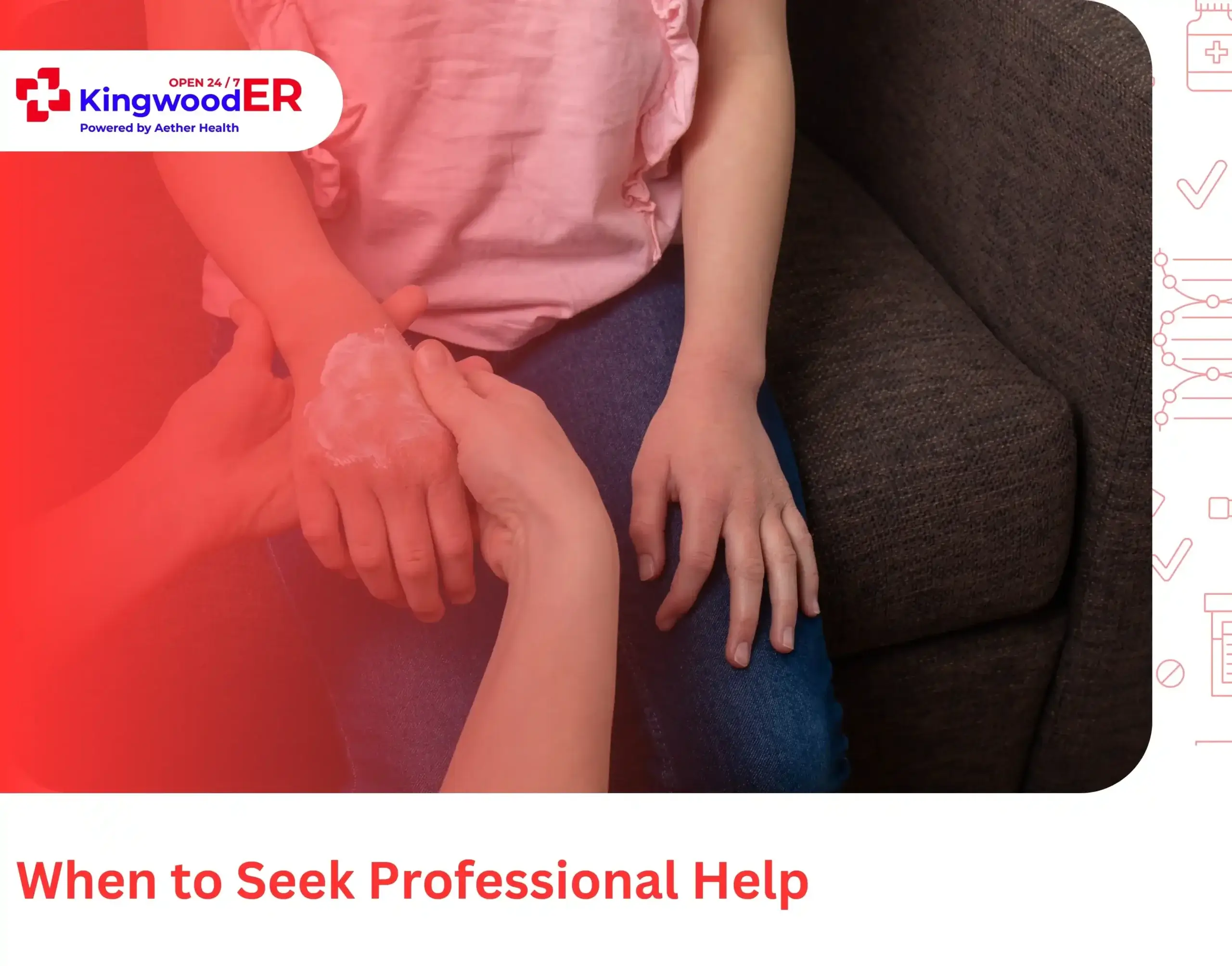
Sometimes a flare gets worse even when you try your best at home. In these moments, seeking medical help promptly helps keep the skin safe and prevents infection or lasting damage. Here’s when you should consult a doctor or dermatologist.
1. Signs of Infection
Watch your skin closely during a flare. If you see yellow crusts, pus, or if the skin looks very swollen or painful, it may be infected. A fever or chills also points toward infection. These signs require immediate medical attention, as infected eczema doesn’t heal on its own and can worsen rapidly.
2. Flare not Improving or Spreading Rapidly
If you treat the flare correctly by moisturising, taking gentle baths, and applying creams, and still see no relief after three to five days, call your doctor. Also seek help if the rash spreads quickly, becomes extremely itchy, or starts to crack and bleed. Delaying severe eczema flare up treatment can make the flare harder to control and more painful.
3. Escalation of Treatment
Some severe flares need stronger medical treatments. A dermatologist may recommend phototherapy (light therapy), oral medications to reduce inflammation, or biologics for long-term control. These treatments are helpful when regular creams and home care measures are ineffective. Your doctor will explain the plan, check your skin often, and support you through each step.
Conclusion
If your eczema flare feels uncontrollable or you notice severe pain, spreading redness, yellow crusting, fever, or swelling, get medical help. These may indicate an infection and require urgent medical attention.
Kingwood ER is open 24/7. Walk in any time for fast, expert treatment for severe eczema flare-up. Our team will help calm your symptoms and safeguard your skin.
Frequently Asked Questions
1. Why does my eczema flare get worse at night?
Skin loses more moisture at night, and your body’s natural stress hormones drop when you sleep, which can make itching feel stronger. Also, you don’t have distractions at night, so the itch becomes harder to ignore. A thick nighttime moisturising routine, combined with the use of light cotton gloves or wet wraps, can help.
2. Can I scratch if it feels impossible not to?
Scratching worsens flares and increases the risk of infection. Instead, gently tap the skin, use a cool compress, or apply wet wraps. Keep nails short to protect skin.
3. How fast should I see improvement after starting treatment?
Most people feel relief in 2–3 days with proper care. If symptoms persist or worsen after 3–5 days, contact your doctor. Severe cases may need prescriptions.
4. Do I really need to moisturise multiple times a day?
Yes, during a flare, moisturise 2–4 times daily using thick, fragrance-free creams or ointments to help skin heal.
5. Can food cause eczema flare-ups?
Food usually doesn’t cause eczema, but can trigger flares for some, like dairy, eggs, nuts, soy, or gluten. Keep a diary and consult a doctor before dietary changes.